
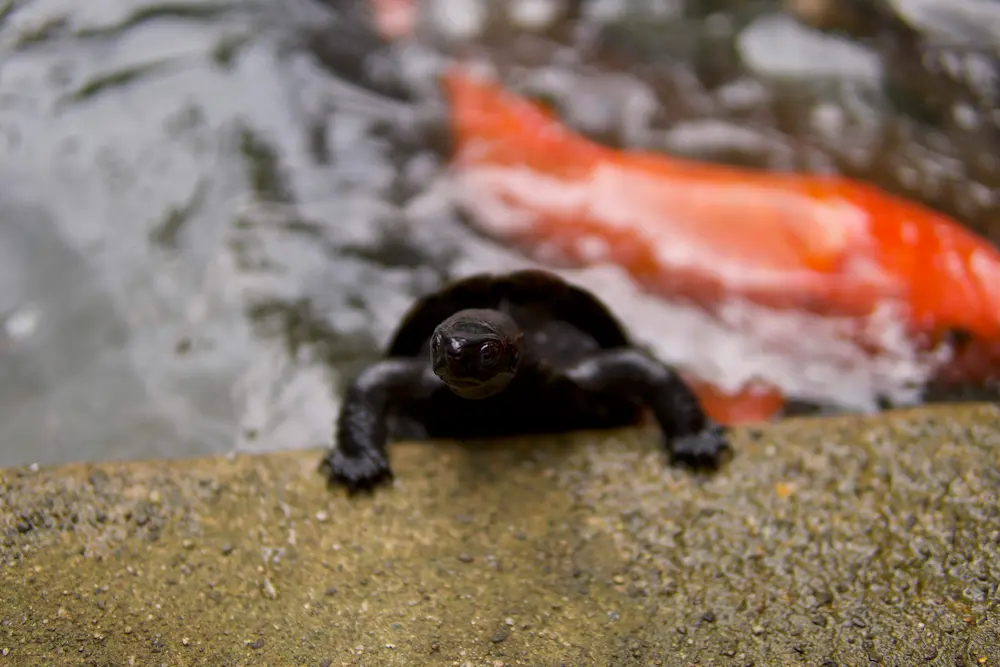
Happy Turtle Day!
Today just so happens to be world turtle day, which is a coincidence because today I have a story about a turtle for you.
‘There lives Nursultan Tulyakbay. He’s still asshole. I get iPod, he only get iPod Mini. Everybody know it for girls!’
Aren’t petty rivalries just the best? Although on the surface it may not look like it, nowhere is this more true than in Japan.
In case you weren’t aware, this country is old.
Tokyo versus Osaka (or Kanto versus Kansai) is one for the ages.
Tokyo’s been the political and military capital of Japan since 1603, the seat of the Tokugawa shogunate.
Osaka, meanwhile, was the merchant and economic centre of the country during the Edo period, supplying goods to the capital.
Tokyo had the Shogun.
Osaka had the money.
Oh, and independence from the samurai-dominated power structure, I guess.
Plus: in Tokyo, people line up on the left side of the escalator, like cars.
In Osaka?
Not so much.
Osaka people make a point of lining up on the right.
Just because.
Honestly, there aren’t really enough people to have escalators. However, there are enough people to have a fierce rivalry on the Sea of Japan coast between Sakata City to the north, and Tsuruoka City to the south.
Which is all a bit ridiculous if you ask me.
I’m too sophisticated to get involved. Because, as I have mentioned before, one of the cities was home to the richest family in Japan until WWII.
The other one is Tsuruoka City.
A name that, if legend is anything to go by, could be attributed to a turtle washing up on the shores of Sakata City waaaay back in 1601.
But not just any turtle,
How massive?
Why 7 Shaku (Japanese feet) massive!
Now, you would expect a Japanese foot to be smaller than an imperial foot because Japanese people aren’t known for being the biggest people around.
You would be right.
But only just. One Shaku is only slightly smaller than the feet we know.
And when I say slightly,
I mean slightly.
One Shaku is 11 /64 inches. In other words, this turtle was about 2.1 meters long, or just under seven feet.
Pretty massive if you ask me!
Frankly, any turtle washing up on shore is a good omen. Some species of turtle live for over one hundred years, with folk legends telling of some living over 1,000 years. Pretty long if you ask me!
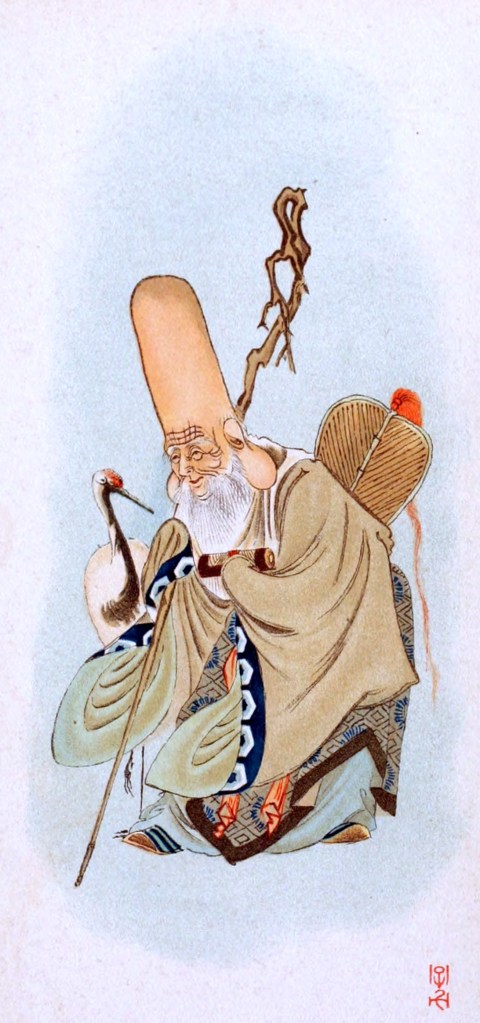
Turtles are also a symbol of wisdom and patience, basically because they move slow and deliberately. In fact, turtles often accompany one of the Seven Lucky Gods, Fukurokuju, the god of wisdom and longevity.
This guy.
And what did the townspeople do when they came across this monstrous beast? Well, they presented it to the local lords, The Mogami Clan of course.
And what did the Mogami Clan do in response?
Why, throw a massive party!
With tons of rice and sake, of course.
Of course.
A legendary animal just appearing on shore was not something to be taken lightly, and the Mogami Clan knew how to respond in kind.
Not only that, the castle near where this turtle washed up at the time was called Tozenji-jo (東禅寺城).
Not for long.
Now the people had sufficient reason to rename the castle to something more befitting of its legendary turtle status:
Kamegasaki-jo (亀ヶ崎城).
Turtle Cape Castle.
In fact, this legend was so legendary, some people even referred to Sakata City as Kamegasaki1.
These days, it’s Sakata again, but the Kamegasaki name lives on as a neighborhood. And if you wander around there, you’ll find remnants of the old castle.
Sort of.
Like many Japanese castles, Kamegasaki-jō was demolished during the early Meiji period, under the 1873 Castle Abolition Law. But the site still lives on as Sakata Higashi High School’s east campus and Kamegasaki Park.
But that’s not all.
Turtles alone are a symbol of longevity. Combine that with another animal symbolising longevity and you have a recipe for balanced longevity, arguably a better form of longevity.
That animal?
Why,
Tsuru, in Japanese, of course.
Of course.
The more sharp-witted of you out there should be able to recognise that tsuru is a sound I have already mentioned in this piece.
The ‘tsuru’ in Tsuruoka.
AKA
Crane Hill.
Now, bear in mind: this is all speculation. There are no definitive records confirming this naming theory. But it’s possible, some might say highly likely, that Tsuruoka’s name was inspired in part by Sakata’s legendary turtle.
Up until the early 1600s, Tsuruoka Castle was known as Daihōji-jō. After the Mogami clan (led by Mogami Yoshiaki) took control of the Shōnai region following The Battle of Sekigahara, the story goes that cranes descended upon Daihōji-jō, a wildly auspicious sign,
if there ever was one.
This combined with Sakata’s legendary turtle meant the region was in for some balanced longevity.
Crane Hill. Turtle Cape.
The best kind of longevity.
However, the people of Sakata were sophisticated enough to stay Sakata.
The people of Tsuruoka though?
Well…
How’s that for petty?
Read more:
- Nihonkoku, a mountain on the border of Yamagata and Niigata, also has a legend based on an unfathomable beast, or bird in this case.
- Tokyo Banana
- This Japanese link is where I got a lot of the information for this article from.