
Continuing on from last week’s post on the deep meaning behind tea ceremony’s most famous concept is another Japanese practice with profound implications that go over the heads of most people:
Haiku.
One line of five syllables, one of seven, and another of five.
When my year 5 (5th grade?) teacher Mrs. Taylor in NZ set us the task of writing haiku, the only thing we cared about was getting the right number of syllables. We didn’t care about what we were describing, the feelings it evoked…
or that we were trying to capture nature.
That’s right.
The whole deal with haiku is capturing facets of nature with the written word.
Impossible. I know.
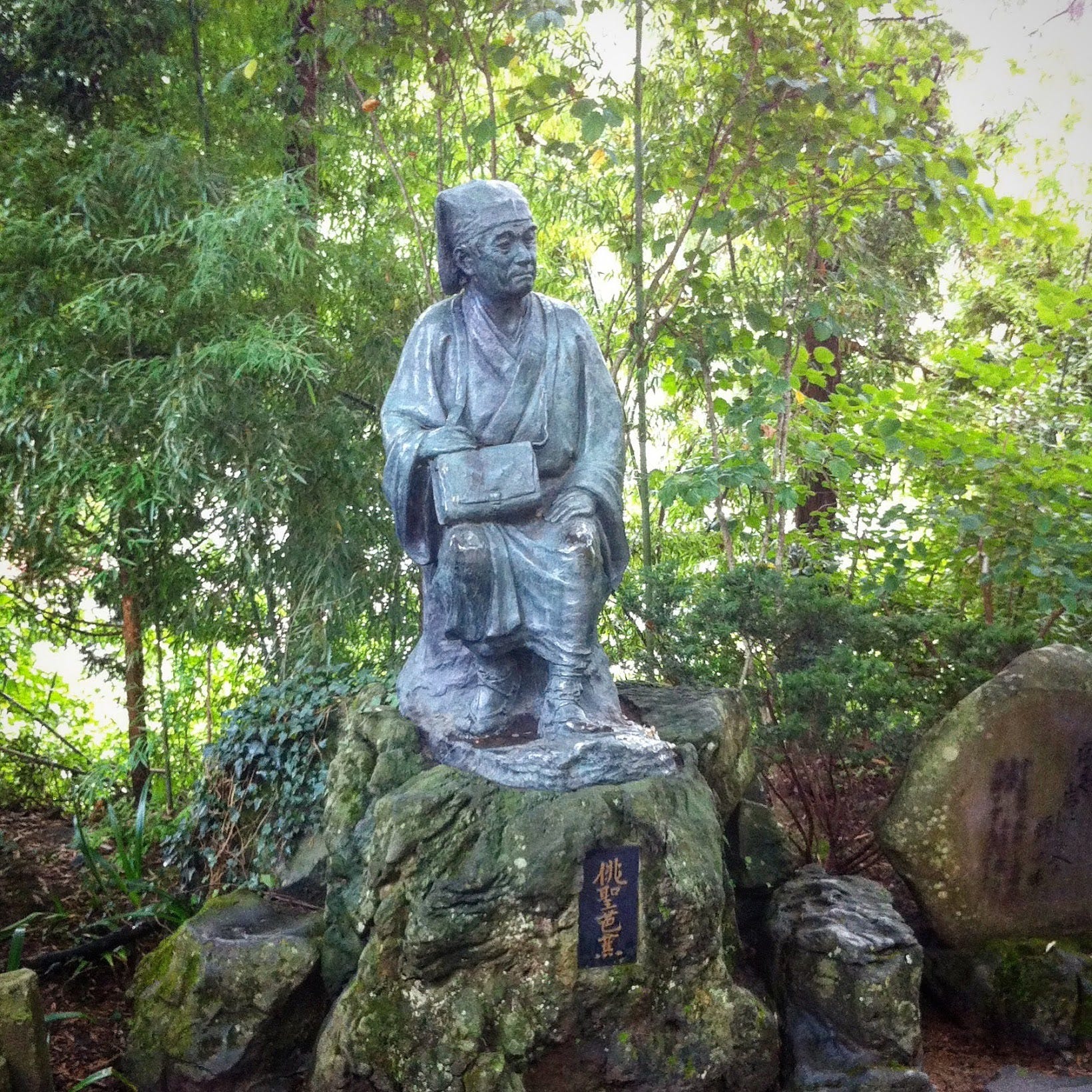
But some who have tried came excruciatingly close. One man in particular, a certain Matsuo Basho, even travelled some 2,400km (1,500 miles) in search of the perfect prose (which I wrote about here).
And how close he got!
When you realise capturing nature is what haiku poetry is about, you start to see it differently. You start to see that good haiku is in fact, good haiku.
When you read it in the original Japanese, it hits even harder.

One of my favourite facts about Haguro-san, the mountain where many of our yamabushi trainings is based, is that it is home to one of Japan’s top 100 landscapes famous for its scent.
Yes, there is a list for that!
Here’s the only resource I could find (in Japanese), and here’s a list of 100 top somethings in Japan (also in Japanese, like famous waterfalls, famous low mountains, mountains famous for flowers, or in the case of Yamagata, 100 famous fresh water springs, but with only 60 places on it…).
Anyway, Haguro-san is not on the list for what you’d expect.
It’s not the scent of the world-famous line of cedar trees. It’s not the smell of the burning fire yamabushi jump over to symbolise our precise moment of rebirth. It’s not the fragrance of fresh flowers blooming in spring, nor the sweet sweet smell of umami that comes from the real star of Japanese cuisine, bamboo shoot soup.
Nope. It’s none of these.
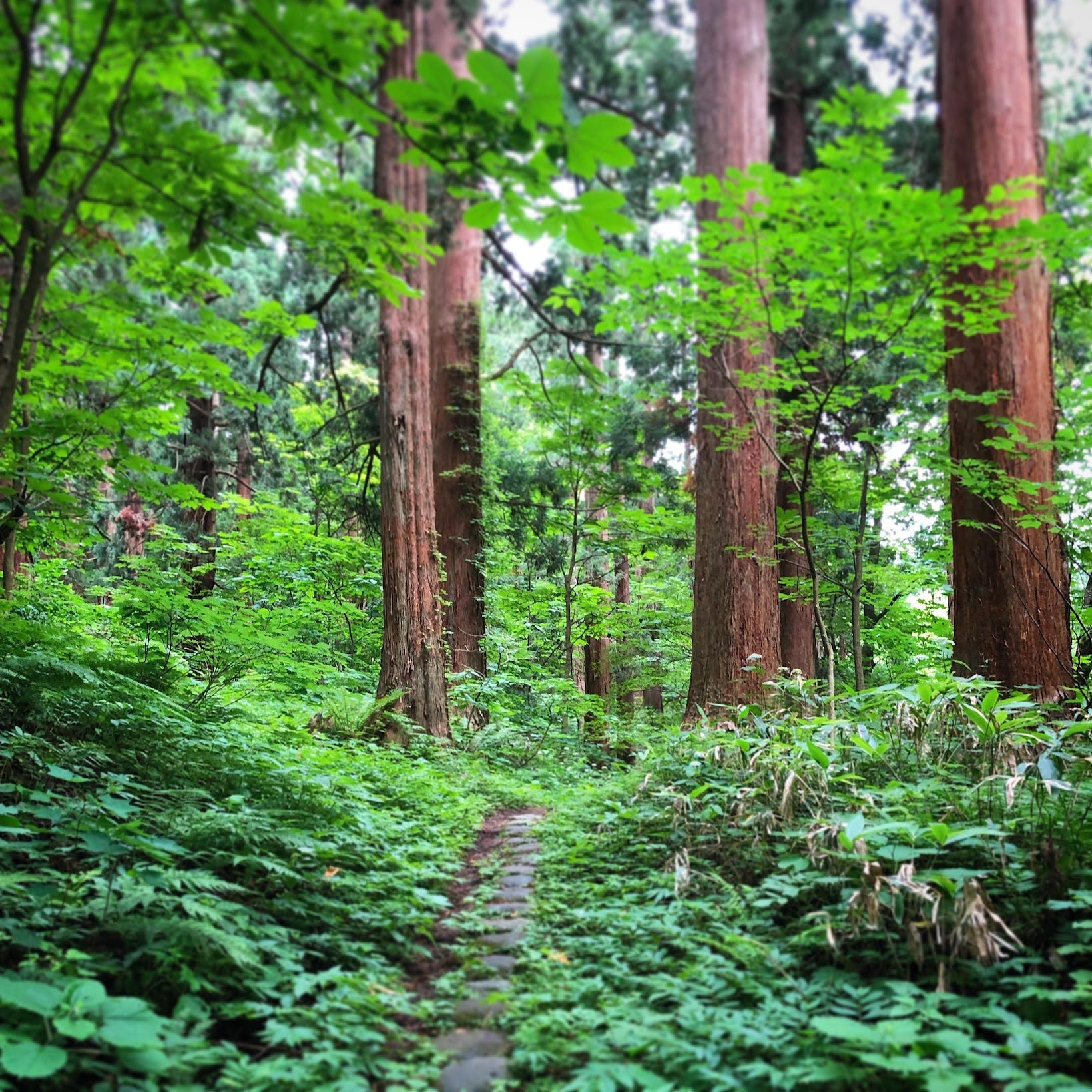
Climb the stone stairway of Haguro-san, and right before you get to the third slope, there is a path that veers off to the right. Walk 500m on a trail of round stones, over small mountain creeks, and whole lot of mud, and there, deep in the middle of a cedar forest, you’ll see it:
Minamidani. The Southern Valley.
Basho spent four nights staying at Shionji Temple here where he composed the following prose:
有難や – Arigataya – How blessed I am
雪をかほらす – Yuki o kahorasu – Fragrance of the snow
南谷 – Minamidani – Minamidani
But the thing is, if you go to Minamidani at the same time of year Basho was there, all you can see is the ruins of Shionji temple among a sprawling forest of tall tall trees. There is a small pagoda (or there was, it has since fallen), foundation stones, the remains of a garden with characteristic stone bridge, and grass. A whole lot of grass.
So what’s the fragrance of snow got to do with it?
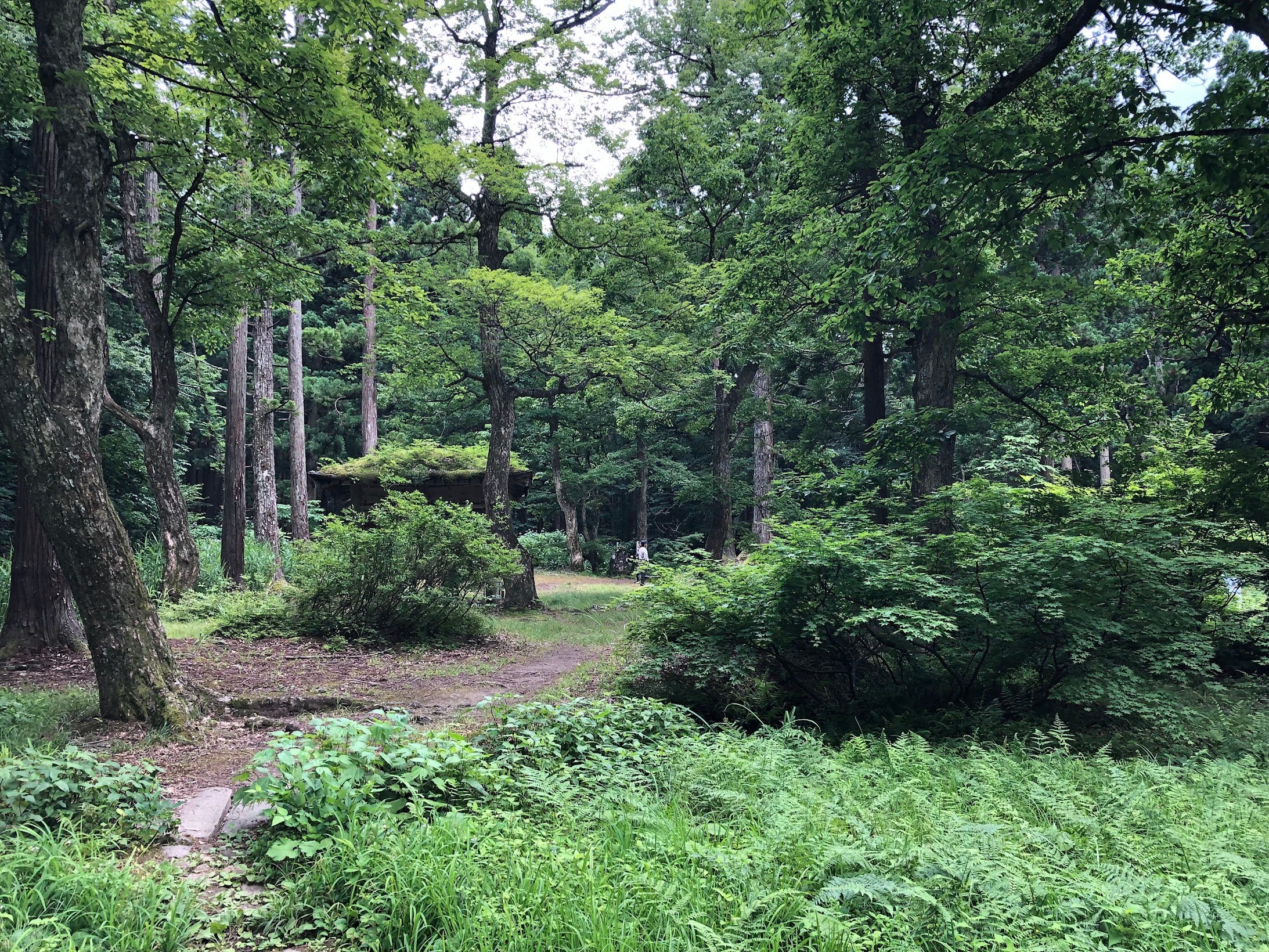
In those days, Haguro-san wasn’t famous for its cedar forest. Or, maybe it was, but the cedars, planted a mere 50 to 60 years prior, would have been nothing compared to the 400-year-old behemoths they are today. In other words, in those days, you could see very far. So far, in fact, Basho could see the snow on Gassan some 20km (12 miles) away.
Well, not just see it.
If you’ve spent extensive periods outside in the snow, you can understand this quite vividly. Snow has the uncanny ability to muffle sound unlike anything else. It’s something I really appreciate about the winter. But it also does have a particular smell about it. Or at least, it’s a unique sensation when the cold, hard, air of snow hits your nostrils.
Needless to say, this smell of snow is as recognisable now as it was more than 300 years ago when Basho was on Haguro-san.
That is the power of Haiku.
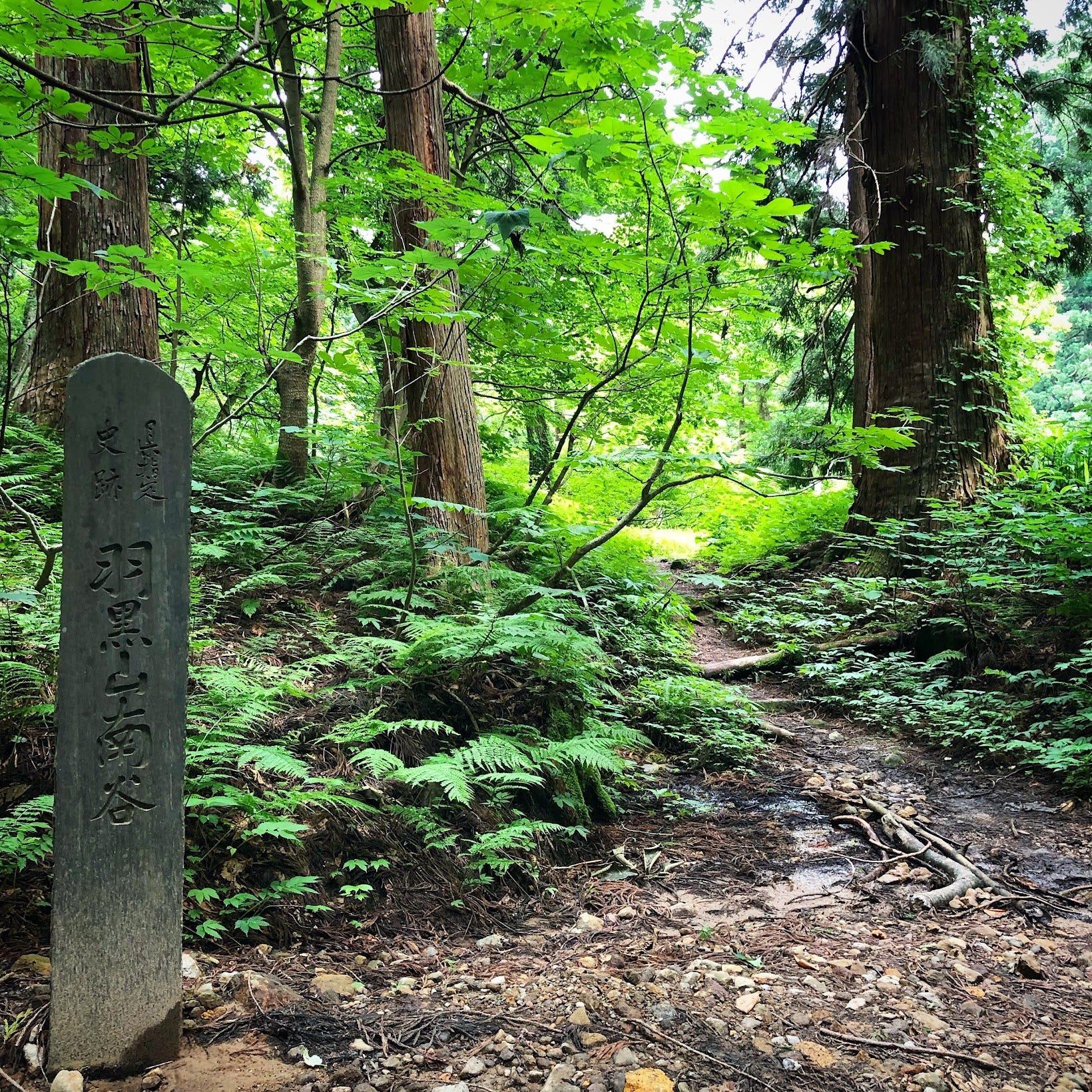
That is the power of haiku.
That is what my primary school teacher should have taught us. That would have saved me travelling halfway around the world, spending more than a decade in a foreign country, and putting myself through gruelling yamabushi training to realise, and then share with you.
Thanks, Mrs. Taylor.
Minamidani in my video on Haguro-san
When you go to Haguro-san, be sure to visit Minamidani. Not only can you get a real sense for the mountain from a place a lot of people simply pass by, you can channel your own Matsuo Basho, and maybe create a haiku that truly encapsulates nature in the process.