
Haguro-san Hiking Guide
Want to learn the background to Haguro-san? View the Haguro Story here.
Put simply, Haguro-san is mecca for hikers.
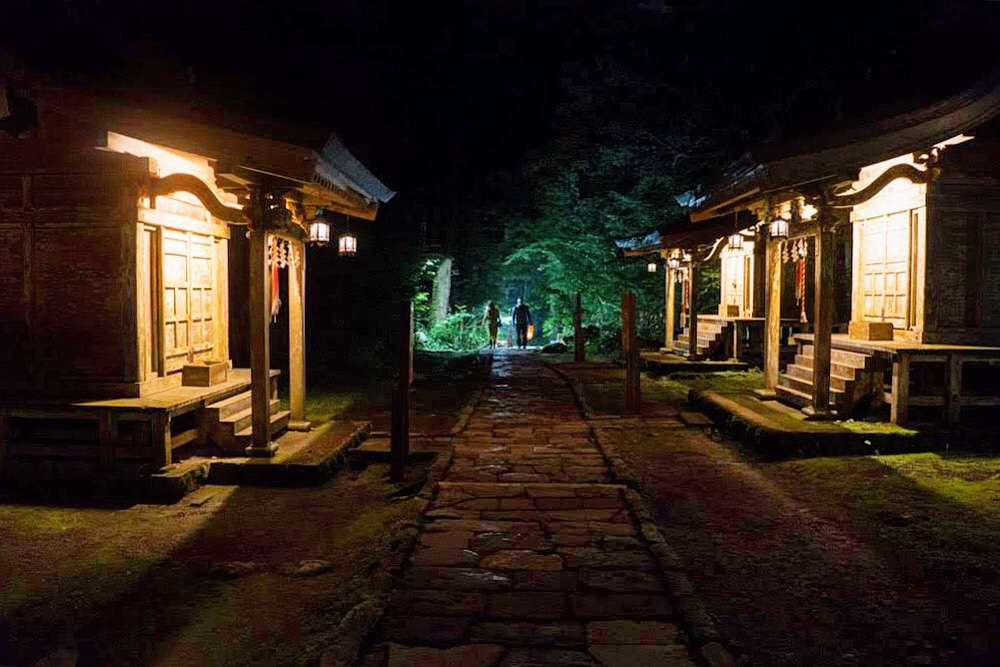
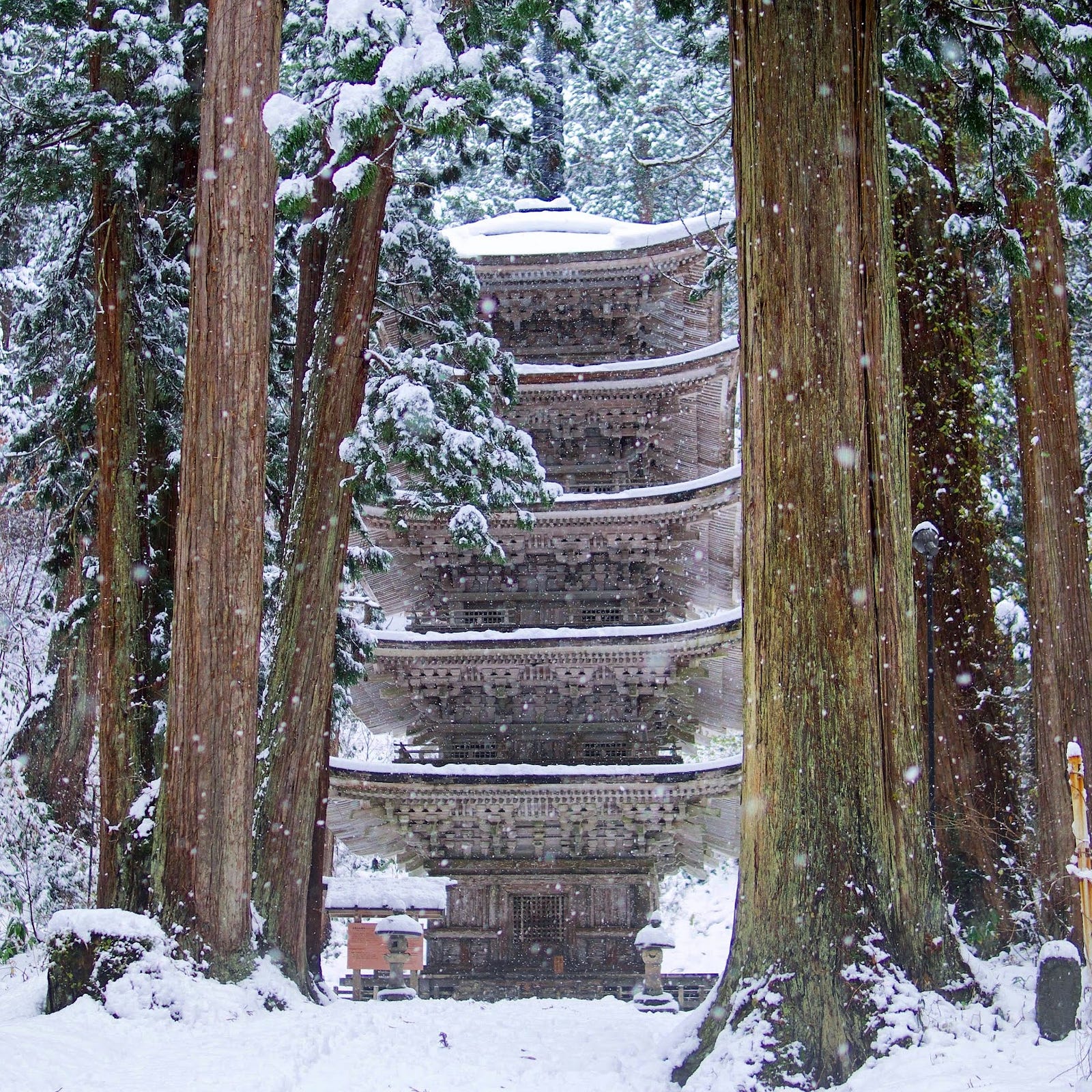
Starting from the pilgrim’s lodge village of Toge, passing through the stark red Zuishinmon gates you will immediately be taken into another realm. This first decent takes you along Haguro-san’s famous stone stairway amongst the cedar forest, past countless massha shrines, over the Haraigawa (exorcism) river, past Suga-no-taki falls and the grandfather cedar, to the piece de resistance, Haguro-san’s National Treasure Five Story Pagoda.
From here, the real climb up the 2,446 steps starts. Along the way, be sure to stop at Ninosaka Chaya Tea House for some Chikara Mochi, literally ‘pounded rice cakes to help you power through’.
Here’s a yamabushi hint: if time allows, definitely also check out Minamidani where famed Haiku poet Matsuo Basho spent four nights while compiling Oku-no-hosomichi, The Narrow Road to The Deep North.
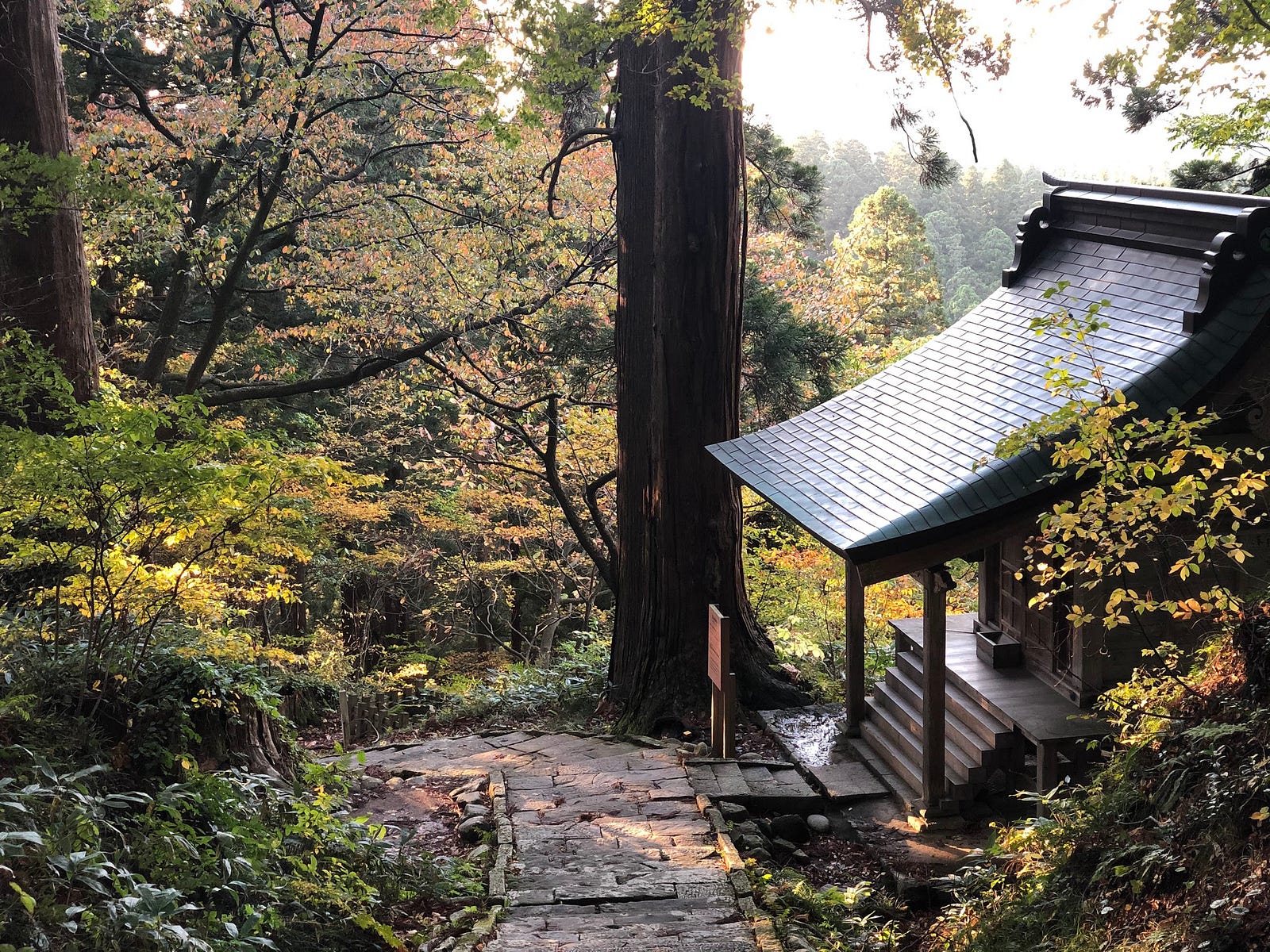
Before reaching the summit you will spot Dewa Sanzan shrine’s lodging, Saikan, and the aforementioned shrine to Prince Hachiko. Lastly, you will arrive at Sanjingosaiden, the collective hall of the three Dewa Sanzan Kami, home to Japan’s thickest thatch roof and Dewa Sanzan Jinja, where we pay our respects.
Alternate Trails up Haguro-san
Alternatively, or additionally, try Haguro Kodo, the Haguro Legacy Trail (read on for more). This is a route completely unlike the traditional route, almost entirely through primeval forests, but with historical relics dotted all over the place.
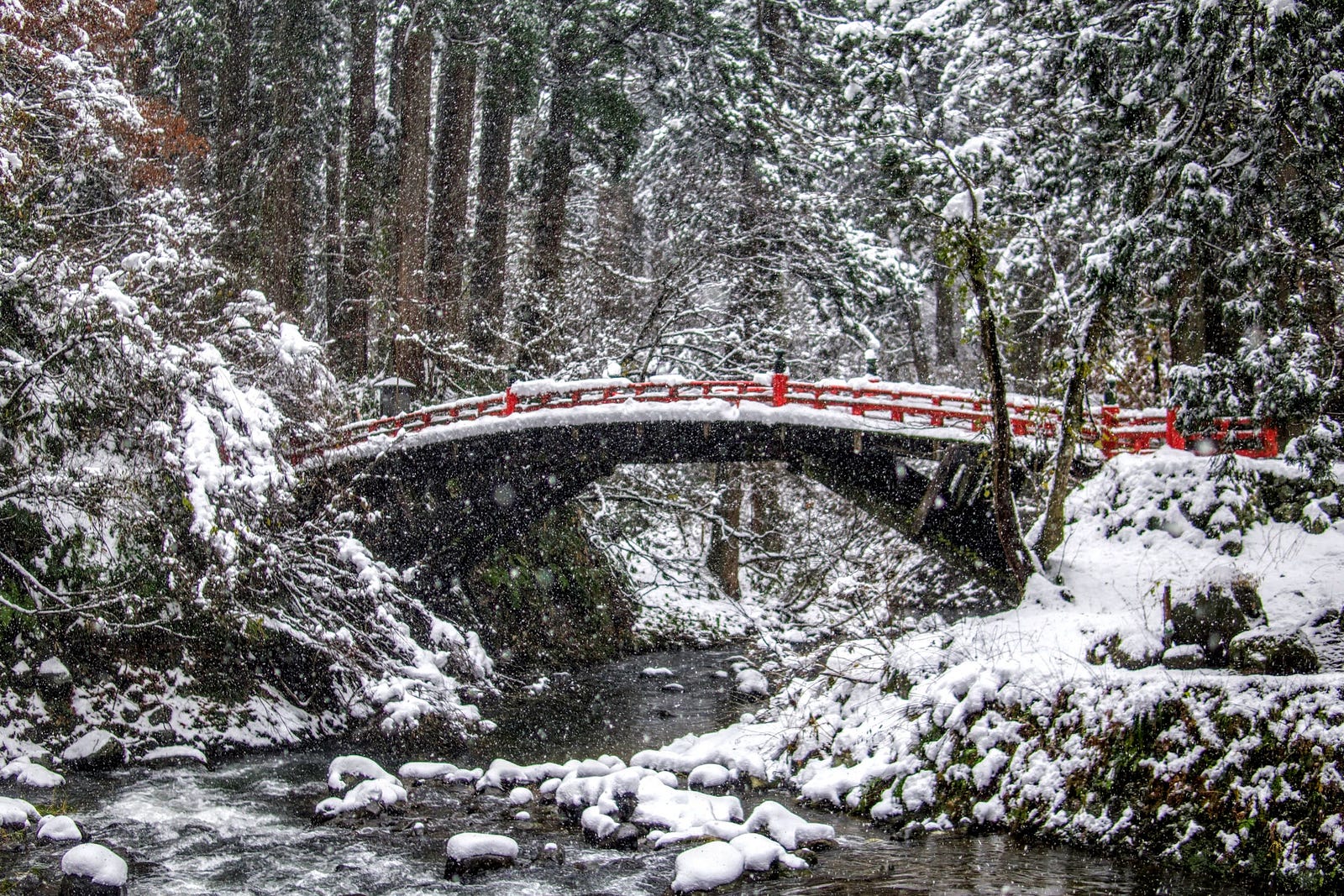
Plus, unlike the two other Dewa Sanzan mountains, Haguro-san is open year-round. And let me tell you, the Five Story Pagoda under metres of snow sure is a sight to behold!
The Haguro Legacy Trail: Haguro Kodo

The Haguro Kodo begins in Hachiko, a tiny hamlet on Route 47. Although the first part of the path is on a service road, you instantly find yourself in a serene forest of evergreens and are immediately overcome with its mystical energy. If the Jizo statues don’t make you feel like you are in a sacred area I don’t know what would.
Keep following the path up as it veers off to the right and you will come across an open area called Subeno(皇野). Subeno literally translates to ‘Imperial Field’, an homage to Prince Hachiko, who is said to have begun his ascetic training on the Dewa Sanzan in this very spot. This unsuspecting area is said to have prospered up until the Muromachi period (approximately 1336 to 1573) with up to 500 buildings, such as temples (大皇山満納寺) and Shukubo pilgrim lodges.
In the middle of Subeno, there are the remains of a building called Haguro-san Honsha, the main office of Haguro-san. This is believed to be the original Haguro-san office that over the centuries was located in many spots up the mountain until finding its way to Sanjingosaiden at the summit in 1818.
In Subeno, there are the remains of a small pond called Mitarase that was used for washing, and nearby there is an Inari shrine and monument dedicated to the ‘founder’ of the Dewa Sanzan, Prince Hachiko.
Artefacts Galore

The Haguro Kodo then takes you along a stream called Haguro Sawamizu, with numerous artefacts such as a small monument called Gyojazuka, which is believed to be Prince Hachiko (founder of the Dewa Sanzan)’s grave (there are at least two purported graves to Prince Hachiko, another one is at the top of Haguro-san).
On this monument there is some Sanskrit and also 「一世行者○海」(according to recent research, the circle is said to be the character 永 for longevity). This is most likely a monument to a local ascetic. Also, near the stream there is a monument called Hikyaku no Haka, the Grave of Hikyaku, said to be Prince Hachiko’s envoy. Chigozuka, another monument along the path is dedicated to a young monk said to have lost their life there.
The Grand Views of Haguro Kodo
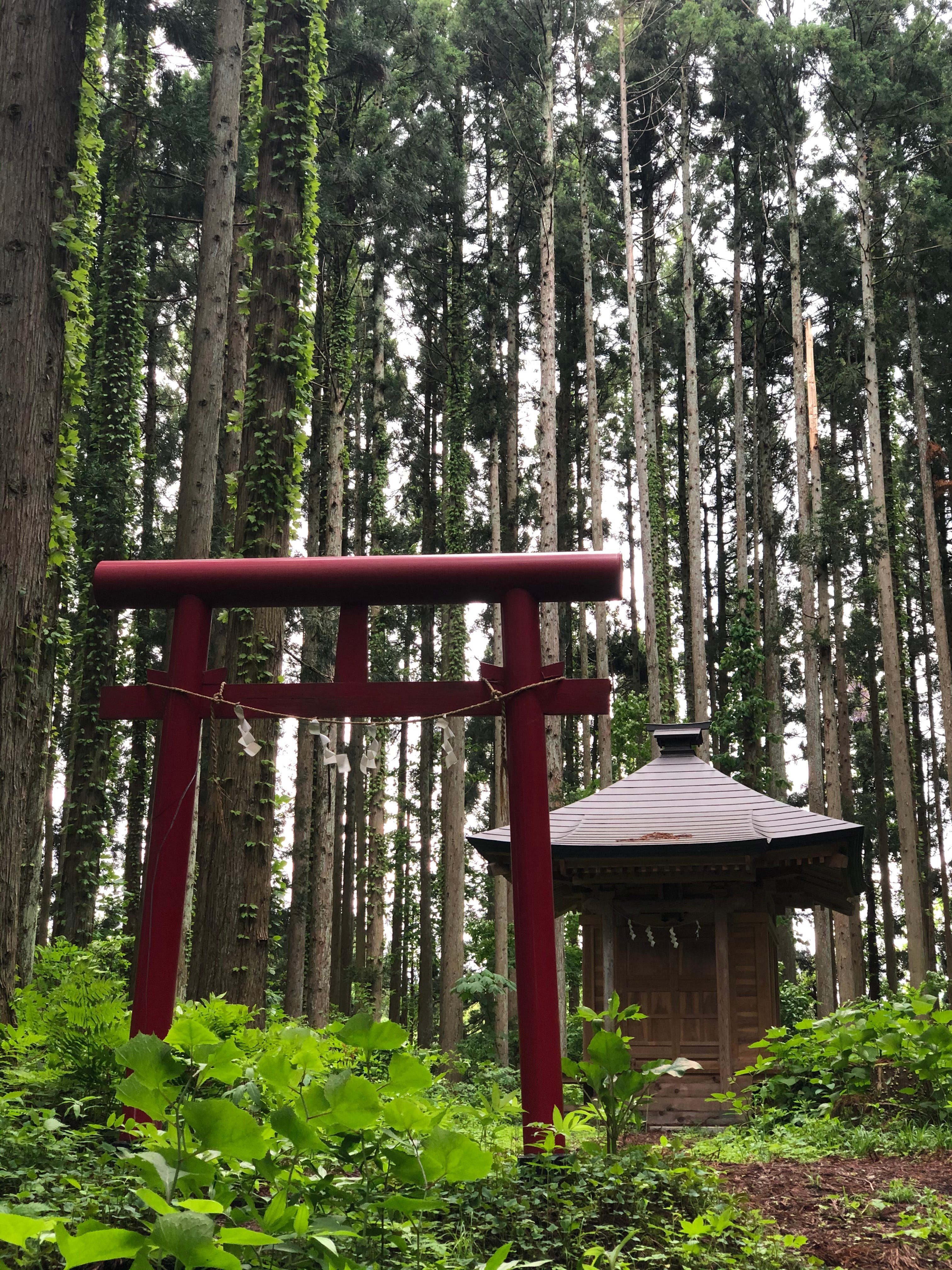
Follow the Haguro Kodo signs up the mountain that lead through the dense forest. Before long, you will come out at an opening that reveals great views out to the Tachiyazawa Basin or if the weather is good, Chokai-zan. Once you make your way to the top of the hill, views out over the Shonai Plains and to the Sea of Japan await. Keep following the path and you will come across an access road that leads into a Beech and Cedar forest that eventually comes out at Reisaiden at the top of Haguro-san.
To be honest when I reached the summit I got quite a shock. I had probably visited that part of Haguro-san at least 20 times. Never did I realise there was a mountain path right there. Part of that might be because the Shrine seems to not want people to use the Haguro Kodo. I’m not sure why, but the path fails to appear in maps and there is zero signage at the summit. It could perhaps be because where it comes out is in fact a cemetery. Generally anything related to death is taboo in Shintoism. That too me only added to the mystery. Either way, I was really glad I got the chance to see things for myself.
Getting to the Haguro Kodo
There are two ways to get to the Haguro Kodo. First is to climb down from Reisaiden Shrine at the summit of Haguro-san. Second is to use a car. I’ve written all about how to get to Haguro-san in this article. For the Haguro Kodo there is a car park here, and the trailhead is here.
There are useful maps at the carpark. From the carpark, you will see a house that sits against the hill. There is a road that goes directly past this house leading straight into the forest. This is the Haguro Kodo.
Getting to Haguro-san
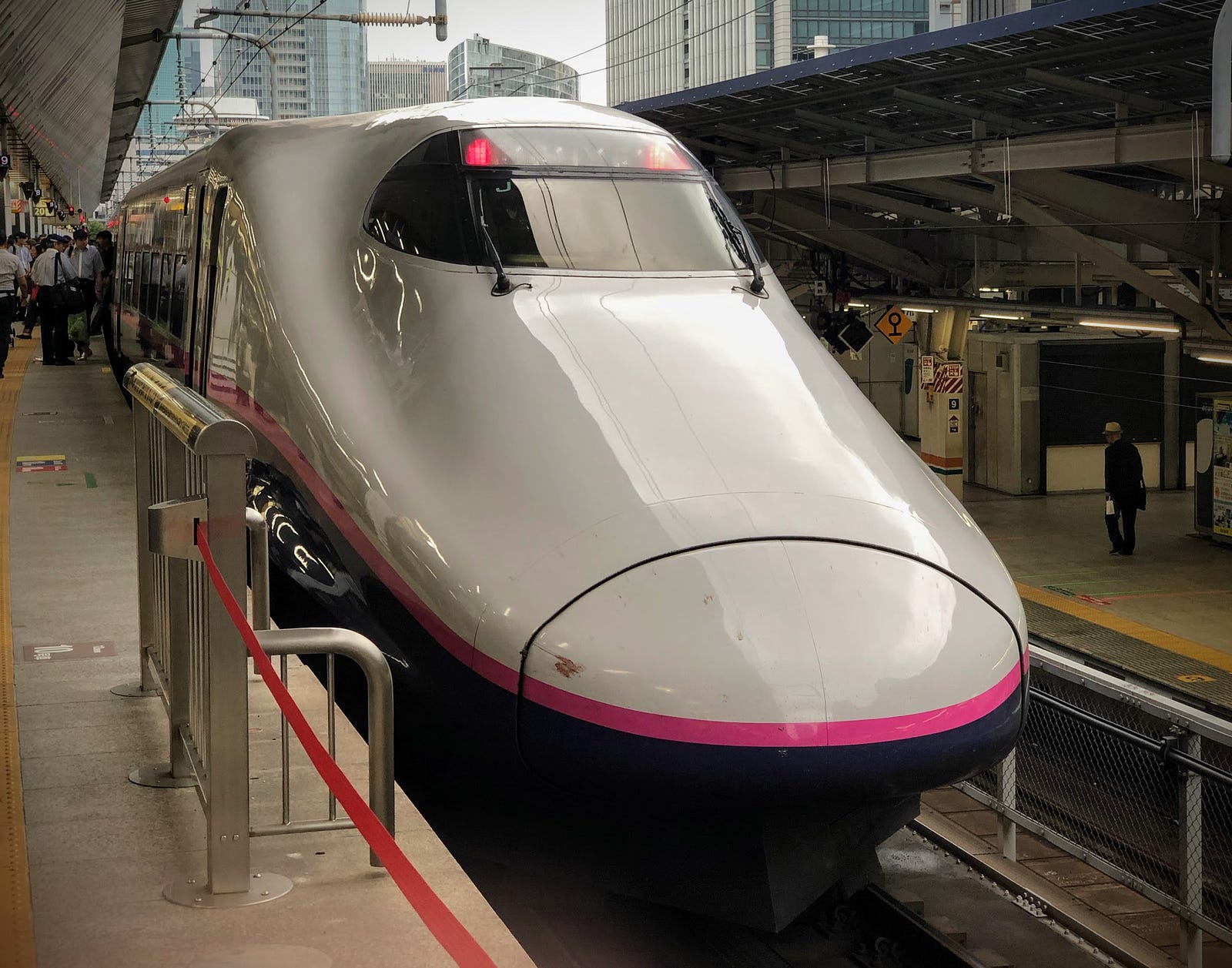
From Tokyo, the easiest way to get to Haguro-san is the one-hour flight to Shonai Airport from Tokyo Haneda. Then, you can either take a taxi, rental car, or the bus via Tsuruoka Station. However, I recommend taking the slow route: the Joetsu Shinkansen and Inaho Express to Tsuruoka.
Accommodation on Haguro-san
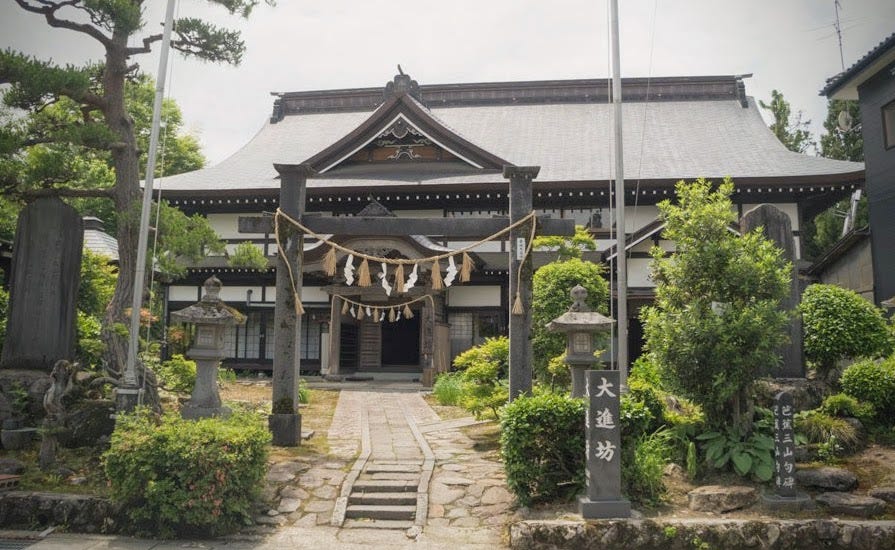
A trip to Haguro-san is not complete without staying in one of the Shukubo pilgrim’s lodges, purpose-built lodgings from the 17th century run exclusively by yamabushi.
Shukubo provide Dewa Sanzan Shojin Ryori, ascetic cuisine developed from what yamabushi ate for survival on the mountains. Plus, there are altars for rituals and prayers, yamabushi guides, Ofuda amulets, garments, and everything needed for your journey of rebirth. Especially recommended are Shukubo Daishinbo run by the Hayasaka Family for 17 generations, and Shukubo Daishobo run by Master Hoshino that hosts yamabushi trainings.
Although not technically a Shukubo, Saikan mentioned earlier is another great option for accomodation on Haguro-san. Unlike the Shukubo, Saikan is open year-round, even when inundated with metres of snow. Although any Shukubo will provide amazing meals, Saikan is especially known for the elaborate dishes chef Shinkichi Ito lovingly serves.
The Dewa Sanzan’s Haguro-san
This tiny peak is one of the best places in Japan to learn about not only Japanese culture and history, but also about yourself. Plus, there’s plenty there for hikers and nature lovers alike. If you’re looking for a little-known haven off the beaten path in Japan, look no further than Haguro-san.
Haguro-san Videos
Nearby locations of interest
The Tsuruoka Side of Haguro-san

The summit of Haguro-san is also accessible by car. There you will find Dewa Sanzan Jinja in the building called Sanjingosaiden, The Collective Hall of the Three Kami. This is where each of the Dewa Sanzan kami are held during the winter months. Nearby Saikan is also a must-see. Try some of the most unique Shojin Ryori (Ascetic Cuisine) that Japan has to offer. Check out dewasanzan.com for more (I run the site).
Gyokusenji Temple
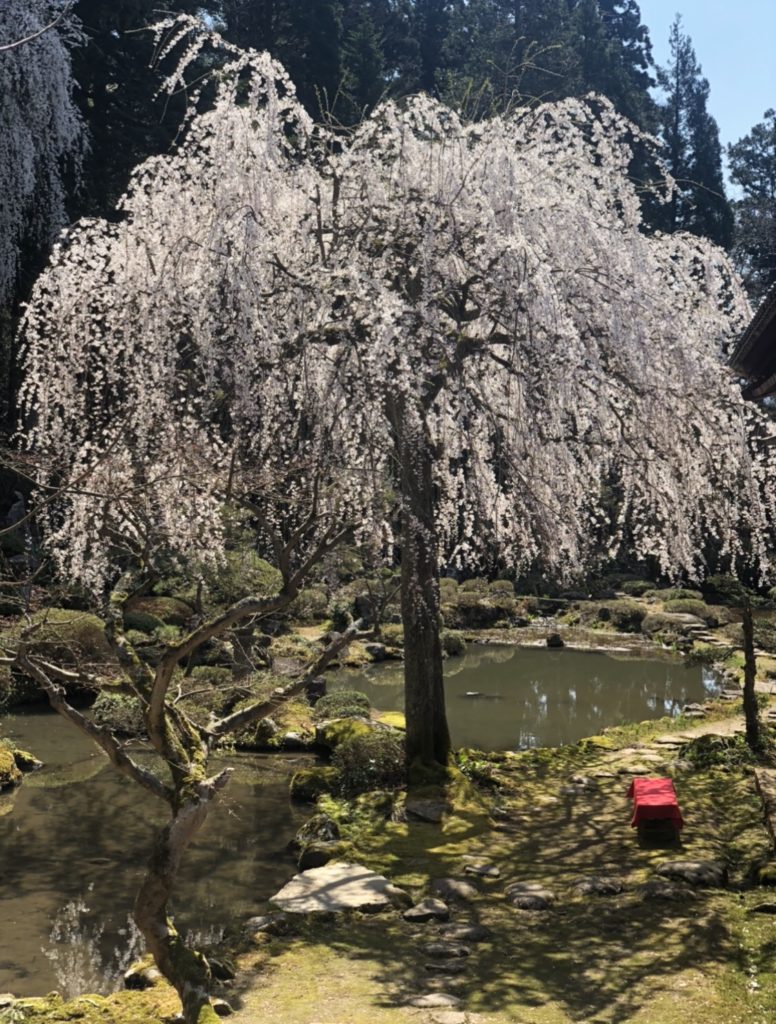
Gyokusen-ji Temple is a Soto-sect Zen temple located at the base of Haguro-san. Gyokusen-ji is perhaps most well known for its Japan Heritage gardens that are over 300 years old. While there, be sure to grab yourself a cup of freshly-whisked Maccha Green Tea and accompanying sweet. This is a great way to pass the time while looking out over the famous garden.
Gassan via the 8th Station
If you’re visiting Haguro-san and looking for even more of an adventure, I highly recommend hitting up Gassan. Gassan represents the world of the afterlife on the Dewa Sanzan Journey of Rebirth. The tallest Dewa Sanzan peak is where we come face to face with our ancestors. Gassan is only open from July to mid-October. This is because of the massive amounts of snow that accumulate on the peak annually. However, this means that the variety of landscapes to be seen is second to none. Use this map for the 8th Station on the Haguro-san side of the mountain.
Matsuyama, Sakata City
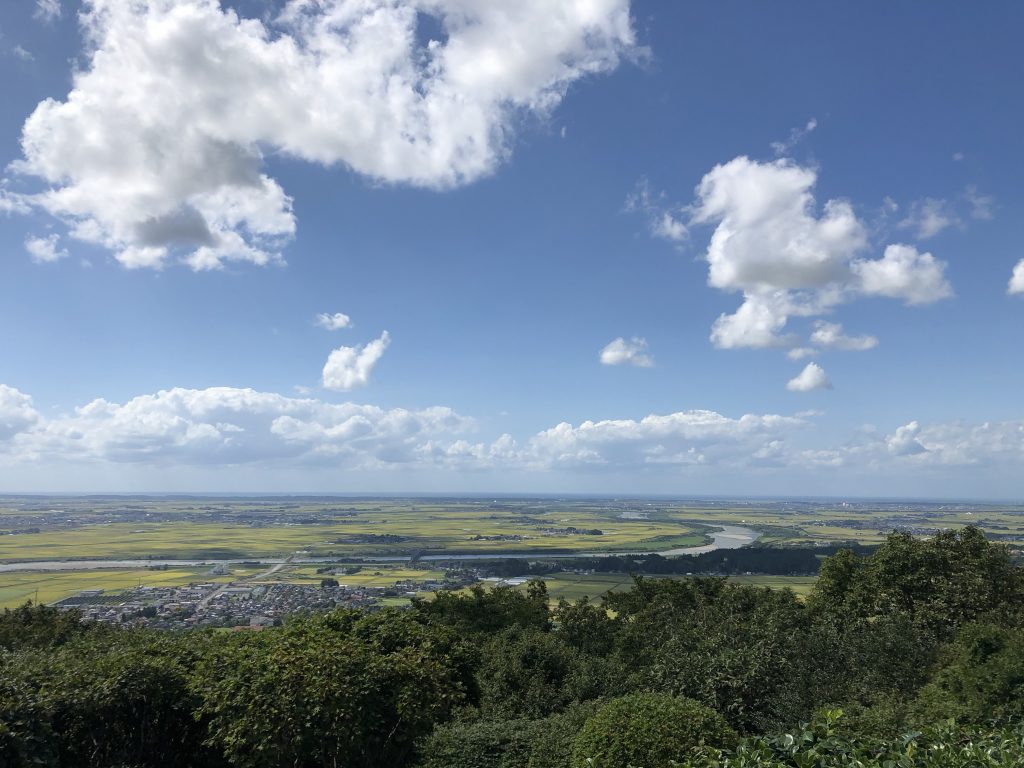
From Kiyokawa, it isn’t that hard to get to Matsuyama in Sakata City. Matsuyama is a former castle town. Here you will findsome of my favourite spots in the Shonai Region. For example, Somokusha Cafe, Sokoji Temple, and excellent views all over the Shonai region from Chokai-no-mori.
Genso no Mori: The Forest of Illusions
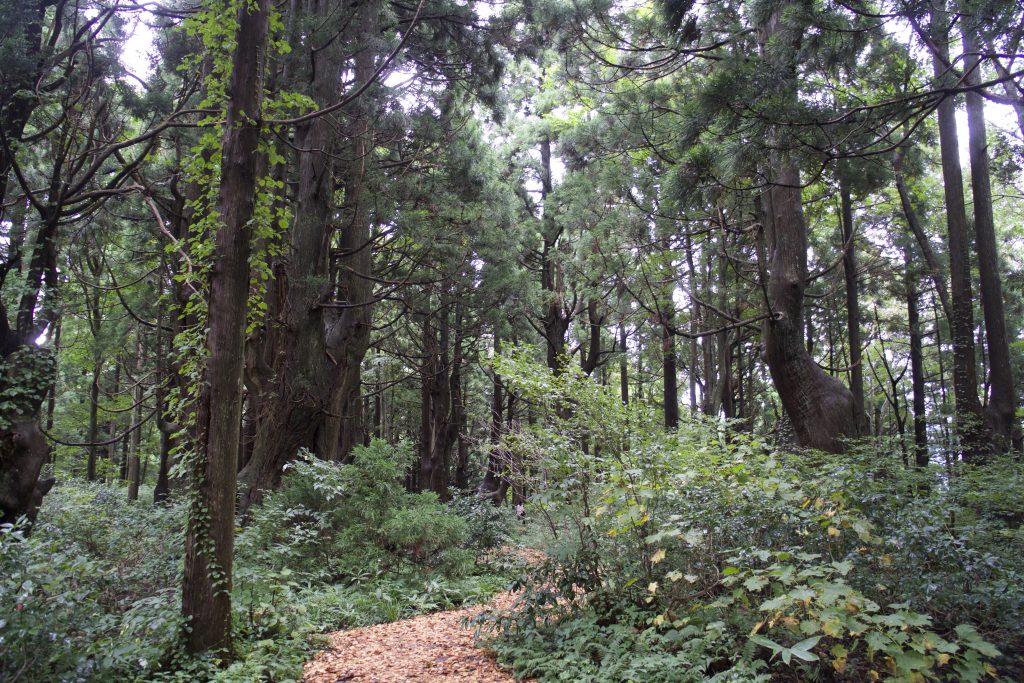
The Forest of Illusions, Genso no Mori, is a nearby forest full of natural cedar trees. Over time, the trees deformed into mangled shapes that give the forest a very special aura. The forest feels like being in the tentacles of an octopus, definitely check it out for yourself!
Want to learn the background to Haguro-san? View the Haguro Story here.