

Tranquil place. Would be a shame for something bad to happen.
Like The Siege of Hasedo Castle?
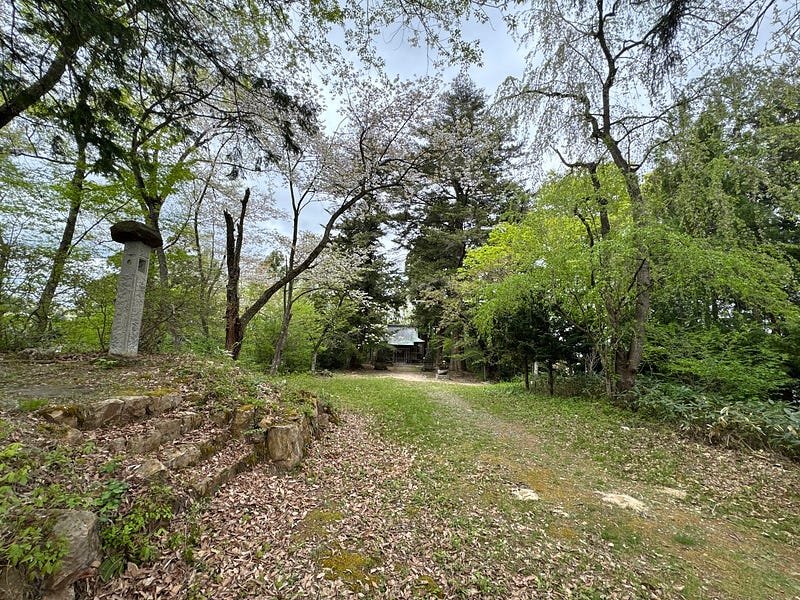
The weeping cherry blossoms, almost-too-perfectly paved path, secluded shrines and throngs of flowers hide a truth that seems inconceivable when you walk the slopes of Shiro-yama; that this peaceful peak was once the scene of utter carnage.
OK. It wasn’t that bad.
There was a relatively small army up against a relatively massive one. There was bloodshed. There was close-combat fighting. There was sword-fighting. There were deaths.
However, there was no Persian God-King. Nor was there an adolescent killing a wolf in the name of ‘education’.
Admittedly, this was no 300.
But for the people involved, it certainly felt like it.
This is a story about how a tiny army in northern Japan fought off an army almost 10 times their size. Not quite 300 proportions, but a valiant effort nonetheless.
And it all started in 1600.
Fifth year of the Keicho era. 8th day of the 9th lunar month, to be precise.
Japan was in the midst of their most decisive civil war; the Battle of Sekigahara fought by forces of Tokugawa Ieyasu (Eastern Army) against a coalition of Ishida Mitsunari (Western Army).
But that’s not all.
This war also had a northern theatre; a lesser-known battle called the Keicho Dewa Kassen named after the era (Keicho) and location (Dewa Province, yes the namesake of The Three Sacred Mountains of Dewa) where it took place.
Read more: The Myth Mystery and Mist of Togami-yama
Fighting for the Western Army, Uesugi Kagekatsu of the Uesugi Clan had built an army of 50,000 to fight against Tokugawa Ieyasu. However, fighting for the Eastern Army, Date Masamune (who was the basis for Darth Vader’s look) and Mogami Yoshiaki laid siege to Shiroishi Castle, and took over control.
Seeing the writing on the wall, Mogami sent a letter to Uesugi to try and convince him to switch sides and become a vassal for Tokugawa. Uesugi refused, and instead set his sights on conquering Dewa, sending general Naoe Kanetsugu and an army of 20,000 to do so.
So, what happened?
Naoe’s army had some early success; attacking and completely decimating Hataya Castle, a branch castle of the Yamagata Domain in Yamanobe Town to the east of Yamagata city.
Just by pure coincidence, can you guess how big the army defending Hataya Castle was?
300.
Plus, they lost. Pretty miserably apparently.
Well done, Naoe.
But it’s still not enough.
Naoe knew that if they could simply conquer the nearby Hasedo Castle, the Mogami Clan would forfeit, they would claim Yamagata Castle, and their campaign for dominance in Dewa would be a success.
Simply Conquer Hasedo Castle
Don’t make Mogami Yoshiaki laugh.
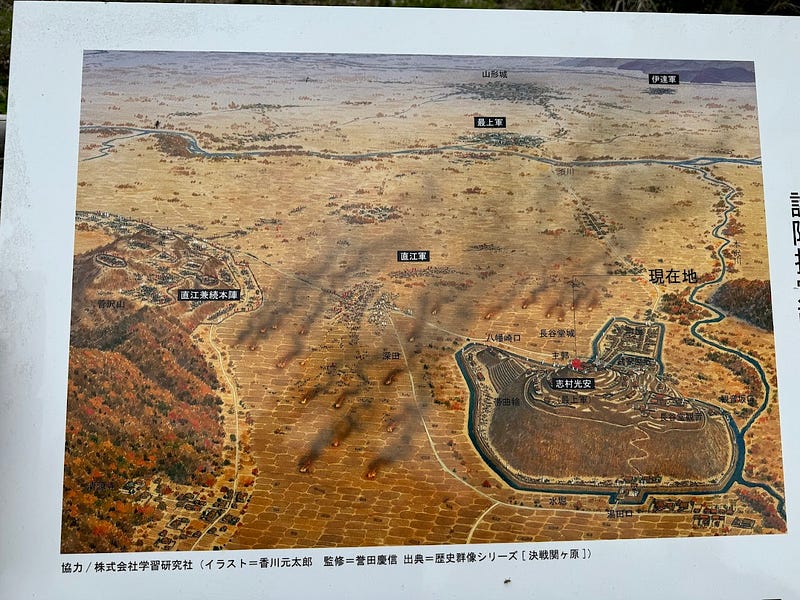
Like Hataya Castle, Hasedo Castle also did not have the numbers, only about 1,200 to fight off the 20,000-strong Uesugi.
However, unlike Hataya Castle, and much like the Spartans, Hasedo Castle did have a secret weapon:
Hasedo Castle.
Hasedo Castle was so well designed it was its own secret weapon. This time around Naoe really had it in for himself.
Hasedo Castle wasn’t massive by castle terms, standing on a mountain a mere 85m above ground level. However, naturally, the castle was designed to keep invaders out.
And keep invaders out it did.
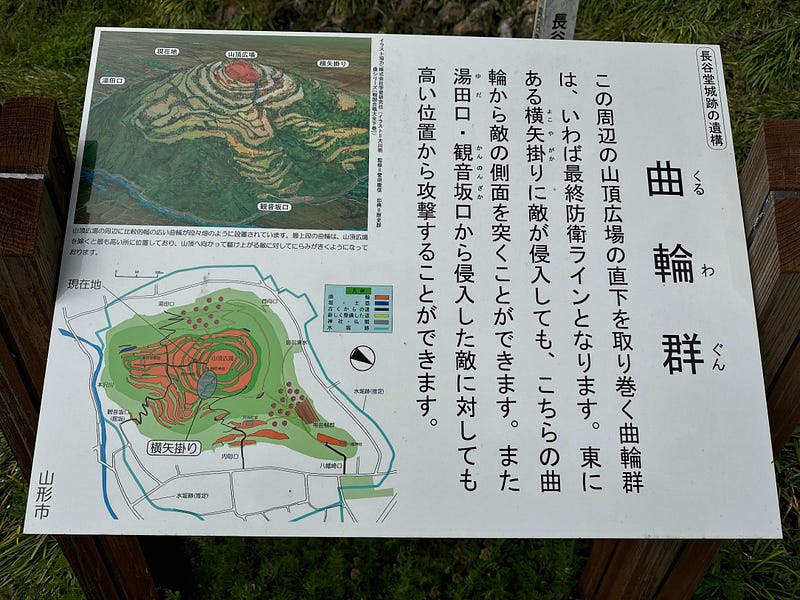
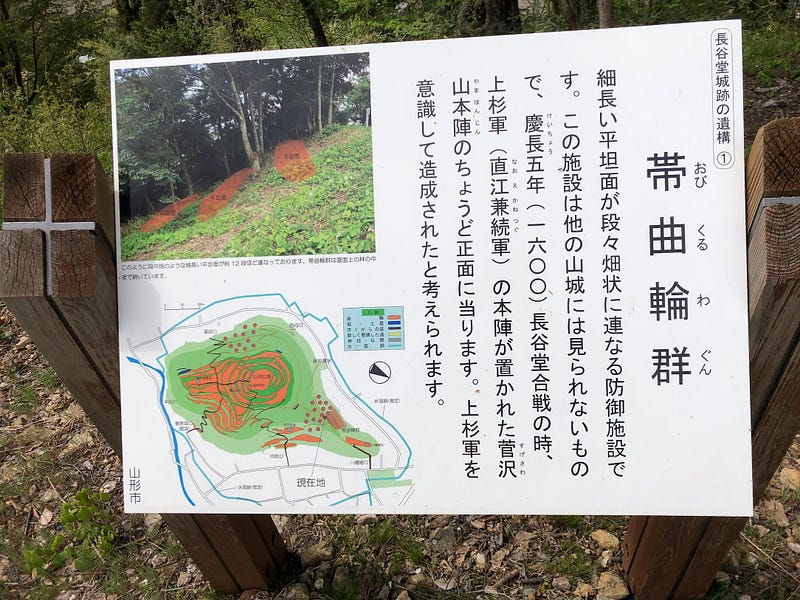
Called Obikuruwa Gun, ‘groups of belted walls’, thin strips of flat land faced the direction Naoe Kanetsugu’s army came from. These walls were believed to have been built specifically for this battle, in fact. Plus, walls called Kuruwa Gun encircled the summit where the main keep was, the last line of defense.
What was smart about these walls was that, if enemies were to attack from the east, the castle could attack from the side. If enemies came up from the Yuda or Kan’nonzaka entrances to the south-west and east, the castle could attack from directly above.
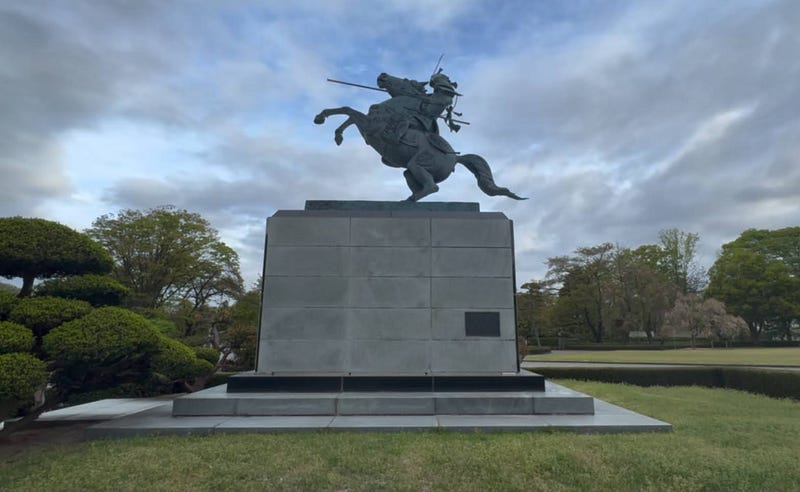
Then, the Motosawa-gawa River provided a natural moat to the south. Both a moat and earthen walls stretched their way west to north, and back down to the east. Plus, walls surrounding the whole town provided extra protection as well.
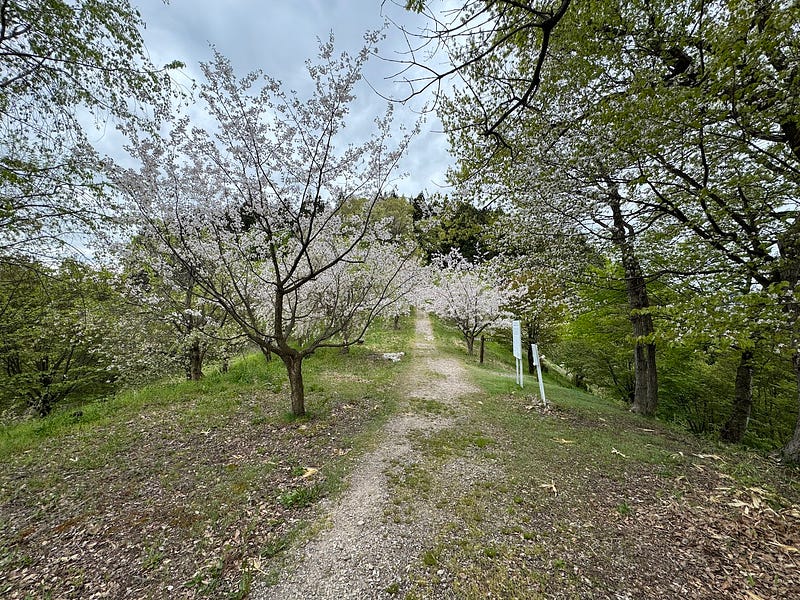
Last, it’s obvious when you walk the trails of Shiro-yama, but the path is also very much not straight, winding its way up the mountain like a threaded needle. Needless to say, enemies would have a very hard time penetrating this castle.
Enemies like Naoe Kanetsugu and the Uesugi Forces?
Exactly.
So, what actually went down?
- On the 13th of 9th month, Naoe Kanetsugu and the Uesugi forces conquer the aforementioned Hataya Castle, some 10km north-east of Hasedo Castle. The next day, they moved to Sugesawa-yama, 1km north-west of Hasedo Castle, near Togami-yama.
- On the 15th, Naoe’s forces surround Hasedo Castle, but reinforcements led by Mogami Yoshiaki attack Naoe’s forces leaving 2–300 dead.
- On the night of the 16th, forces from Hasedo Castle attack Kasuga Uemon’s army, an army supporting Naoe.
- On the 17th, there is yet another setback for Naoe; word arrives of the Mogami forces taking control of nearby Kaminoyama Castle.
- On the 18th, Kanetsugu’s forces mount an all-out offensive. Hasedo castle fights this off with arrows and gunfire.
- On the 22nd, reinforcements from The Date Clan in Sendai arrive in Yamagata.
- On the 29th the armies fight up close around Hasedo Castle. In a final blow for Naoe, news of Tokugawa’s victory at Sekigahara arrives.
- On the 1st of the 10th month, Naoe’s forces retreat back to the Yonezawa Domain with Mogami and Date giving chase. Here, things really heat up, and Mogami Yoshiaki is believed to have been hit on the helmet with a bullet at this time.
Then, a few centuries later, Hasedo Castle was converted into a flower wonderland for locals and a yamabushi from New Zealand to enjoy, oblivious to the bloodshed that happened right in this very location.
Visiting Shiro-yama
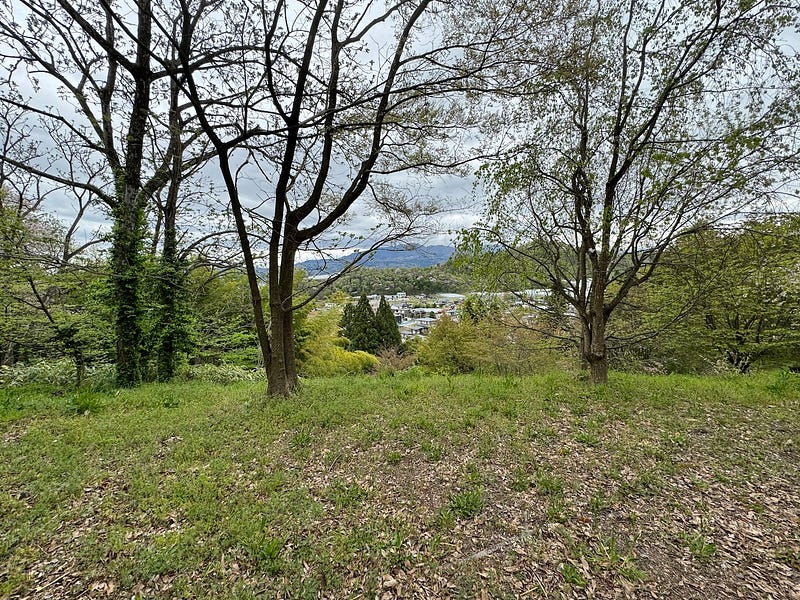
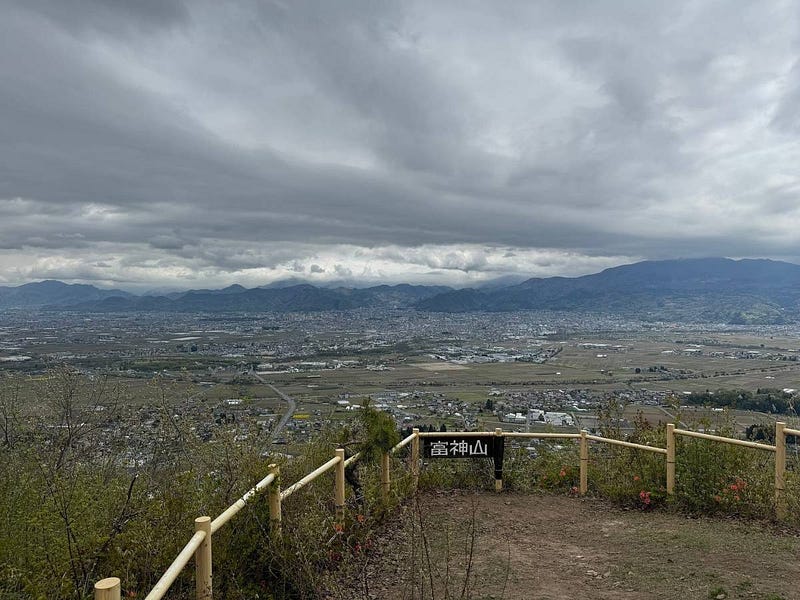
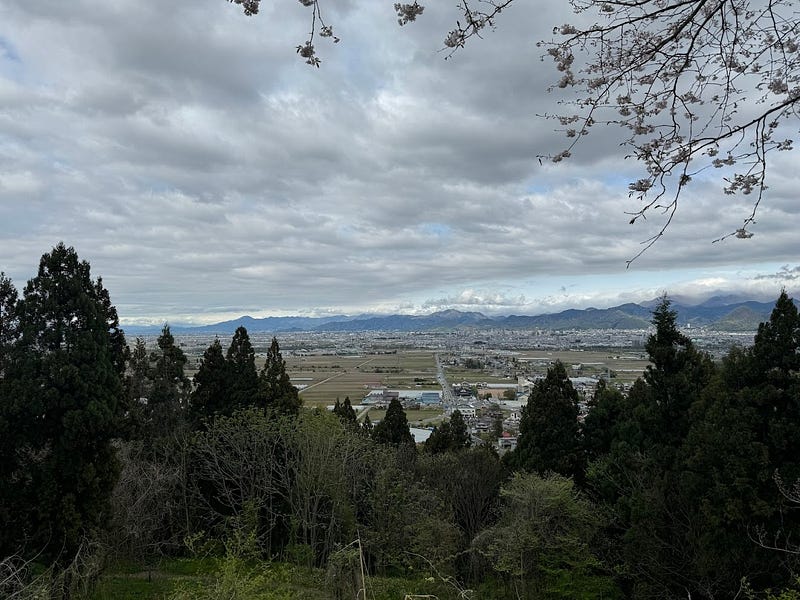
You can find the remains of the castle all over Shiro-yama, such as the moat, dirt enclosures, and other defensive artifacts. The summit of Shiro-yama has a clearing with stone monuments and a gazebo. From here, you can see Sugesawa-yama, the mountain Naoe Kanetsugu used as his headquarters, central Yamagata City, and Kajo Koen, the remains of Yamagata Castle. Locals have planted and a lot of vegetation, and a lot occurs naturally. Their valiant efforts over the years created a wonderful mountain to explore.
Osusume Shuyu Trail (recommended loop trail, 20 minutes one-way)
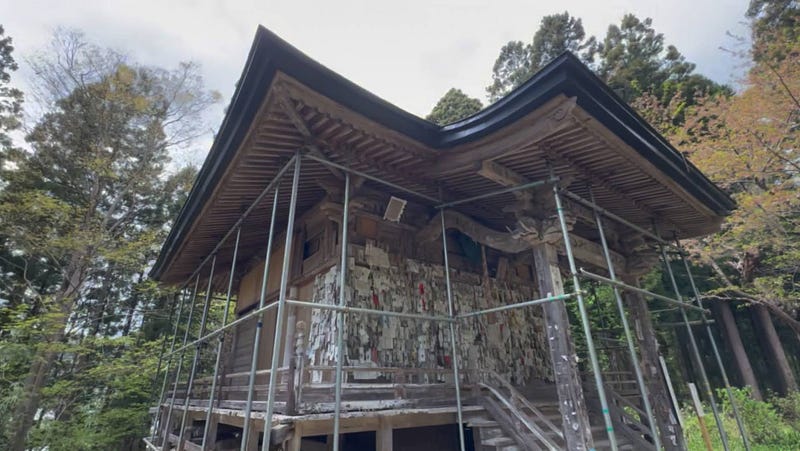
Start at the Hachiman-Saki trailhead at the northern end of the Hasedojo-ato Koen (Hasedojo castle remains park) off route 348. There is a car park and public toilets in the clearing on the other side of the road. Once past Hachiman Jinja (shrine), go up the dirt foundations and around the park grounds.
Each junction has a sign, so you shouldn’t get lost. There are plaques at the moat and foundations where you can learn about the remains and construction methods of mountain castles. Also, stairs line the steep parts, so they aren’t too hard to climb. A few shrines dot the mountain, and near the main hall there is an old shidarezakura (weeping cherry blossom) and Rhododendron degronianum flowers. I definitely recommend checking out the Hasedo Kannon hall
On the western slop lies a field of spider lilies, so you can enjoy the flora year-round.
Nearby Locations Worth Checking Out
The Myth, Mystery, and Mist of Togami-yama

Togami-yama (富神山とがみやま(とかみやま)) is a 402m (1318 ft.) peak in the Murayama region of Yamagata prefecture open year-round. Togami-yama is a level 1 in terms of physical demand, which means it is easy to hike, has a A technical grade, which means it requires little expertise, and you want to allow at least 40 minutes one-way for a hike.
Chitose-yama: Home to the Legend of Princess Akoya
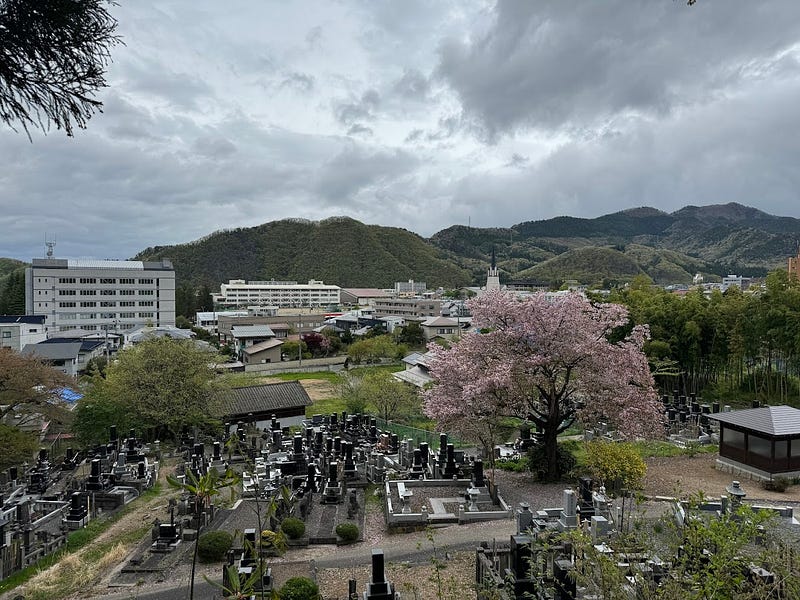
Chitose-yama ‘Forever Mountain’ on the other side of Yamagata City, a mountain with an incredible legend.
The Asahi Renpo (Asahi Alps)
The mountains on the Asahi Renpo also on the 100 Famous Mountains of Yamagata are (from north to south) Shojiga-take, Ito-dake, Tengusumotori-yama, Torihara-yama, Koasahi-dake, Osasahi-dake, and Okitama Ha-yama.