
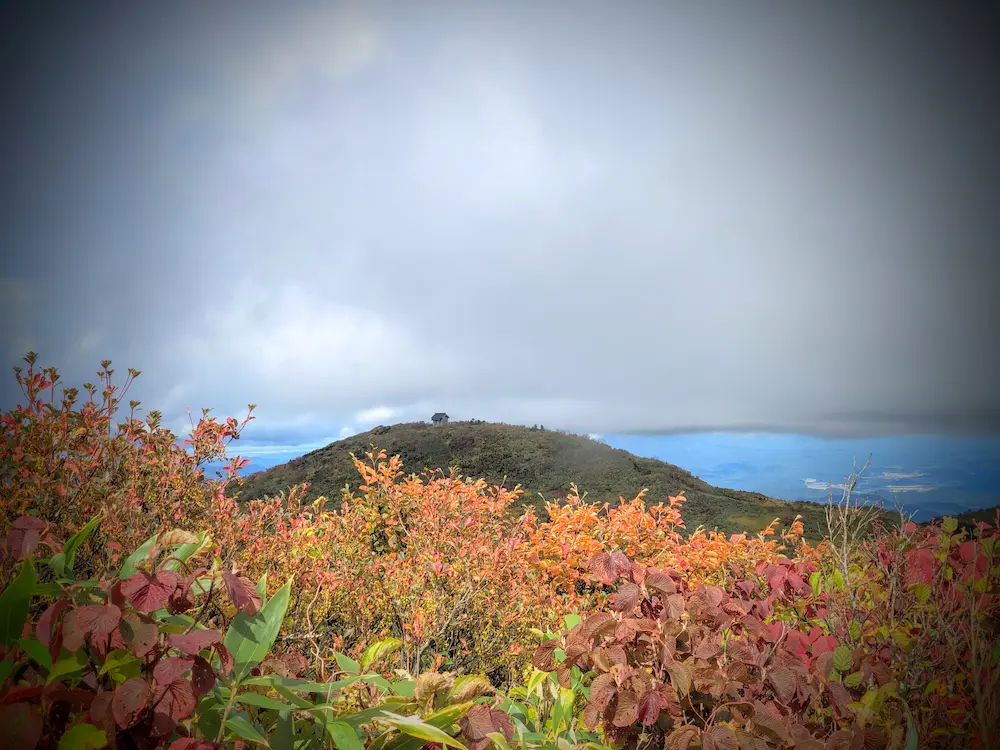
The Japanese affinity for mountains stretches much further than their (valid, mind you) infatuation with Fuji-san. I mean, just look at the sheer number of words for mountain in Japanese:
- Yama (山, e.g. Fuji-yama), is probably the most well-known term for mountain in Japanese. Yama can also be read as san (e.g. Haguro-san), and sometimes voiced as zan, (e.g. Chokai-zan).
- Then there are terms like mine (峰, also 峯 and 嶺, e.g. Kumanonaga-mine), for peak, also read ho, and sometimes fu orpu.
- Take (嶽, or its simplified version 岳, e.g. Shojiga-take), voiced as dake (e.g. Atsumi-dake), or also read as Gaku, means ‘a tall and precipitous mountain’.
- Plus, I’ve recently discovered many cases of mori (森), usually meaning forest, also meaning mountain, e.g. Futatsu-mori or Kagikake-mori).
- Now, here I’m getting a bit picky, but there is also ten, (巓 e.g. Higashidai-ten), which refers specifically to a summit, rather than the mountain as a whole.
But wait, there’s more!
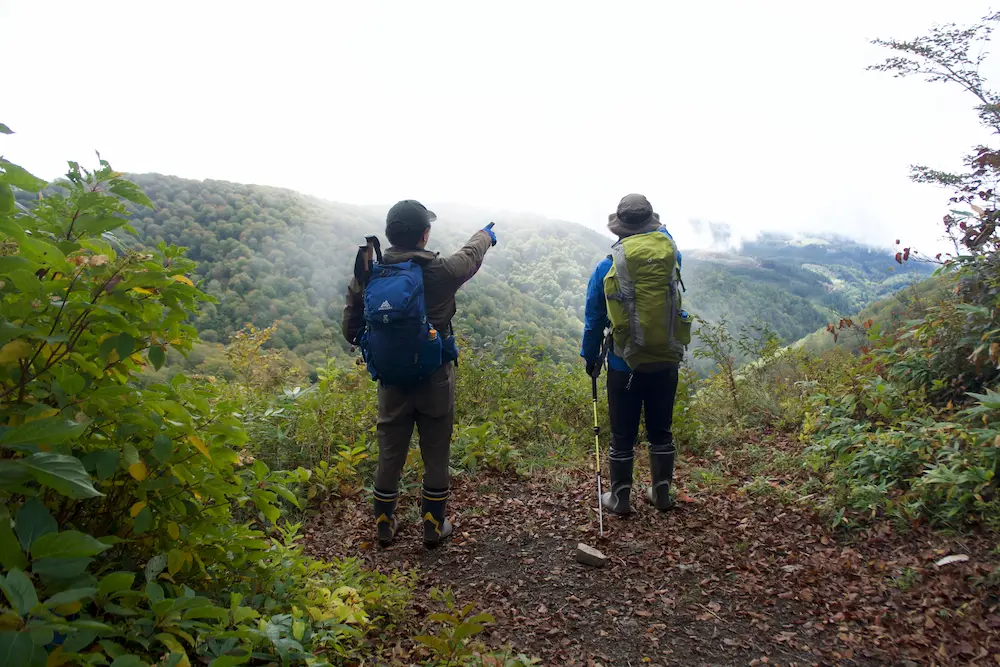
Better still, Japanese even has different terms for mountains dependent entirely on their proximity to civilisation. That these terms exist is a clear remnant of a time when mountains in Japan were much more than objects of adoration, when mountains in Japan provided sustenance for the population:
- Mountains alongside villages are Satoyama (里山), village mountains.
- Okuyama (奥山), mountains in the depths (not to be confused with ‘deep mountains’), describe mountains far from human settlements.
- In addition, mountains simply far off in the distance are known as Miyama or Shinzan (深山), deep mountains (not to be confused with ‘mountains in the depths’).
- Then, we also have Reizan(霊山), sacred or holy mountains. Reizan are the mountains our souls are said to ascend when we pass away, and are where us yamabushi (mountain ascetics) train. Reizan include locations such as Dewa Sanzan, Yoshino-yama, or Japan’s “Three Holy Mountains (三霊山, Sanreizan)”; Fuji-san, Tate-yama, and Haku-san.
But wait, there’s even more! The Most Common Name for a Mountain in Japan
To make things even more interesting, there’s one name for a mountain that appears a lot more than any other in Japan. It’s a name that proves Japan’s relationship with mountains is unlike anywhere else, and it’s a name that in most likelihood you’ve never heard of:
Ha-yama.
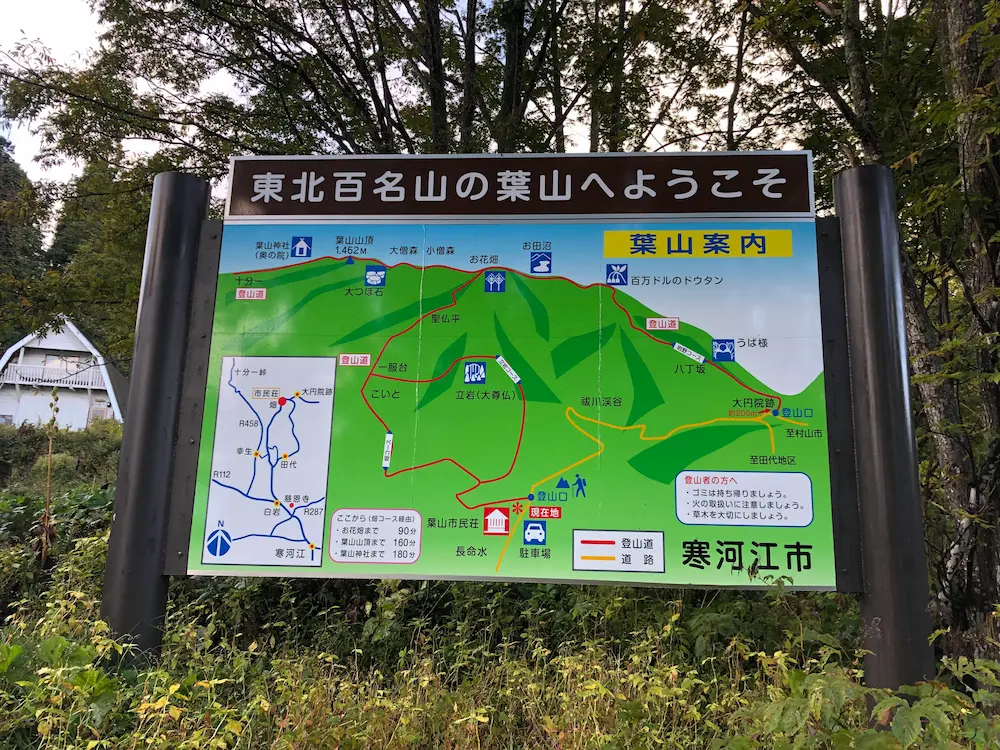
Ha-yama are so common, in fact, Yamagata Prefecture alone has at least four; Murayama Ha-yama, Okitama Ha-yama, Ha-yama in Kaminoyama City, and Ha-yama in Yonezawa. Fukushima Prefecture has at least two, Ha-yama in Koriyama, and Ha-yama in Date City. There is a Ha-yama in Kesennuma, Miyagi Prefecture, and of course Iwate Prefecture gets in on the action too.
But why so many?

The name Ha-yama should give us a hint as to why it is so common, right?
Well, yes and no.
Firstly, there are so many ways for writing Ha-yama (葉山, 羽山, 巴山, 端山, 麓山), it’s hard to know where to start.
But the thing is, although Ha-yama often have different Kanji characters, these readings are all variations of the same character, 端, Haji, ‘edge’.
In the same vain, Ha-yama all have one characteristic that links them; They are either located on the edge of Reizan, sacred or holy mountains, or are at least nearby.
In other words, Ha-yama are all ‘edge’ mountains. Ha-yama is a category of mountains in and of itself, while also being a name. Hence, the frequency.
What makes Ha-yama ‘edge mountains’ so special?
Hakuban Jinja (shrine) stands aloft with the summit of Murayama Ha-yama to the left
As you’re aware, Japan is a country with a long history and culture of ancestor worship. The Japanese do a good job of remembering that without the ancestors, none of us would be here.
Take Obon (Bon festival), for example.
The custom of Obon is a time when Japanese people welcome the spirits of the ancestors back into their homes and villages.
Back to from where, though?
Why, the mountains, of course.

During Obon, it’s not uncommon to see Mukaebi (“welcoming fire”) or Okuribi (“sending fire”) outside houses, or even a giant 大 (big) character burning on the hillside. These fires are lit to guide the ancestral spirits down from the mountains back to the homes of their descendants.
Like the Mukaebi and Okuribi, fires, at Obon, it’s common to see horses made from cucumbers, and cows made from eggplants. These symbolise the vessels the ancestral spirits use to come and go from the descendants’ homes, respectively.
Horses are obviously very fast, so the spirits ride horses to get back to their homes as soon as possible. And could you imagine riding a cow (like Isabella Bird did) to get up a mountain? Cows purposely slow down the return journey, meaning we get to enjoy more time in the presence of the ancestors, before they return to their abode in the mountains.
So, what’s the connection to Ha-yama?
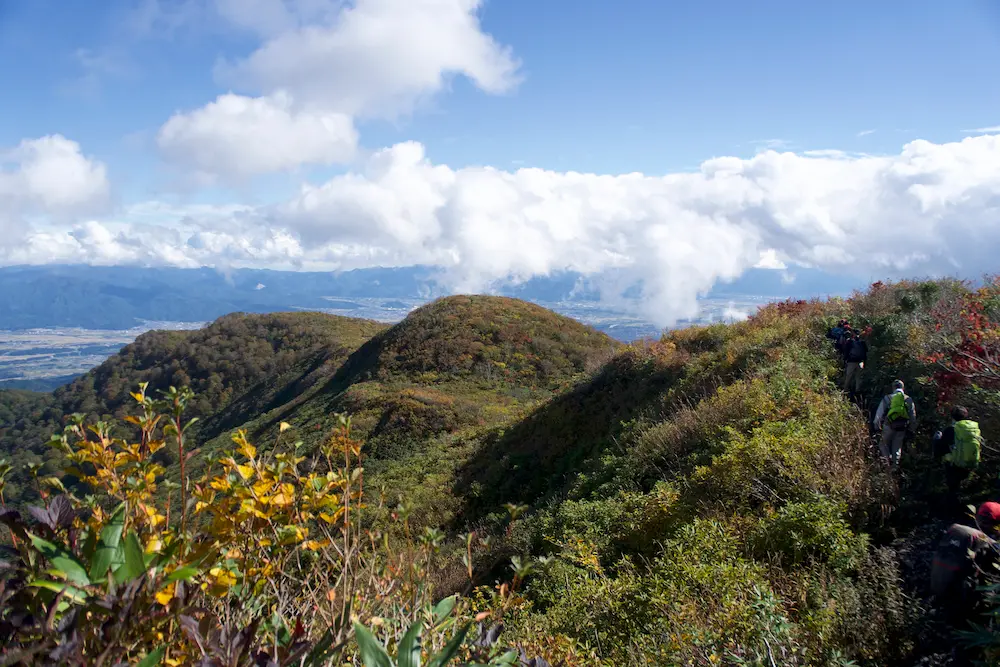
Well, when we pass away, it’s believed our souls do their own form of spiritual training on the mountains (see my article on Gassan for more). Under the guidance of 13 Buddha, our souls first climb the low-lying Satoyama (village mountains) nearby. Our souls then venture up to the mid-height mountains, a job Ha-yama are perfectly poised for.
Eventually, after 33 years, it’s believed our souls make their way to the summit of the taller Reizan (holy mountains). Here our souls turn into kami (deities) that protect all of us down below.
And here’s the important part
There is a deep-seated belief in Japan that ancestral souls that are prayed to turn into kami that bring good fortune. At the same time, ancestral souls that aren’t prayed to turn into kami that bring bad fortune. This is exactly why we yamabushi pray for the souls of the ancestors lost to natural disasters, those without families left to pray for them like the victims of The Great East Japan Earthquake.
Obon works as an annual reminder for us to pay our respects to the souls of the deceased. On the other hand, Ha-yama are a constant reminder.
Therefore, Ha-yama play a critical role in not only reminding us of the importance of praying to the ancestors while also playing a critical role in the afterlife. Ha-yama are therefore not the tallest mountains around, which is probably why you haven’t heard of them, nor are they the shortest, meaning there are quite a few.
But they are certainly one of the most important.
So, what’s it like on Ha-yama? Let’s find out, with my local Ha-yama, Murayama Ha-yama, right next to Gassan of the Dewa Sanzan.
Murayama Ha-yama: A Former Dewa Sanzan Mountain?
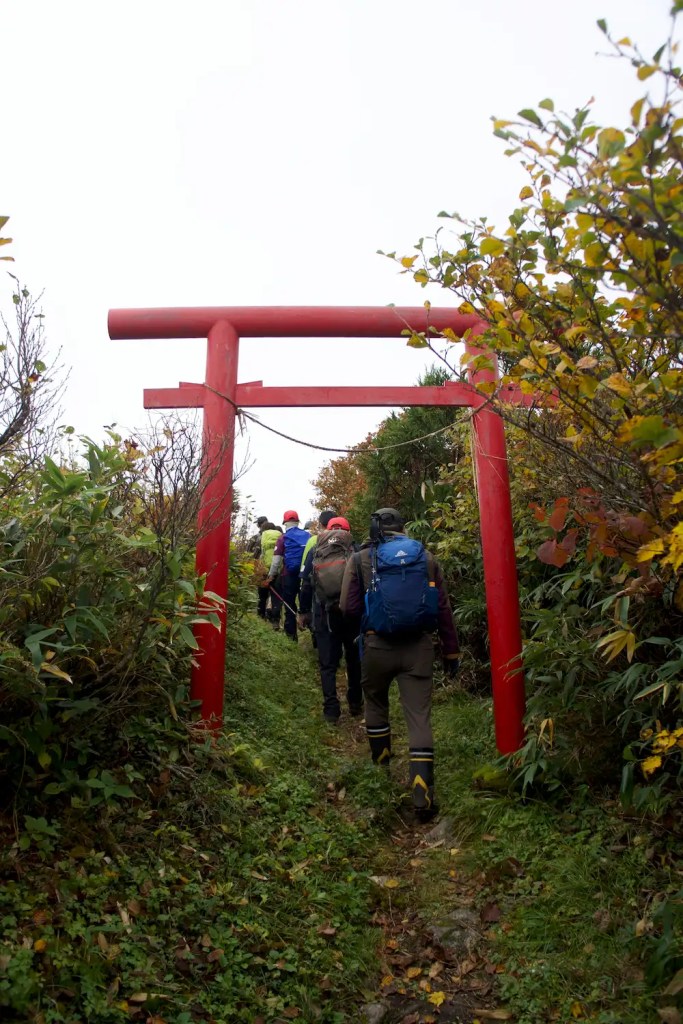
Murayama Ha-yama (not to be confused with Okitama Ha-yama) lies right next to the Dewa Sanzan, the three sacred mountains of Dewa in Yamagata prefecture. An important part of the journey our souls take before reaching the summit of the looming Gassan, Murayama Ha-yama also has an interesting backstory in and of itself.
In truth, Murayama Ha-yama had been on my bucket list even before I started the 100 Famous Mountains of Yamagata project. Although these days Murayama Ha-yama is just a regular ‘edge mountain’, in the past it was a Dewa Sanzan peak.
The Shugendo History of Murayama Ha-yama

With a Shugendo history dating back to the Nara Period (710–784), along with Haguro-san and Gassan, up until the Edo perido (1603-1868), Murayama Ha-yama formed the three Dewa Sanzan peaks. At that time, Yudono-san was the Oku-no-in (inner sanctuary), rather than one of the three mountains itself.
Traditionally, worshippers would climb Haguro-san, Murayama Ha-yama, and Gassan. Then, and only then would they go on to Yudono-san, and emerge feeling as if they have received a new life (so-called ‘rebirth’). With all that in mind, allow me to share with you my experience climbing Murayama Ha-yama, the ‘edge mountain’ of the Dewa Sanzan.