
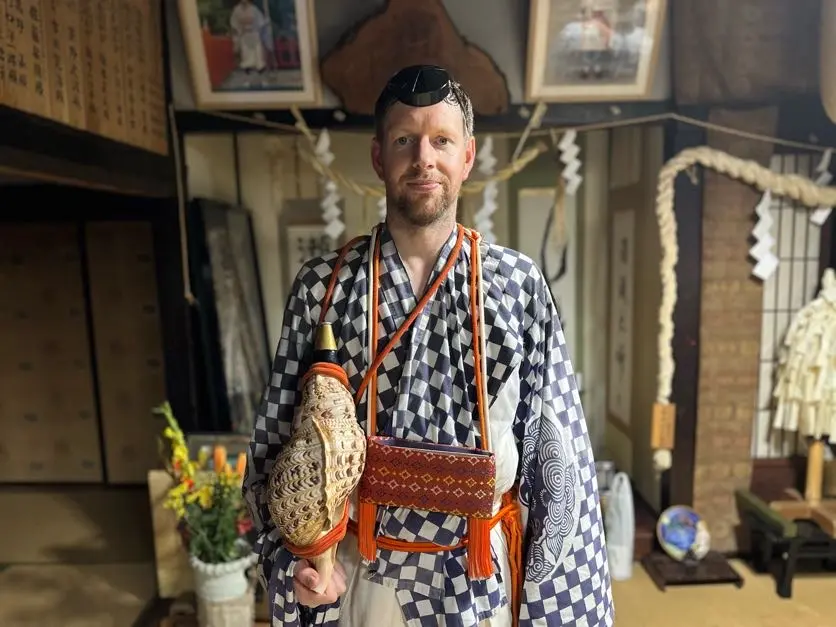
I Love Being a Yamabushi
I love being a Yamabushi. I love being asked about Yamabushi. It is such an integral part of my life now, I’m extremely happy any time I get the chance to share any of the things I’ve learned out on the mountains.
But if there’s one thing I want people to know about yamabushi, it’s this:
Knowledge has nothing on experience.
As with many aspects of Japan and Japanese culture, Yamabushi is a deep deep rabbit hole. Learn one thing, and to your dismay you only discover a whole other world of things you need to learn just so you can even begin to understand that first thing you ‘learned’.
I’m only scratching the surface of Yamabushi, and I’ve been a Yamabushi for more than half a decade now!
This isn’t limited to Yamabushi.
It is, however, why I believe Shugendo, the belief we yamabushi follow, is right on the money.
When you get thrown into the Yamabushi world, however intriguing, you don’t start with a lecture on the history of the place. You don’t start by memorising some mantras or doing some calligraphy or some other ‘zen’ thing.
No, you start by doing.
You start by being thrown right into the mix. It’s you, sitting in the main hall of a shrine or temple, bowing deeply as the Taiko drums beat loudly, and the first ritual begins.
As it should be.
All this background knowledge is interesting and all, I certainly enjoy learning about it, but it all has nothing on actually getting out there and doing.
That’s why Master Hoshino always says ‘how you sense is the answer’. It’s not how other people tell you it is, nor is it how the history or background of the place would lead you to believe.
It is what it is, and it is what you sense it is.
That’s the answer
That’s what you’re looking for.
Everything I share with you is based on this premise. I know that whatever I share with you will be taken differently by each and every one of you,
And that’s how it should be.
There are billions of people on this earth.
Billions.
Each of us has a different way of sensing, and a different understanding of the world.
If there’s any parting wisdom I can give you from all of this, it’s this: You need to get out there on your own so that you have the chance to even begin to gain an understanding. You need to get out there in the world and explore it with your own two eyes. You need to gain a sense for the world on your own.
You need to sense for yourself
Only then will you even begin to scratch the surface.