
Yudono-san isn’t a mountain. Well, it is. There is a Yudono-san, but when we think of Yudono-san, we aren’t thinking of a mountain. When we think of Yudono-san, we think of Yudono-san Jinja or Shrine. Yudono-san is Jinja dedicated to a sacred object of worship. This object is so sacred only those who have seen it with their own eyes know its true identity. Sound mysterious?
It should.
For the past couple of millennia the identity of Yudono-san’s object of worship has purposely been kept a secret. First by the Shingon Buddhist monks who oversaw it, and then by Dewa Sanzan Shrine who forcibly took control during the Meiji Restoration from 1868 onwards. However, this is but a small part of the alluring nature of Yudono-san, the final stop on the Dewa Sanzan Journey of Rebirth.
Yudono-san: The Dewa Sanzan’s Okunoin
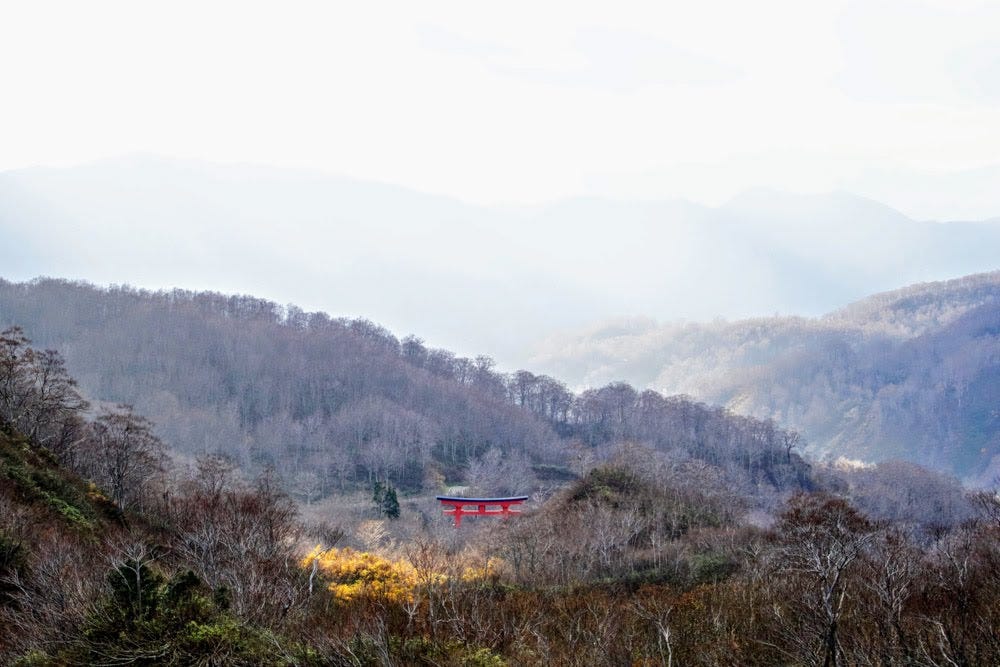
Yudono-san is known as the Dewa Sanzan’s Okunoin. Okunoin are traditionally part of a Buddhist temple complex at the back of the main hall where a hidden buddha is enshrined. In Yudono-san’s case, the object of worship is so large that there is no hall, nor was there ever one. Now a Shinto entity, the Okunoin meaning is largely lost on the Dewa Sanzan. However, I am assuming it traditionally referred to the object of worship.
From what I’ve read, in the past travellers had to climb each of the Dewa Sanzan, the three mountains of Dewa (Haguro-san, Gassan, Murayama Hayama-san and at some point in time Chokai-san), before being able to go to the Okunoin and the object of worship on Yudono-san.
Yudono-san’s Sacred Object of Worship
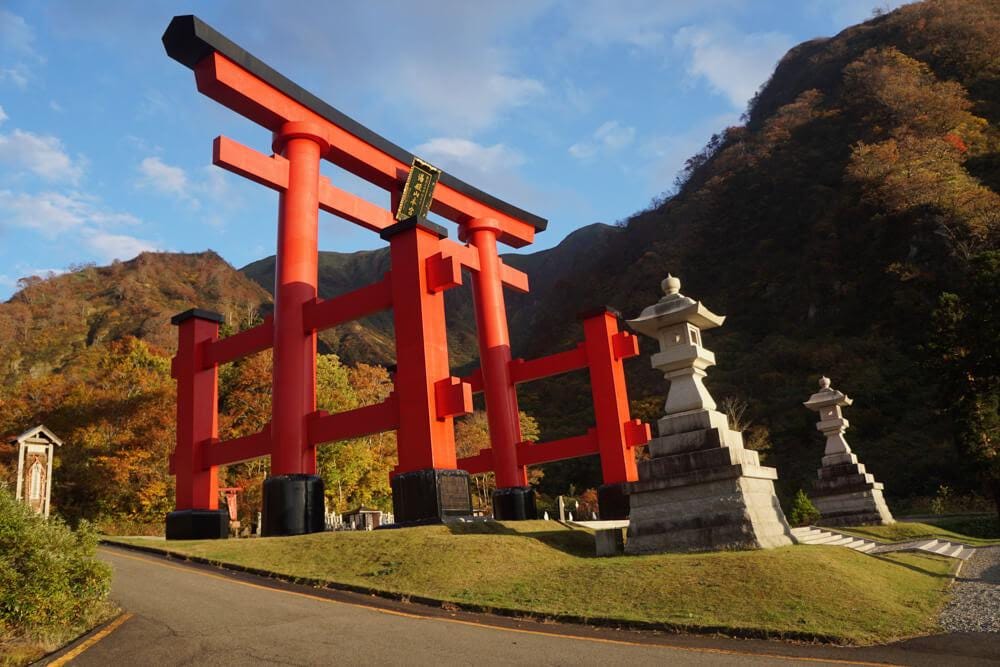
The sacred object of worship at Yudono-san Jinja (shrine) represents the physical location of our rebirth. Since ancient times, the mysteriousness of this object has been likened to childbirth. Taken aback by its presence, visitors would often pray here for a bumper crop and prosperity of descendants.
My bet is there were quite a few folks who were overcome by its presence. So much so, they couldn’t wait to share their experience with those back home. However, as we aren’t allowed to discuss the object’s true identity, it just made people more and more curious. This led droves of people to venture to Yudono-san in the Muromachi (1336-1573) and Edo Periods (1603–1868). I have nothing to back this up, but I have heard in this heyday, Yudono-san attracted over 1 million visitors annually.
The Ancient Rokujurigoe Kaido Route
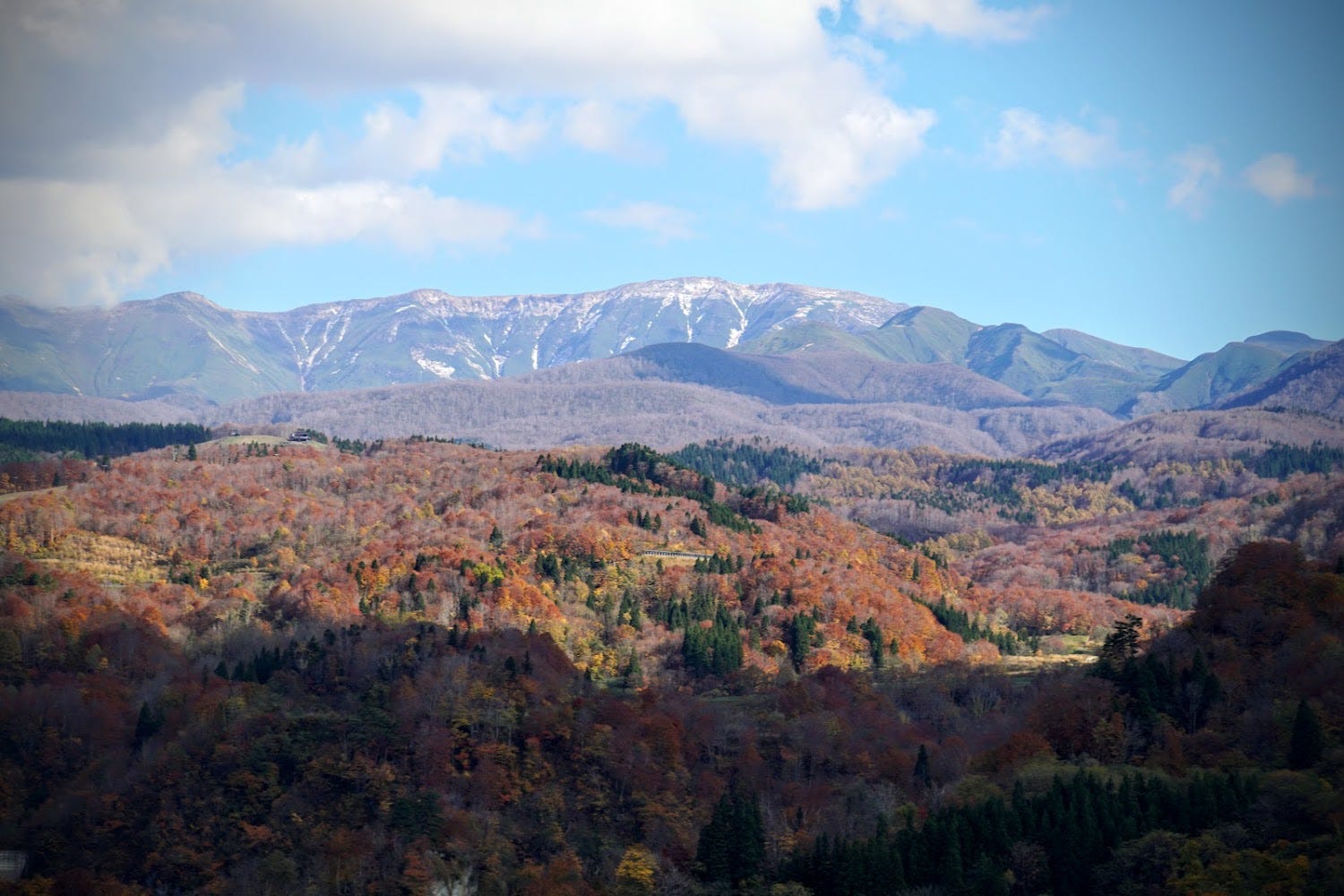
In the past, travel to Yudono-san was largely made possible thanks to the Rokujurigoe Kaido. The Rokujurigoe Kaido is an ancient trail dating back at least 1200 years. The trail cuts across the centre of Yamagata Prefecture connecting inland Yamagata with the Shonai region.
Rokujurigoe Kaido literally means ‘route of over 60 Ri’, or Li. Ri or Li are an ancient Chinese unit of measurement now comprising completely different distances in China, Korea, and Japan. In Japan, a Ri is 3.9km, which quick maths means the Rokujurigoe Kaido is longer than 234km. However, the Rokujurigoe Kaido is nowhere near that length. The distance between Yamagata City in inland Yamagata Prefecture and Tsuruoka City on the coast is just less than 100km. It’s possible the route was named at a time when the length of a Ri was shorter. Also, perhaps they weren’t talking about the whole length of the trail, only a few specific sections.
Journeys around Japan in the Middle Ages
Either way, the Rokujurigoe Kaido was an extremely popular route between the 14th and 19th centuries. This was when mountain worship was at its peak in Japan. At those times, inter-regional travel in Japan was limited to the elites, but there was an exception for traveling for spiritual purposes.
During this time many around Japan made journeys to Mt. Fuji and Ise Grand Shrine in Mie Prefecture. For the people of the Tohoku and Kanto regions of east Japan, particularly popular was the sacred Dewa Sanzan that utilised the Rokujurigoe Kaido. At that time the main users of the Rokujurigoe Kaido were those visiting Yudono-san. However, the trail was also a very popular trade route. People from the Shonai region carried fish and candles. Those from inland Yamagata brought safflower, silk, beans, and tobacco among other things.
Bandits!
Before long the Rokujurigoe Kaido became popular amongst bandits as well. So feudal lord Mogami Yoshiaki established a checkpoint in the nearby town of Sunagoseki. Located halfway between the Sunagoseki checkpoint and Yudono-san, Gassan Shizu Onsen was perfectly poised to take advantage of the influx of guests mountain worship brought. The town soon began to flourish as a lodging town, providing accommodation, meals, and a place to relax and rewind. Shida-san, the proprietor of Gassan Tsutaya Ryokan (traditional Japanese Inn) in Shizu Onsen, isn’t exactly sure when, but Gassan Tsutaya got its start around this time, along with many of the other lodges in the region.
While it is still possible to walk the Rokujurigoe Kaido, these days most people drive Route 112, The Gassan Road. This is the very same road that turns into a frozen wonderland when the temperature drops. Interestingly, the Shonai region being blocked off for almost half of the year was the catalyst for an important plot point in The Last Samurai starring Tom Cruise and Ken Watanabe, a story based on the area.
Yudono-san Jinja (Shrine) Season
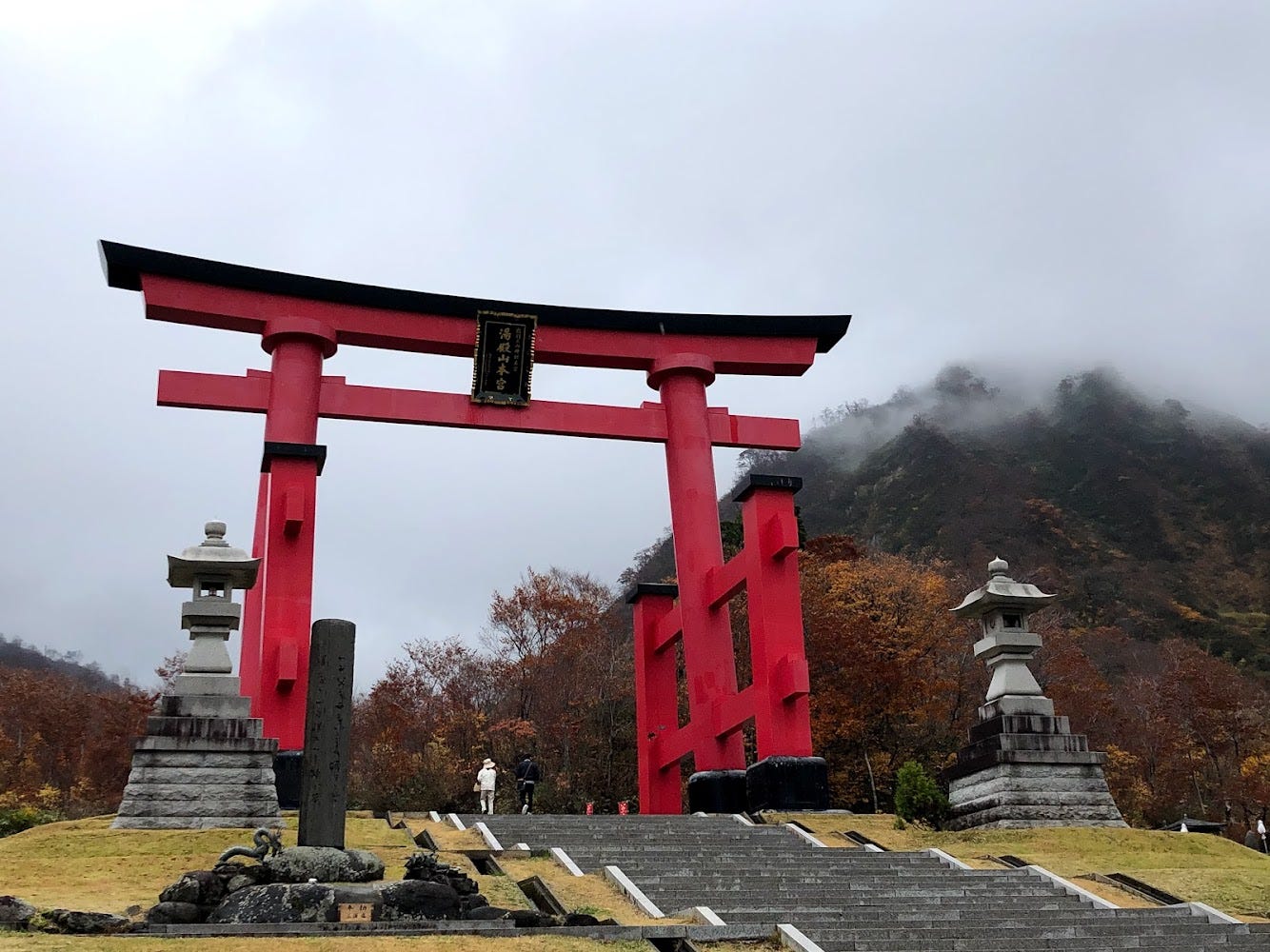
Yudono-san shrine is open when enough snow has melted. This is usually Golden Week in late April to early May, up until the first week of November. The shrine is located off Route 112. You can walk there on the Rokujurigoe Kaido.
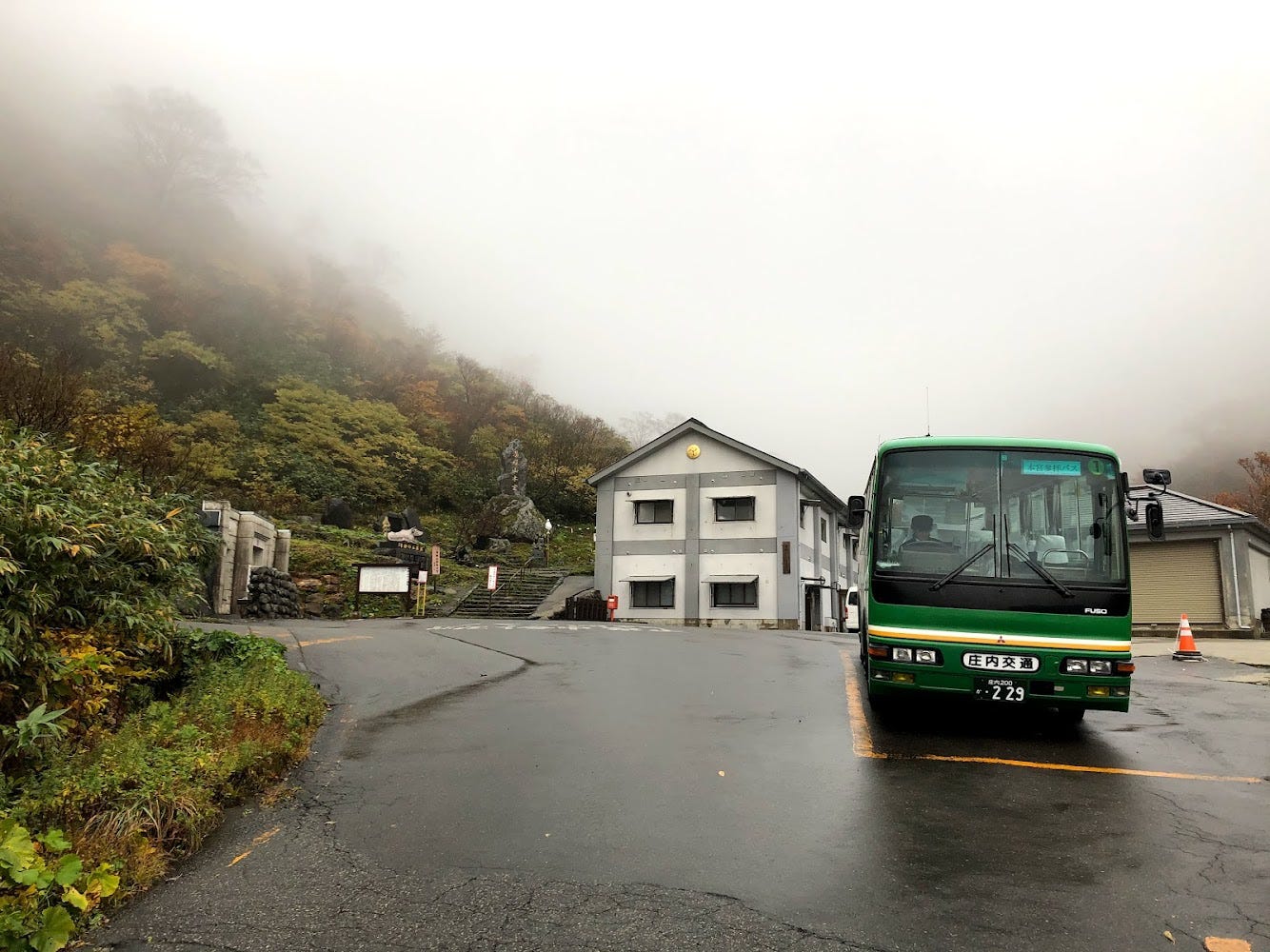
The toll road to Yudono-san Shrine costs ¥400. This road takes you to a carpark adjacent the shrine gates and the main office. Here you can stay the night, and there are a few restaurants and souvenir shops as well. From this area, busses can take you to the main shrine where the object of worship lies. The bus is ¥400 return, or ¥300 one-way.
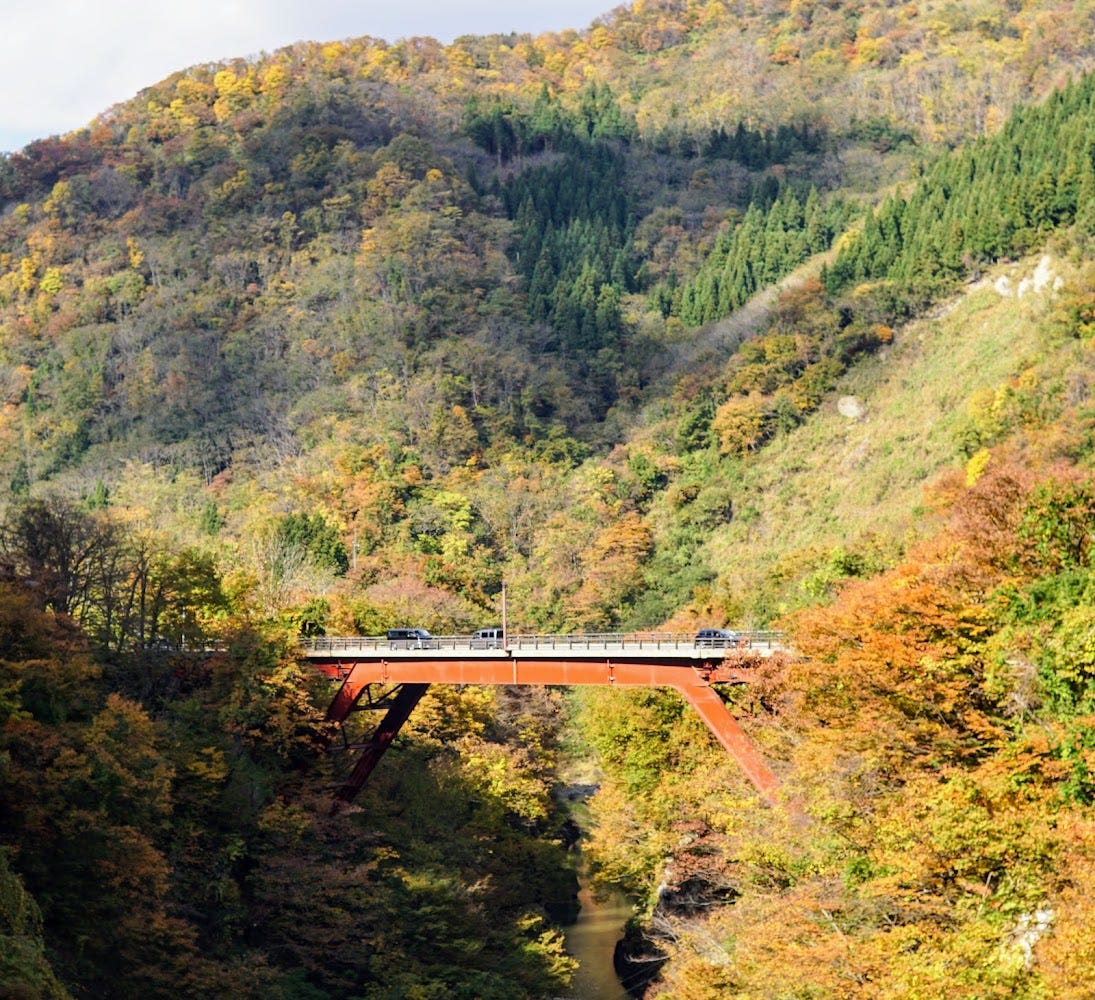
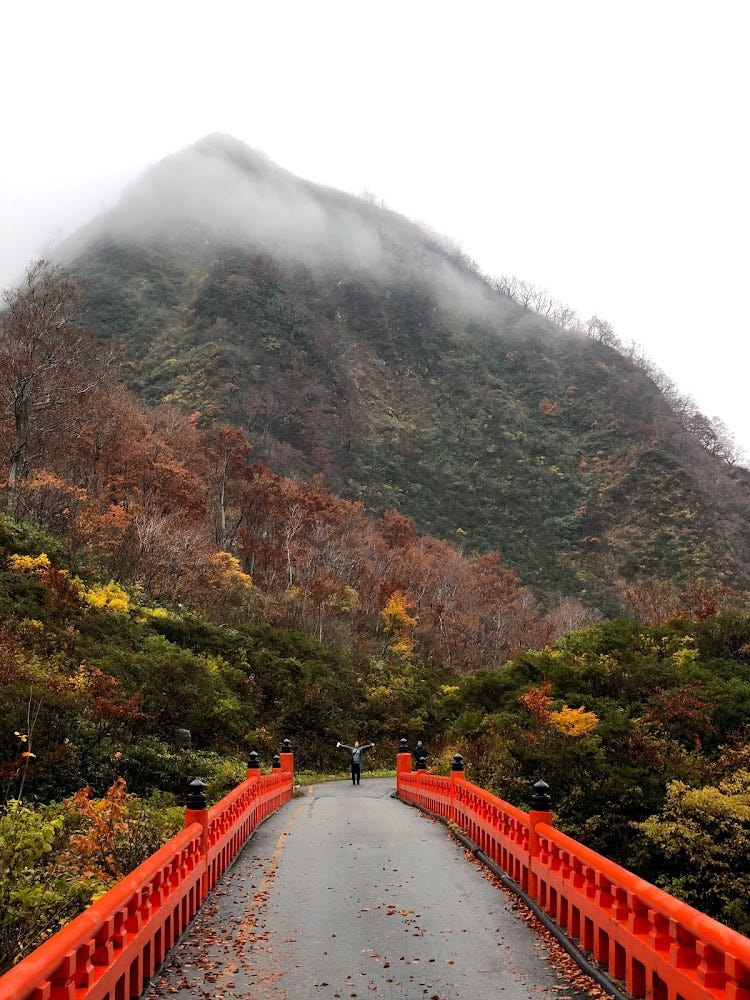
If you can, I’d highly recommend walking this road instead. Not only will it save you some money, it is good exercise amongst what is a very atmospheric walk. The path is lined with statues, torii gates, beech forests and rivers with really cool bridges to cross. If you’re here in autumn the leaves are simply breathtaking. Give yourself more than the normal 20 minutes to hike because of the time needed for absorbing it all.
Visiting the Object of Worship at Yudono-san Shrine
When you make it to the bus stop and toilets at the top of the road, it’s time to head into the inner sanctuary and to Yudono-san’s object of worship. There is a short path that takes about 2 minutes to walk from where recording of any kind is strictly prohibited.
You will come across an open area with some huts. Here, take off your shoes and socks and you will see a booth with a monk inside. Pay the ¥500 fee for a blessing before you enter the sacred area. You will receive a small human-silhouette-shaped piece of thin paper, and a thicker Omamori charm that says ‘湯殿山神社’ Yudonosan Shrine on it. Keep the Omamori charm for safe-keeping.
How to pay your respects at the Object of Worship of Yudono-san Shrine
The monk will ask you to lower your head as they perform a blessing by chanting and shaking the white ceremonial tassels over you. Then, take the small piece of paper, and wipe your body in an act of purification. Breathe on the paper three times, and then place it in some water near you. You are now purified and ready to head on in to see the object of worship.
I’m not going to describe the object of worship, but you pray to it in the normal manner. First, bow twice, say a prayer in your head, and clap twice to send it to the kami. Then, bow once again. Then, you can walk up behind the object of worship to pray to the kami there. Come back down and there is a section for praying to the ancestors on Gassan. Once done, there is a small stall to buy all manner of amulets and charms.
Climbing the Real (Fake) Yudono-san
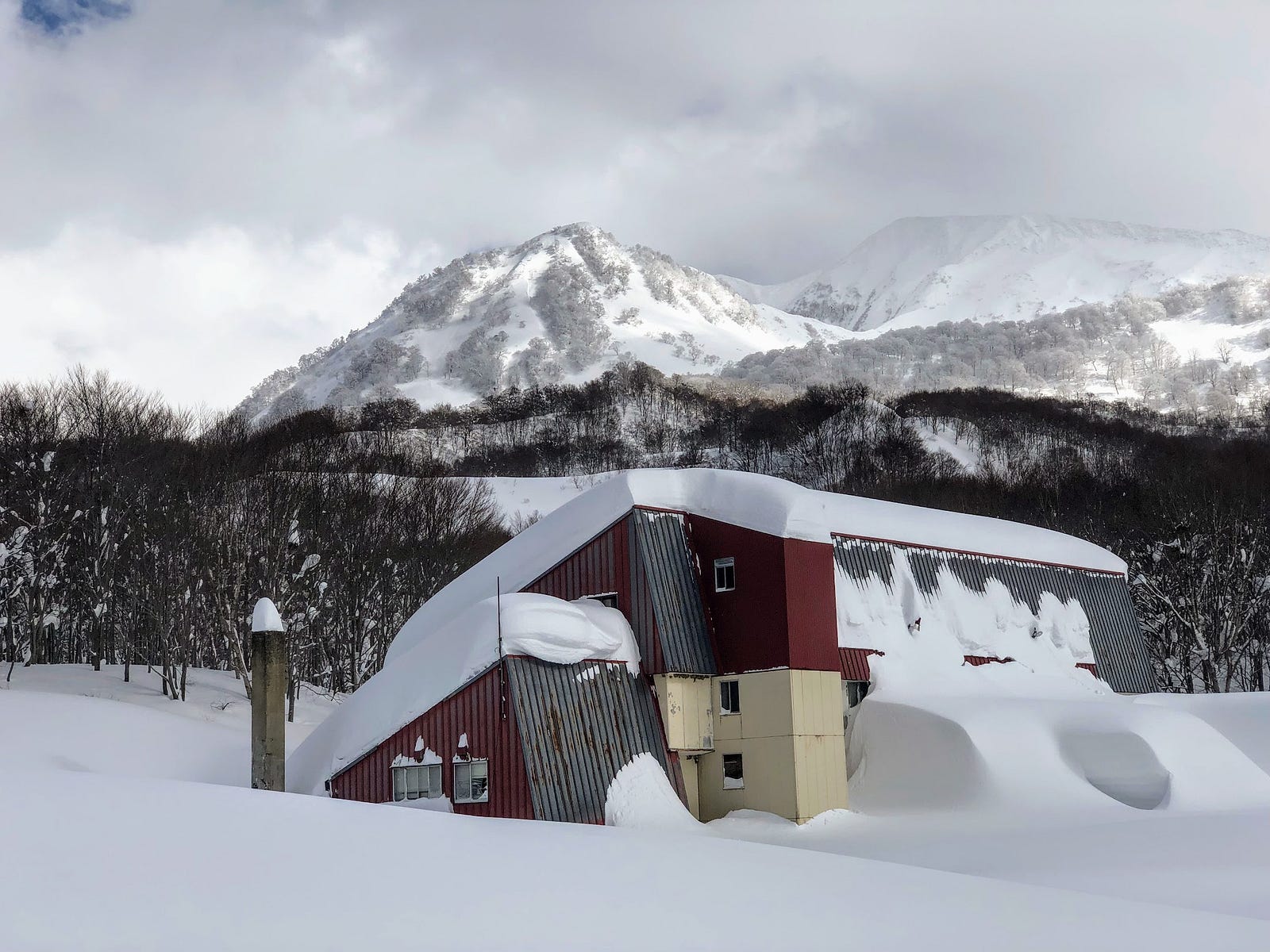
I mentioned earlier, but when people say Yudono-san they mean Yudono-san Shrine, not the mountain. Yudono-san was made Yudono-sanbecause they wanted to have a Yudono-san, not because it was Yudono-san. This Yudono-san is actually a fake Yudono-san. It used to be Yakushi-dake.
If you want the satisfaction of having said you’ve climbed Yudono-san, you’ll need to come here when there is snow. This is usually from December to March. The easiest way up is to start snowshoeing from Gassan Shizu Onsen, below the Gassan Ski Lift. However, you do have to make your own way up as there are no trails. It takes about 2 and a half hours one-way, so you’ll need to make a day of it.
Hiking to and from Yudono-san Jinja in the warmer months

If you want to hike Yudono-san Shrine, I’d recommend doing the Dewa Sanzan Traverse. First do Haguro-san separately, then climb from the Eighth Station of Gassan to the summit, then down to Yudono-san. From there you will have to organise transport back to Haguro-san. Although much more tough, one other option is to start your hike up Gassan at Yudono-san Jinja. Full details in my Gassan article.
Waterfall Meditation on Yudono-san
Yudono-san is a hotspot for yamabushi and other mountain ascetics (see Sokushinbutsu below). Alongside the waterfalls yamabushi use for waterfall meditation, you will often find shimenawa ropes, statues, or monuments of some kind placed there as a sign of respect to the waterfall itself, and to the ascetics who trained there.
Our experience visiting Yudono-san Shrine
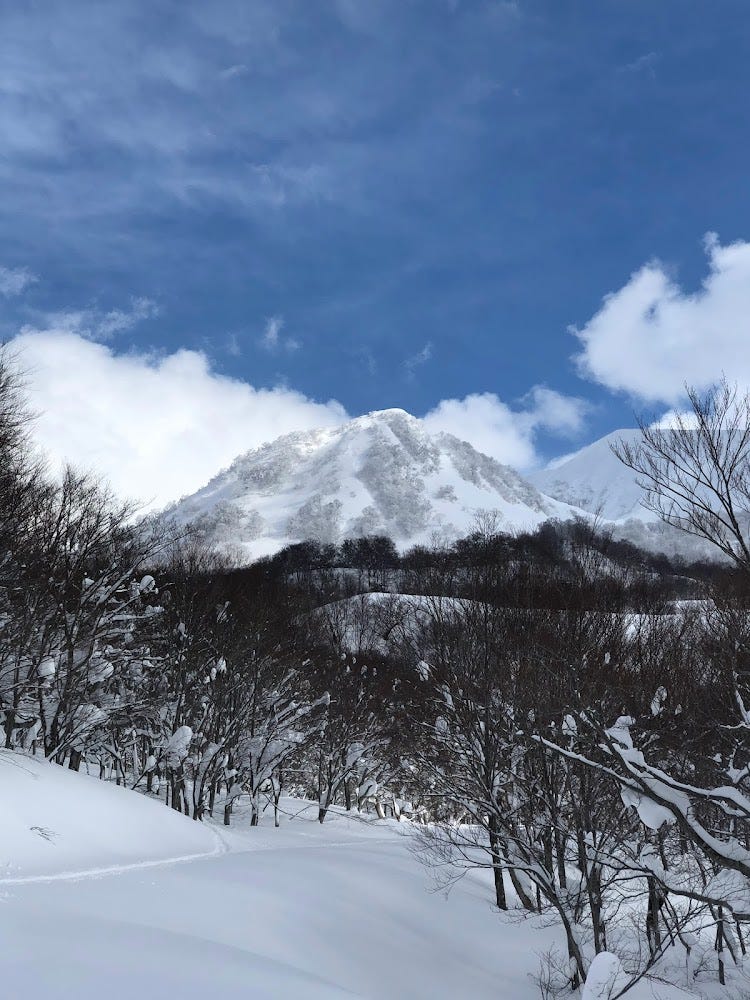
Called Hatsumode, Japan has a long history of praying at a Shinto Shrine for a good year at the first opportunity in the New Year. When we stayed at Gassan Tsutaya Ryokan, Shida-san very graciously invited me to join him in the Kyugantan Yudonosan Mairi, the Lunar New Year Visit to Yudono-san.
Japan had been following the lunar calendar until the Meiji Restoration in 1868 when they tried to become more westernised. Up until then there was a custom of paying respects to Yudono-san Shrine at the Lunar New Year, despite it being completely inundated with snow by then. The only way to get there these days is by snowshoeing or on a snowmobile, I can’t imagine what it would have been like in the past.
The custom of visiting Yudono-san at the Lunar New Year effectively ended when Yudono-san and the Dewa Sanzan were converted to Shintoism in the late 1860s and early 1870s. However, Shida-san has since reinstated it in his own way, guiding people there for a few years now. I was lucky enough to be invited this time around, and if you speak Japanese, I recommend you also sign up.
The day of: Yudono-san in the Snow
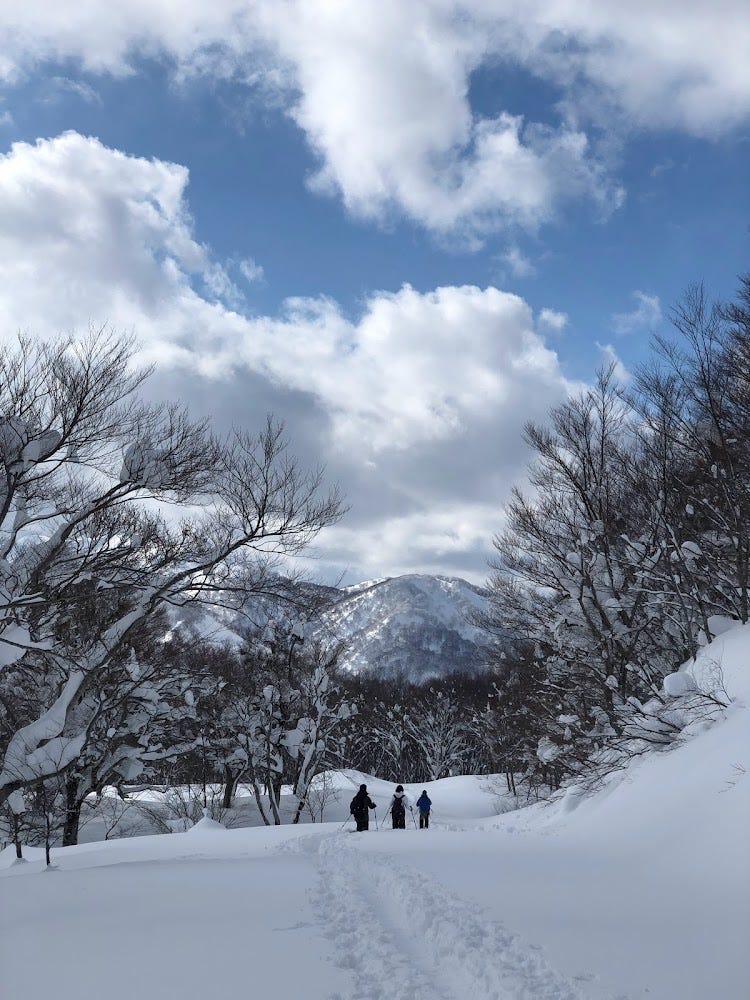
Spending the night prior at Gassan Tsutaya, we were well-rested, and well-onsened. Then we had a hearty breakfast of an assortment of mountain vegetables, and of course a customary morning brew.
We drove to the Yudono-san turnoff alongside Route 112 and headed uphill. Once we turned a corner, we found that the snow clearers were still very much at work. They instructed us that we weren’t allowed to park our cars at the entrance to Yudono-san’s toll road. That would have been the proper start of our hike, something Shida-san had been doing for the past few years.
Deep, deep snow on Yudono-san
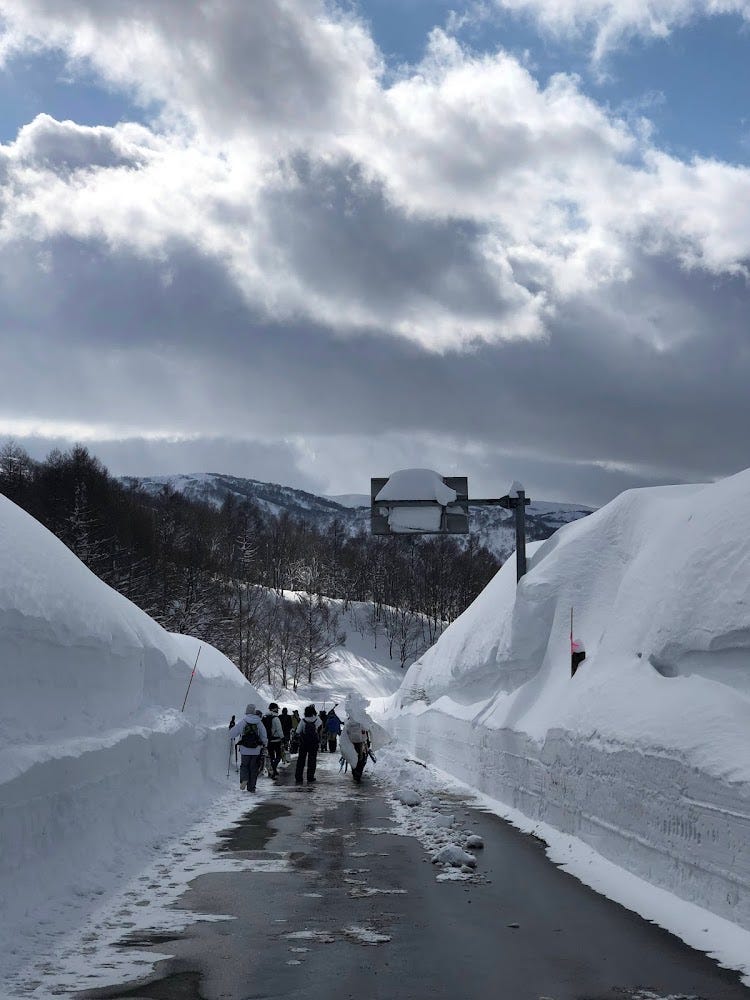
If the snow clearers weren’t there, however, we wouldn’t have known that the snow was in fact almost 5m deep. Know how I know? The snow almost reached the road sign, which is at a height of 5m. To say this area gets a lot of snow would be an understatement.
Once at the Yudono-san toll road, there was a 5m high wall to navigate. At one point along the snowshoe hike, Shida-san used his measuring stick thing to see the depth of the snow. It was indeed deeper than the 4m his pole would go!
The snowshoeing begins
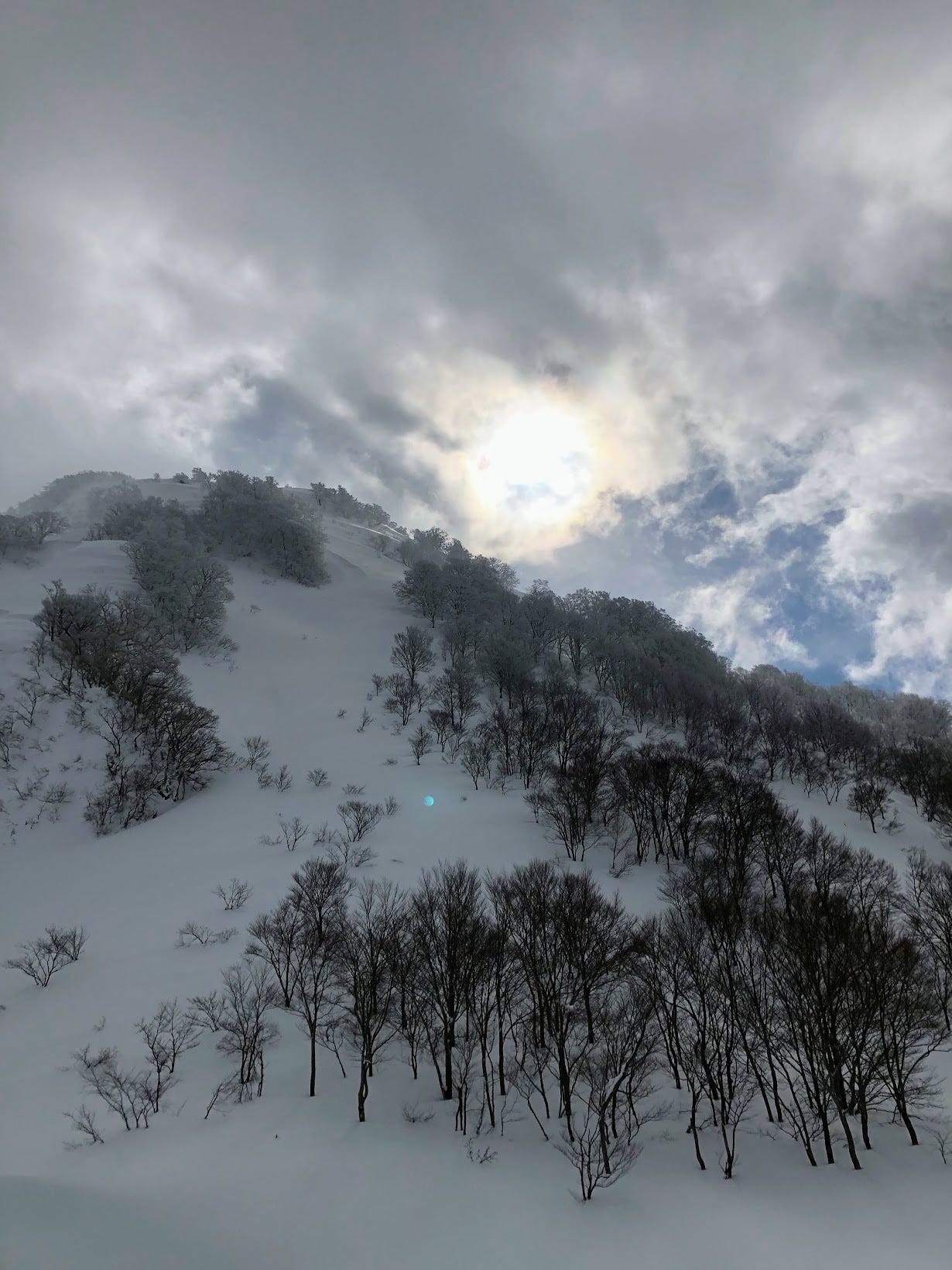
We put on our snowshoes and basically made a staircase as we went up the snow wall. The smarmy Shida-san had brought alpine skis with an attachment meaning he could walk in them. This is definitely something to consider for snowshoe hiking in future.
We loosely followed the toll road for a little while, spending time in the shelter of the beech forest. I’ve been to Yudono-san at least 20 times, but never in the snow. Needless to say the surrounding mountains were awe-inspiring. I was extremely grateful to have my camera with me.
Behold the Torii Shrine Gates of Yudono-san
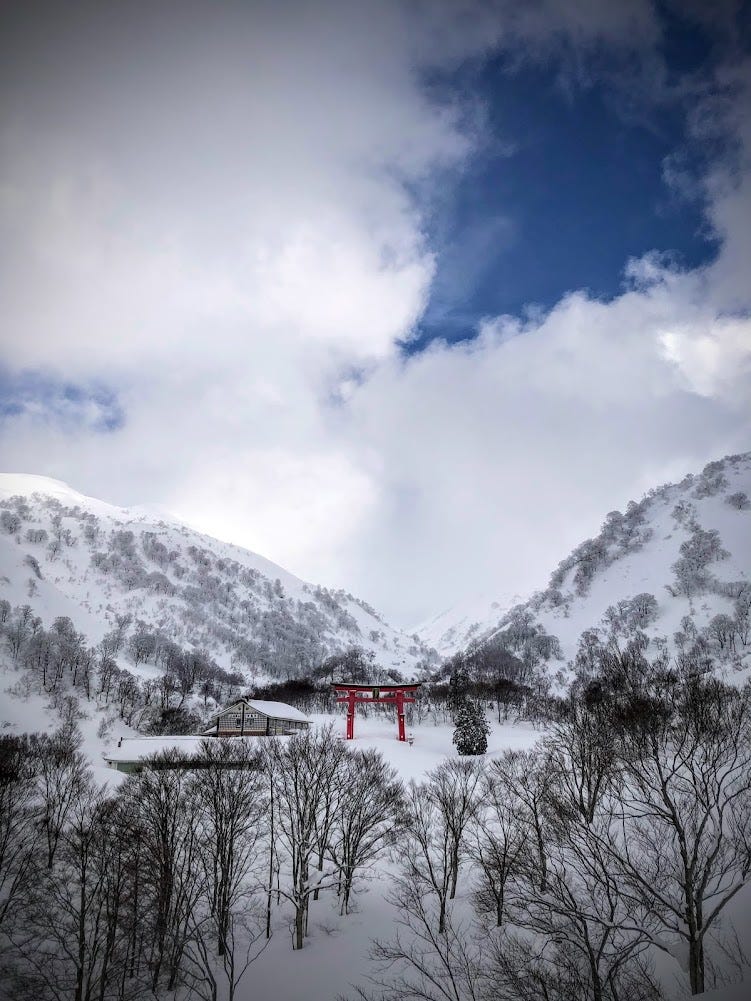
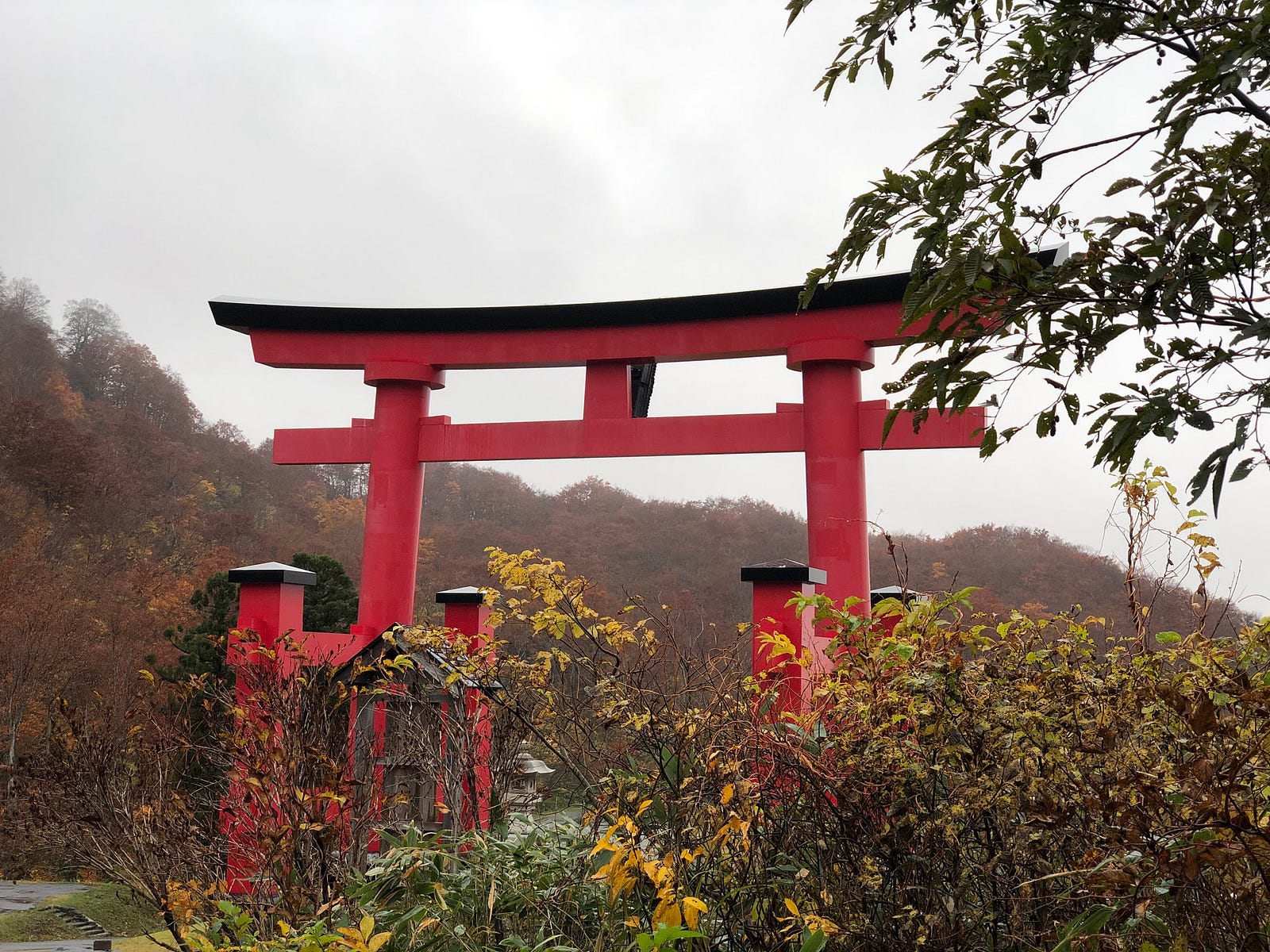
After snowshoeing for about an hour we turned a corner, and there they were. The torii shrine gates of Yudono-san in all their glory. The 15m-tall vermillion behemoth really stood out against the bright white snow. I was under the impression that these gates got buried in snow in the winter. I was sorely wrong, but at least I got to see what it’s really like. The 3-storey Sanrosho (mountain office) adjacent the shrine gates had snow right up to the third floor. This was something the yamabushi who was with us said he had never seen before.
Torii shrine gates mark the border into the sacred world, they aren’t the destination. We continued onwards up the hill. Admittedly, I was very surprised to see that the river running down through the valley from the object of worship was completely covered in snow. I’m not sure why, but I expected a gap of some sorts above the river. It turns out there’s just too much snow for that to be a reality. The only clue we had that there was a river there was the red bridge. Well, what was left of it, with at least 3m of snow piled up on top.
Making it to the Object of Worship
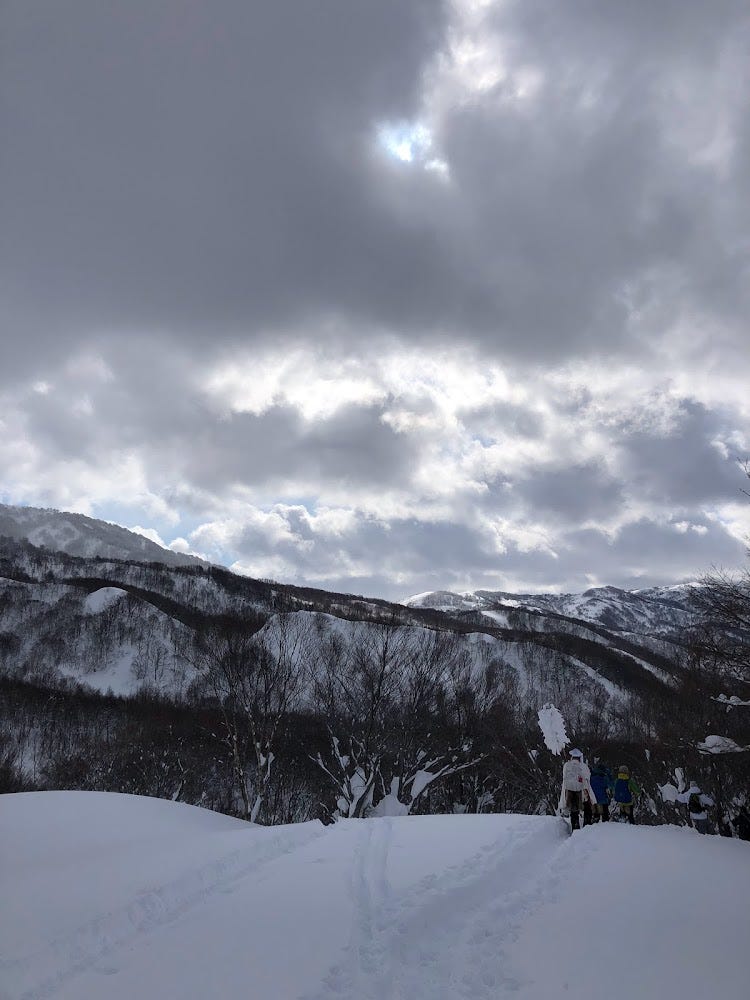
Further along the path there was one section with a hot spring and we could see some sort of marsh. Here there are normally some torii gates, but they too must have been covered in snow. Just past this area was a valley from where we could see the object of worship. We had made it.
A yamabushi in our group from Shozen’in temple carried a bonten, a huge bamboo stick with white lightening-shaped tassels. Once he had performed the rites, we all turned around and headed back to the giant Torii gates for lunch.
Lunch under the shrine gates
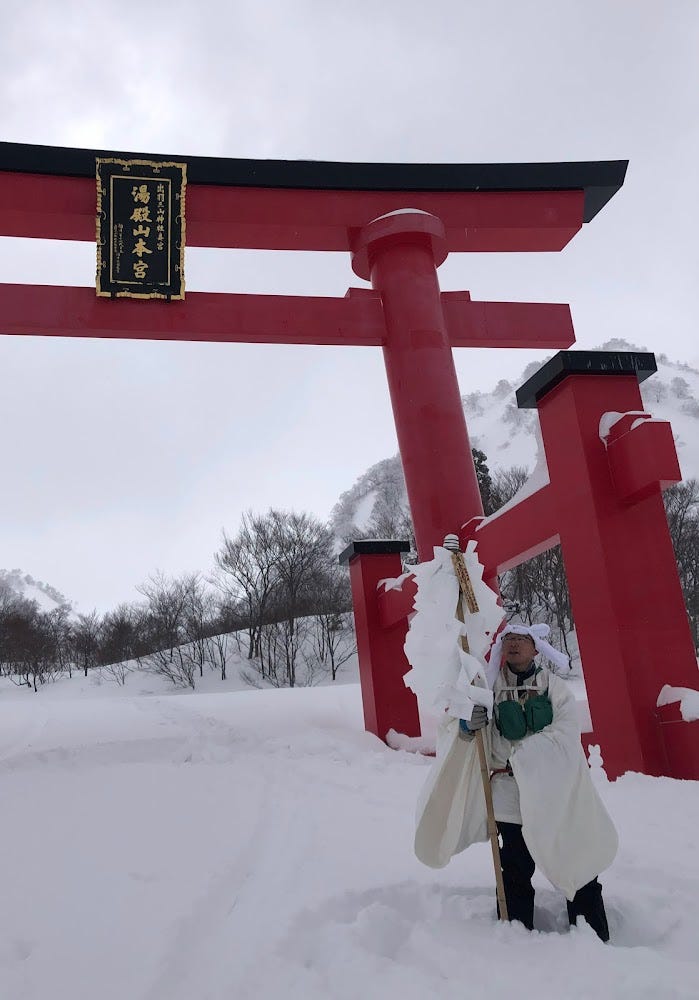
Shida-san had planned this to a T. Some of the people there had brought with them foldable spades. They quickly went about creating a table in the snow right under the gates, padding down some seating in the process. Once the table was ready, Shida-san passed out some freshly heated soup, and we were in heaven. Sitting under the Torii gates with nothing but snowy mountains around us, coupled with the Onigiri rice balls and other snacks Shida-san had prepared, our lunch was quite something.
Content involving mummification and gruesome facts: Do not read this if you get queasy easily!
I found out as we were leaving, but the yamabushi there told us that when the Torii gates were constructed, apparently they found piles of skeletons. This area is known as Sen’ninzawa, the Swamp of the Immortals. I knew this was where the Sokushinbutsu, the Living Buddha or Buddha Mummies, had trained. I hadn’t put two and two together that many would be buried there right under where we were eating.
The Sokushinbutsu of Yudono-san
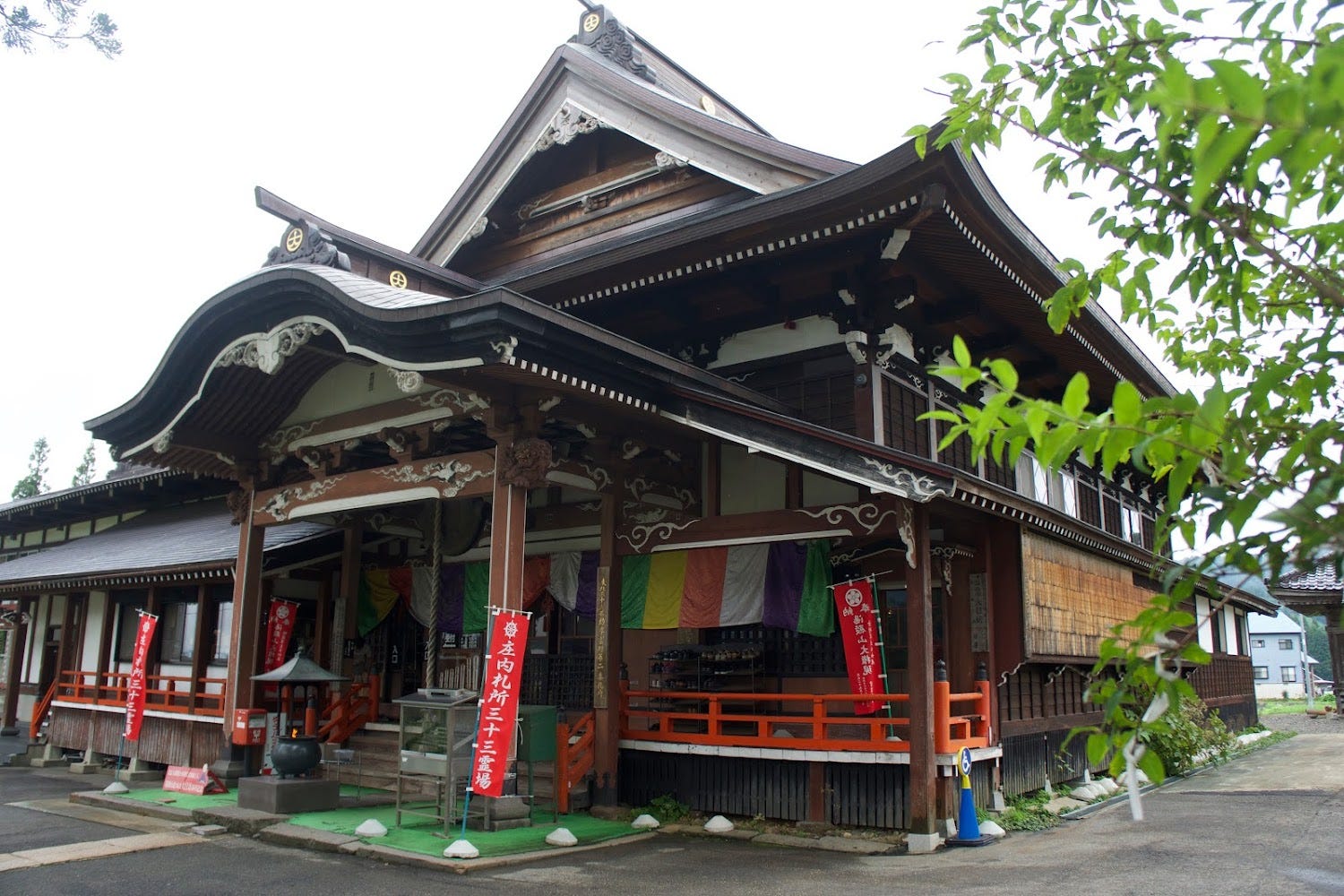
There are 21 known Sokushinbutsu around north Japan that all trained on Yudono-san. There are 6 in the Shonai region along, and 3 along the Rokujurigoe Kaido. However, there are likely hundreds, if not thousands of Sokushinbutsu, who failed to successfully mummify. Their bodies would have just been left and buried in the spot. Being the centre of The Swamp of the Immortals, it makes sense that the shrine gates of Yudono-san would be a hotspot for them.
Although on the surface the act of becoming a Sokushinbutsu may seem like a form of suicide, it is not considered as such. Yudono-san is said to be home to Dainichi Nyorai (Vairocana in Sanskrit), a cosmic buddha from Mahayana and Vajrayana Buddhism. According to Shingon Buddhism, it was believed that by training in the presence of Dainichi Nyorai, that reaching Buddhahood in this life was possible. By becoming Sokushinbutsu, the monks believed they could provide salvation to the people of this realm by proving that Buddhahood was attainable in the current world.
Understandably, this practice of self-mummification was outlawed. The last successful attempt at self-mummification was a priest called Bukkai in 1903 from Kanzeonji Temple, Niigata Prefecture (Jeremiah, 2010, p. 211).
Yudono-san: In Conclusion
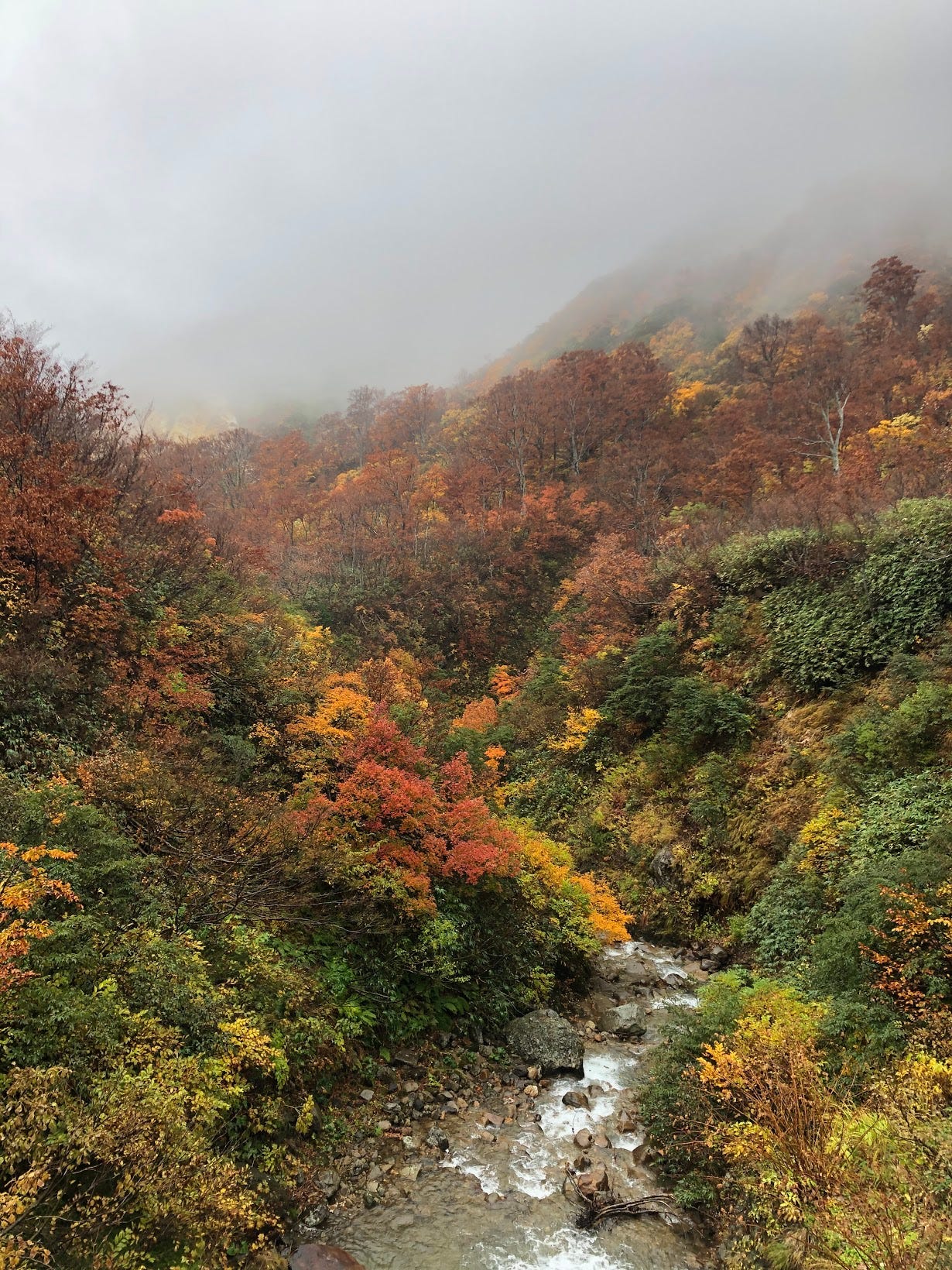
After our lunch, we packed up shop and began the slow trek back to our cars. On the way back the sky cleared up, and we were welcomed with blue skies for much of the return. All in all it was a very fun experience made even better with an Onsen at Gassan Tsutaya Ryokan to top it all off. 10/10 would recommend.
Nearby locations worth exploring
The Dewa Sanzan’s Mountain of Death: Gassan
The belief of the tallest Dewa Sanzan peak as the resting place of our souls, the sheer devotion of the millions who have paid their respects to lost loved ones there while praying for their own safe journey, and the peak’s resemblance to the other realm have all given Gassan a reputation as the mountain of death.
Read: The comprehensive guide to Gassan, My Guide to Hiking Gassan
The Dewa Sanzan’s Haguro-san
The journey of rebirth on the Dewa Sanzan begins with the majestic Haguro-san. The lowest Dewa Sanzan mountain is where the present world’s troubles are overcome. Haguro-san has a famous stone stairway and five-storied pagoda among the hundreds of towering cedar trees. It also boasts Japan’s thickest thatched roof at Dewa Sanzan Shrine making it the perfect initiation to North Japan.
Read: Haguro-san article
North Japan’s Widow’s Peak: Ubaga-take
Ubaga-take: The Widow’s Peak right behind Yudono-san
Ubaga-take is a must-see autumn alpine dreamland right behind Yudono-san with a twisted backstory. Watch the video or read the article to find out more.
Read: Ubaga-take article
Gassan Tsutaya Ochimizu-no-Yu Ryokan run by Shida-san, a Master Yamabushi
If you are planning on visiting Yudono-san or even Tohoku for that matter, I highly recommend staying at Gassan Tsutaya Ryokan. In December 2021, I interviewed Shida-san, and put together this video introducing one of both literally and figuratively the coolest places in Japan.
The Sokushinbutsu Buddha Mummies of Yudono-san
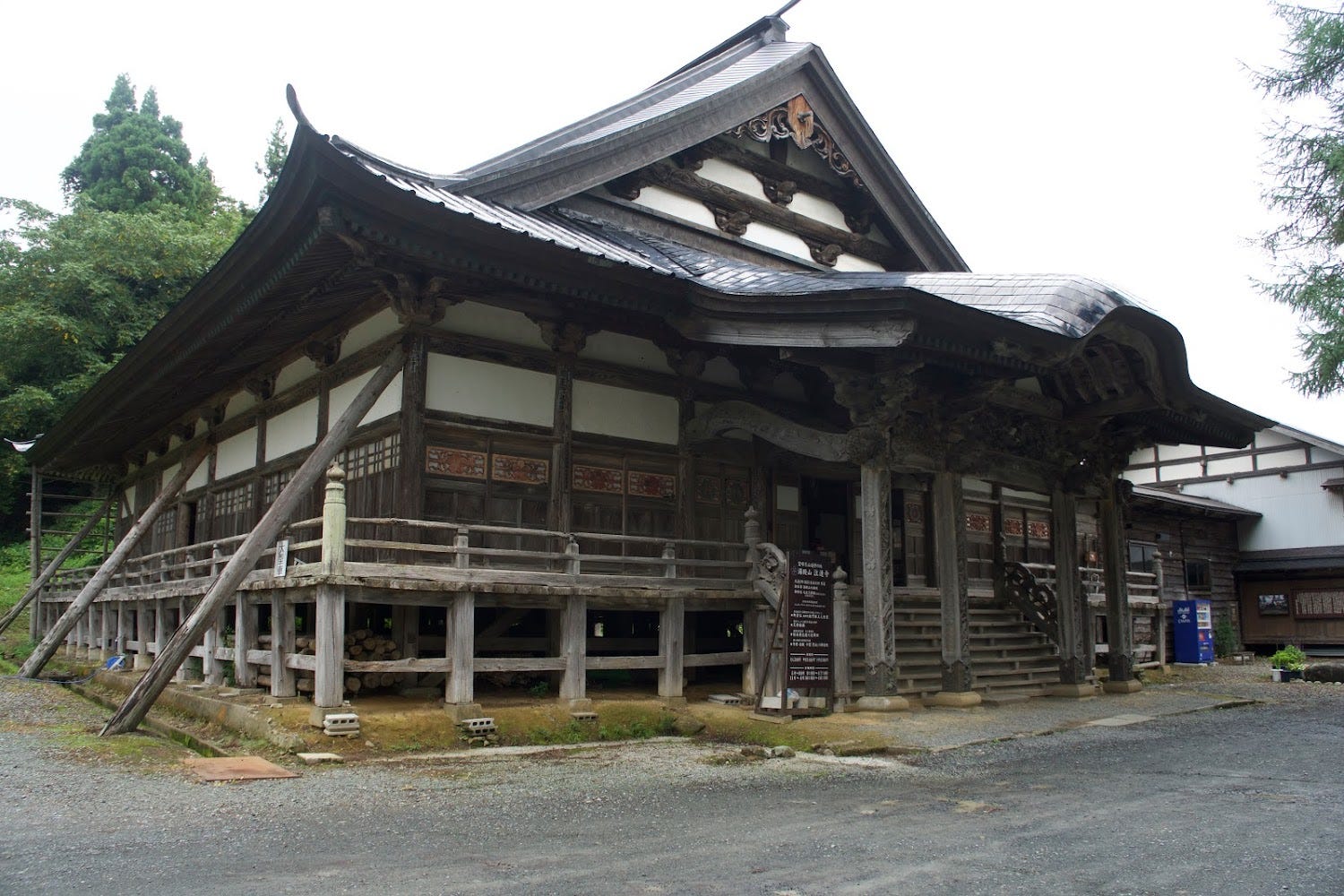
Churenji and Dainichibo Temples on Yudono-san are home to some Sokushinbutsu, self-mummified monks. There are a few others housed in temples scattered throughout primarily Yamagata and the surrounding prefectures.
Hijiori Onsen
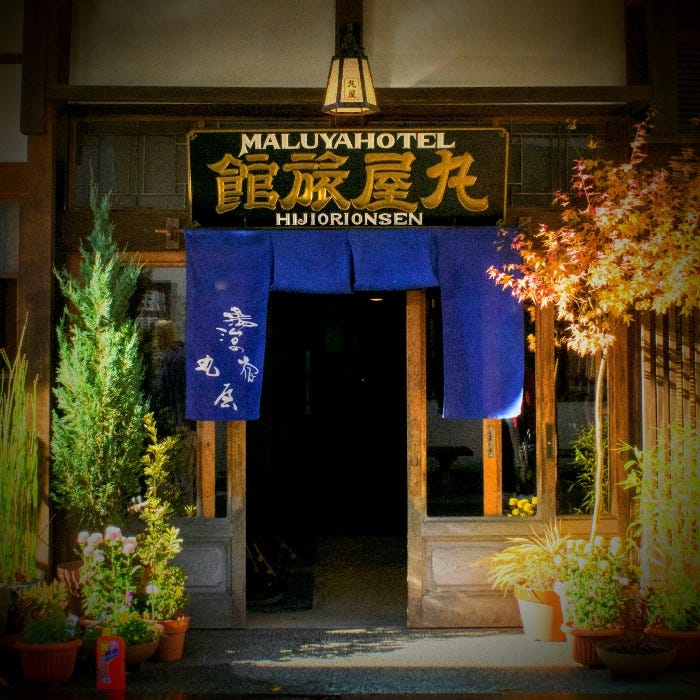
Hijiori Onsen is named after a monk who healed his broken elbow in the hot spring water found there. Tucked away around the other side of Gassan, Hijiori Onsen is famous for recording the greatest snowfall of any region in Japan. There is even an annual competition to see who can dig through the snow to the ground the fastest.
Yudono-san Ski Field
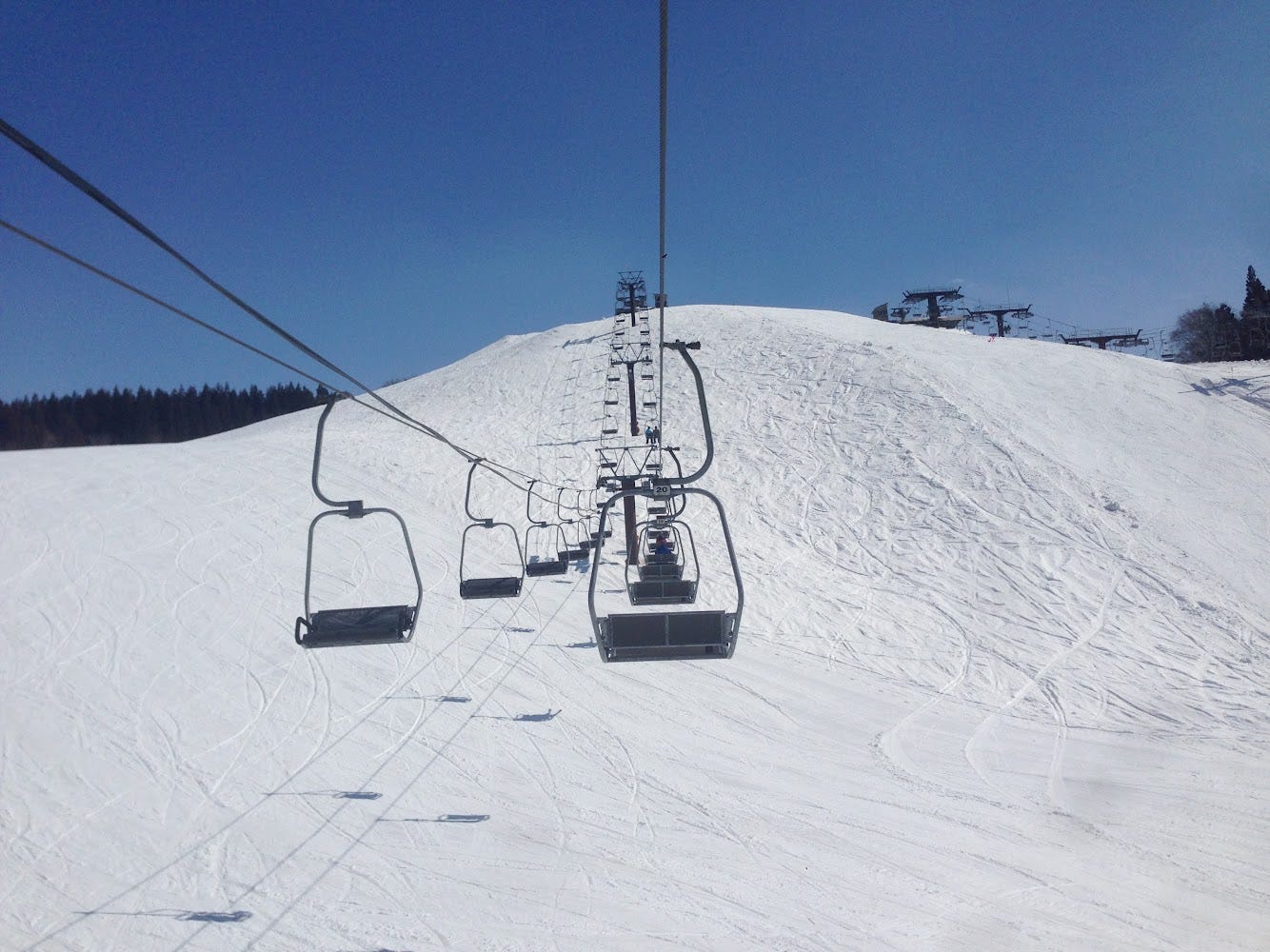
Especially popular with people from Tsuruoka City, Yudono-san Ski Field is the snowy location of choice for many living nearby. 30 minutes from Yudono-san Jinja, the Yudono-san Ski Field has plenty of options for skiers and snowboarders alike. Yudono-san Ski Field is usually open from early to mid-December until the end of March, snow dependent of course.
Yudonosan official website (Japanese) and information in English.
Summer skiing in north Japan: The Gassan Ski Lift
The nearby Gassan Ski Field is one of the rarest spots in Japan. The snow is so deep, the field opens from April to July for skiing, then until October for hiking. I can’t think of another ski lift that gets six months of action in a year. If you’re coming for a ski, day passes cost ¥4,700 and ¥3,500 for adults and children respectively.
Once hiking season starts prices drop to ¥1,100 return for adults and ¥700 for children, or ¥600 and ¥400 one-way respectively. The lift is open daily from 8am to 4:30pm. They close the lift in the middle of June to switch the ropes down.
Yudono-san | 湯殿山| ゆどのさん
Yudono-san is Famous For:
- As the final destination on the Dewa Sanzan Journey of Rebirth and Yudono Mairi, an ancient custom of visiting Yudono-san specifically
- The location of Yudono-san Shrine, where a sacred object of worship is revered
- A destination for many who used the Rokujirigoe Kaido ancient path
- Former Training ground for the Sokushinbutsu, mummified monks known in English as Buddha Mummies or Living Buddha
- Yamabushi training ground, especially waterfall meditation
- Founded in the year of the Ox, one can receive 12 years-worth of blessings if they visit then (2021 was the last time)
References
Rokujuri-goe Kaido | The ancient road of Japan
“Rokujuri-goe Kaido,” an ancient road connecting the Shonai plain and the inland area is said to have opened about 1200…www.asahi-kankou.jp