

Here are the most recent Daily Yamabushi posts, insights from my time on and around the mountains of Japan.
Get them in your inbox by signing up here.
-
The recency bias and getting over stuff
I think it’s fair to say things that happen recently take pride of place in our brains. It’s much easier to remember what happened today than what happened last Thursday. When something we’d rather forget happens, the recency bias can really play on our brains if we let it.
So it helps to remember that, even though things in the current moment may be tough, given enough time, the recency bias loses its power, and other, more recent things start to take pride of place. When this Thursday becomes last Thursday, it doesn’t matter as much anymore.
-
When times are tough, appreciate
Life sucks. This much we know. But life can also be full of the inspirational, the amazing, the beautiful. We must never forget that, and it helps to remember that when times are tough, we need to appreciate. The people you love, the air you breathe, the sustenance you get from food, the sun setting in the distance, the silence of snow, the cool winter air. Appreciation is the key to getting through, the key to seeing the inspiration, the amazement, the beauty in life. Without which, you are left with a life that sucks. This much we know.
-
You won’t die, so it will be alright
This may sound a bit morbid or scary, but a lot of the time during yamabushi training, you start to tell yourself ‘you won’t die, so it will be alright’. I think this is one of the important points in understanding uketamo, the Dewa Sanzan yamabushi philosophy of acceptance. You could probably compare this to ‘what doesn’t kill you makes you stronger’, which I do think is true, but there are a lot of things in life that we have to do that we might not like or want to do, but that won’t kill us, so it will be alright.
-
Have a New Years Resolution? Start now
Have a New Years resolution? Start it now. What’s stopping you? New Year’s Day is just an arbitrary day like every other day on the calendar, what makes it so different from today? No need to wait. Get the wheels rolling and get started!
For myself, I want to do a better job of collecting my thoughts from my blog, they’re all over the place. I also have a bit of a backlog to get through in terms of videos, and building a system that means I can get them out in a timely manner. This will be my first port of call, and it starts now. What are you wanting to improve?
-
Expression is key
When we express ourselves, we gain a better understanding of who we really are, we contribute to the world, and we claim our place. Expressing yourself is a great way to relieve stress, it is a great way to let off steam.
So, are you expressing yourself regularly?
-
Pouring coffee is the perfect mindfulness tool
To pour coffee well requires concentration and awareness, the perfect mindfulness test.
Get the right beans. Beans that have been roasted in the past week are best, and they can retain their freshness for about a month. Always buy beans as beans, and grind right before the pour. Hand grinders work well as they don’t take too long, and they don’t damage or burn the beans (if you have a lot of beans to get through, mechanical grinders work well).
It starts with boiling the water. Getting just enough water in the kettle is a challenge in and of itself, if you’re judging by weight that is. Not too much, not too little.
Then, the pour. The two main stages of the pour demand concentration, the first part especially. You have to be very mindful of the amount of water in the kettle, and the angle at which you are holding the kettle. This is where gravity comes into play.
If you use a technique of shifting your centre of gravity, rather than tilting your hand, it becomes much easier to get the right amount of water out. For pour over coffee, this is usually the hardest part, as you only need a very thin stream of boiling hot water.
This is still difficult though, and takes a lot of practice. If you rush this part, the coffee can become very thin, which is why proper technique, and the proper mindset, is paramount.
Then, the main pour begins. At this stage, it is easy to get ahead of yourself and want to pour too quickly. This part is very fun. The bubbling of the beans feels and looks great. Again, however, going to fast will result in a bad pour, so you need to be mindful, making sure to give it the right amount. Not too fast, not too slow.
Once you have the desired volume, you’re done. Now to appreciate the moment, and appreciate the cup. Mindfulness coffee. Enjoy.
-
Never compare yourself to others. Do this instead.
One of the most important lessons I learned reading Dan Ariely’s Predictably Irrational a few years back that really stuck with me was that, given enough time, humans have the amazing ability to come to terms with the severest of circumstances. Dan Ariely himself is a major burn victim, suffering burns to the majority of his body, and yet he still finds a way to live life and strive hard for better.
You never ever should compare yourself to others. You have no idea what kind of struggle they are going through, yet I think it’s common to either say, think, or even hear, ‘you could always be worse off’.
‘You could always be worse off’ is comparison by stealth. ‘You could always be worse off’ is almost always true, the only time it wouldn’t be would be when you are dead.
Don’t take ‘you could always be worse off’, as a comparison of circumstances. See the struggles that the people worse off than you are going through, see them getting through it, and see what humans are capable of coming to terms with.
Of course at times we have struggles that seem overwhelming when compared to others, or even when compared to previous versions of ourselves, but we are part of a remarkable race that has the ability to come to terms with anything life throws at us. We just need to take stock of this, and be reminded of it every once in a while.
(Do not take this as an opportunity to not help those who are worse off than you if you can. All human beings deserve to be treated with decency.)
-
A few tips for driving in Yamagata
There are a few tricks I’ve learned over the years driving here in Yamagata, some that may seem counterintuitive at first but that I have tested multiple times and found to be true.
Yamagata drivers in general like to follow the pack, which means on roads with two lanes going the same direction, they tend to prioritize one of the lanes. If you know which lane is likely to be prioritized, go in the other lane. You’ll get there quicker (just don’t be a dick if there’s a good reason for everyone being in the same lane, like a merging lane not too far away).
Yamagata drivers also often go through yellow traffic lights, sometimes even red. Here, best to play it safe and judge it as if you were driving in NZ, where this is heavily policed. This means you need to be extra careful when the lights change as well as some cars go after they have changed and may even crash into you.
The problem is that the lights are often set on a timer, and you can see where they are in the cycle by looking at the pedestrian crossing lights. If the lights for the pedestrian crossing going the same direction as you just changed, you may be able to make it. If the pedestrian crossing lights of the road cutting across your path are flashing green, slow down so that when they change for you you are still moving. That way you can get through relatively quickly.
In general, stop signs are faster than traffic lights. I used to think traffic lights were faster because there is a 100% chance of you stopping at a stop sign, whereas you can get lucky at traffic lights. But over time I have come to realize that the average amount of time spent waiting at a stop sign is usually less than the average amount of time spent waiting for a traffic light. As a general rule, you should prioritize routes that have minimal intersections, failing that, prioritize routes that avoid traffic lights.
Sakata city recently got a new roundabout. For someone from the city with the most roundabouts per capita (at least this has been true in the past, check out Lower Hutt), you understand how much of a godsend roundabouts are.
However, with a huge concentration of people who do not know how to use them, this can be very troublesome and will take a long time for people to get used to. If they do get used to them, hopefully you’ll see more roundabouts where there are traffic lights now in the middle of the rice fields that never seem to change even when there is absolutely no one there.
Having done a 360 on the black ice before, it’s fun, but also very dangerous. When you’re driving on snow, focus on going in the direction you want to go. Snow is also when you use the ‘b’ gear, which I believe is engine brake. It’s like changing down gears in a manual, and you use it to slow the car down rather than the normal brakes that will make you slide.
Living in Yamagata means you do get good at changing tires though, you need to switch from normal tires to studless tires in the winter, and if you have your wife’s tires to change as well, you get pretty good at it.
Generally speaking, it’s fine to leave your keys in the ignition and go into shops. If it’s winter, people leave their cars on and often go into the Konbini (convenience store) or what have you.
As a pedestrian, at the pedestrian crossings without lights there is a less than 50% chance that people will stop for you, according to a recent study. In my experience, this number is probably at about 10 to 20% of cars stopping for you. Be extra careful here. In NZ I would say the same number would be in the 90s. Orange flashing lights and plenty of warning goes a long way in actually having people stop.
That’s about all I can think of for now. If I think of something else, I’ll probably add it. Either way, driving in the two countries is completely different, although we do drive on the same ‘right’ side of the road!
-
Are you in a cult? The worst question to get as a yamabushi
Discussing the yamabushi ‘cult’ of Mt. Haguro and the Dewa Sanzan
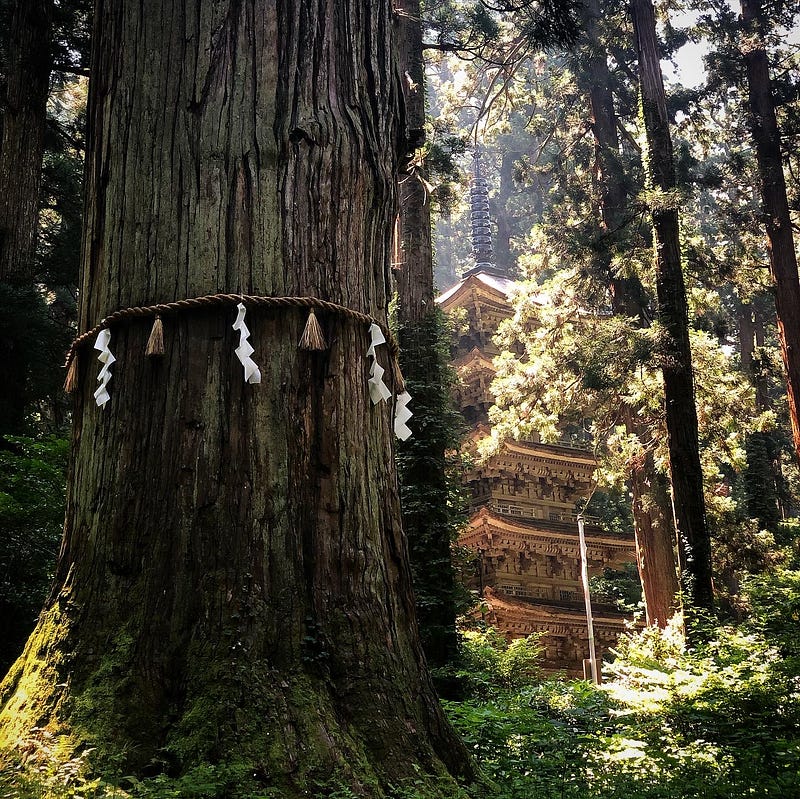
Unwavering support and obedience to our master, incessant chanting to celestial beings for hours on end, and a philosophy that is all about accepting everything that comes to you, on the surface I could see why being a yamabushi could be seen as cult-ish.
Since becoming a yamabushi, every once in a blue moon the question ‘are the yamabushi a cult?’ comes up. In fact, one of the videos that leads to the most traffic on my YouTube channel is entitled The Yamabushi: A Japanese Mountain Cult. So, I asked my good friend Merriam Webster for a definition, and here’s what she told me:
Essential Meaning of cult
1: a small religious group that is not part of a larger and more accepted religion and that has beliefs regarded by many people as extreme or dangerous; e.g.
“a satanic cult”
“cult members”
2: a situation in which people admire and care about something or someone very much or too much;
“He criticizes the way journalists promote the cult of celebrity in modern America.” [=the tendency of people to care too much about famous people]
“a cult of personality = a personality cult”
3: a small group of very devoted supporters or fans
“a cult of admirers”
“She has developed a cult following.”
So, let’s see whether the yamabushi of the Dewa Sanzan fall into any of these categories one by one.
1: a small religious group that is not part of a larger and more accepted religion and that has beliefs regarded by many people as extreme or dangerous

‘not part of a larger and more accepted religion’
Yamabushi follow Shugendo, the knowledge gained on the path (do) of divine natural powers (gen) through ascetic practice (shu), an ancient belief combining the doctrines of Shintoism, esoteric Buddhism, Taoism, and ancient Japanese nature worship. Officially since Shugendo is a combination of religions, and as such does not have any unique doctrines, it is not considered a religion in and of itself. However, Shugendo is indeed part of a larger and much more accepted religion, multiple religions at that. So there’s that.
Strictly speaking, practitioners of Shugendo follow Buddhism or Shintoism, while also practicing Shugendo. Or, have no set belief system and are using the practice to better themselves. In fact the Dewa Sanzan is home to groups from both religions who even practice side by side. I’m not sure you are allowed to choose allegiances like this in a cult.
In addition, Shugendo itself is a do, a way, a lifestyle, or a set of beliefs, the same as Kendo, the way of the sword, or Judo the way of the passive, not a religion in and of itself. As a do there is no end, and it’s about bettering yourself day after day.
‘beliefs regarded by many people as extreme or dangerous’
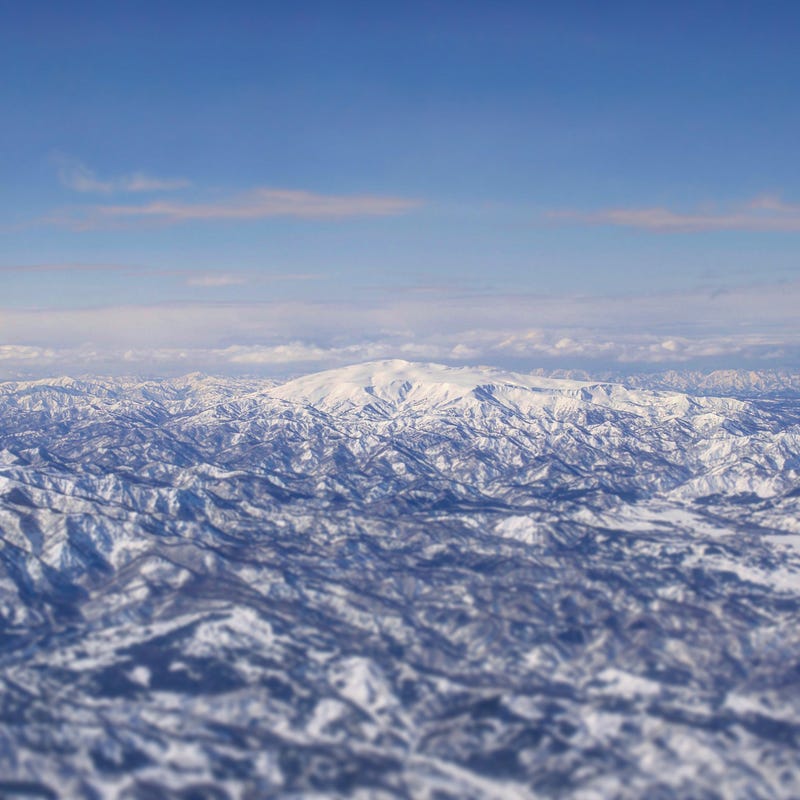
I cannot deny this part, Yamabushi often do indeed partake in extreme and dangerous activities; we go out into the nature even during the severe thunderstorms on Mt. Gassan, climb up precarious cliffs on rusted ladders, wade through gushing rivers, and meditate under ice-cold waterfalls.
Beliefs though? We go out into nature to perform all manner of rites such as waterfall meditation, night time walking meditation, and praying to the Kami and Buddha of the Dewa Sanzan. This is all in an effort to learn from nature, so that we can become better people, and better serve those around us.
Master Hoshino always says we do yamabushi training to do yamabushi training. The aim, if there were to be one, is peace, no extreme or dangerous beliefs here.
2: a situation in which people admire and care about something or someone very much or too much

‘something’
There is ‘something’ of the Dewa Sanzan that everyone would ‘admire and care about very much or too much’, something that everyone would agree is the master. Master Hoshino is the first to say this, but a yamabushi’s job is not to preach. A yamabushi’s job is to lead others into nature, and let them learn for themselves, simply because nature is the teacher, nature is what we admire and care about.
‘We will now climb Mt. Haguro’, ‘we will now perform waterfall meditation’; the yamabushi of the Dewa Sanzan follow Uketamo, the philosophy of acceptance, whereby whenever your master tells you to do something, you do it. However, this is based on the premise that the master is showing you the best way to learn from nature. They are not trying to control you. Yamabushi don’t learn from books, and they don’t learn from word of mouth. Yamabushi learn from being placed in nature, and reflecting on what we feel. It’s that simple.
‘someone’
Master Hoshino is one of less than 40 men in the Toge region of Mt. Haguro to have completed the 100-day Akinomine Autumn’s Peak ritual, how else would he get that awesome beard of his. Moreover, Master Hoshino is on the board of directors at Dewa Sanzan Shrine and runs Daishobo pilgrim lodge, having done so for over 50 years now. Over the years, Master Hoshino has come to be seen as somewhat of a central figure for the Yamabushi of the Dewa Sanzan. From the outside at least.
For those who have actually spent any time on the Dewa Sanzan, however, they would know that Master Hoshino is anything but the central figure of the Dewa Sanzan. If we were forced to designate a central figure that is still alive, that honour should belong to the Guji, the chief priest of Dewa Sanzan Shrine, or the chief priest of the much longer-serving and much more historically significant yamabushi of the Dewa Sanzan, the Buddhist Haguro Shugen sect based at Shozen’in Koganedo and Kotakuji Temples.
In addition, in terms of stature, Daishobo is hardly the biggest pilgrim lodge on the Dewa Sanzan, not even close. The 30 person capacity of Daishobo pails in comparison to say Daishinbo that can host upwards of 100 people, let alone Saikan, Dewa Sanzan Shrine’s official lodging, not to mention any of the Buddhist temples around.
3: a small group of very devoted supporters or fans
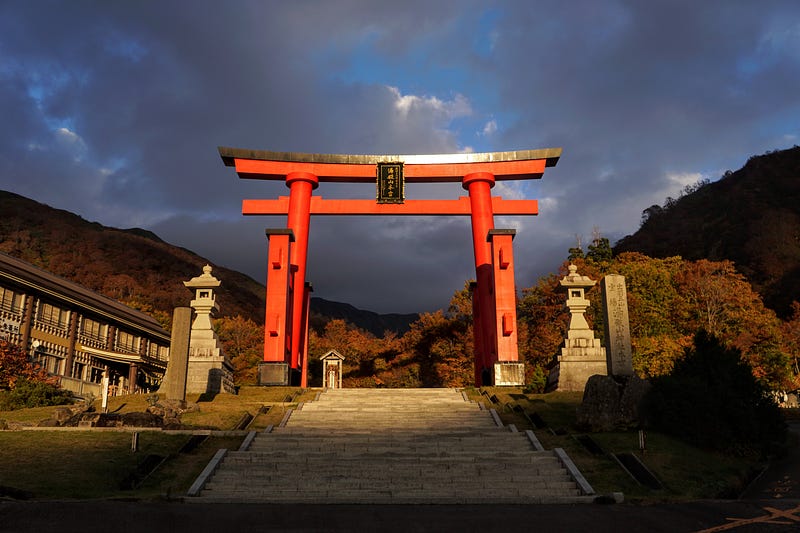
It is true that we very much admire and care about Master Hoshino, he has been an instigator of so much that has irrevocably affected our lives. Although when compared to major religions Shugendo and the numbers of yamabushi are very small, the group isn’t miniscule.
Master Hoshino has been hosting yamabushi trainings from Daishobo pilgrim lodge for over 30 years now. At an average of 10 trainings per year, with about 20 participants in each training, the number is well and truly upwards of 2 or 3 thousand people just with Master Hoshino’s training alone.
Each year Dewa Sanzan Shrine hosts more than 200 participants in the Akinomine Autumn’s Peak Ritual that has run for over 150 years, and the Miko Shugyo training run for women. Not to mention the more than 1,000 years of training the Buddhist Haguro Shugen sect has been running. Yamabushi the world over could even number in the tens of thousands.
The yamabushi are definitely devoted, though. Myself especially.
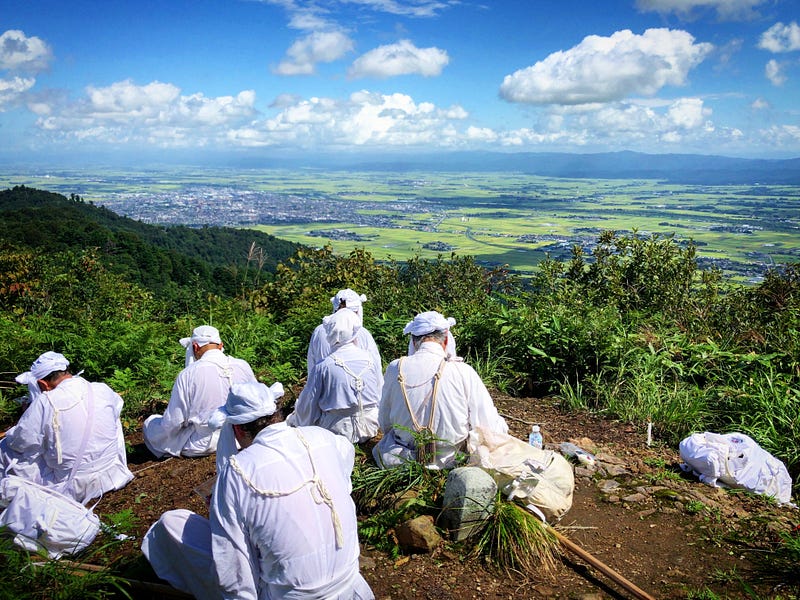
Getting into nature, learning from nature, appreciating nature. Yamabushi training takes you away from ‘normal’ everyday life, and this forces you to reflect on what you have, and allows you to appreciate the mundane. For myself, from this appreciation comes Ikigai, the desire to live well.
I am a Yamabushi who follows Shugendo because it has given me peace in times of strife. I was first invited to join the Yamabushi in the weeks after my father’s funeral, and practicing in nature in the way of Shugendo has helped immensely during the grieving process.
Not only that, my mother has been suffering for years now at the hands of a disease worse than cancer. This has been a real spanner in the works for my whole family, and being able to fall back on training in nature as a Yamabushi has really given me great perspective in life. Being a Yamabushi has definitely helped me through some of the toughest times I would never wish upon even my worst enemies.
Indebted to nature
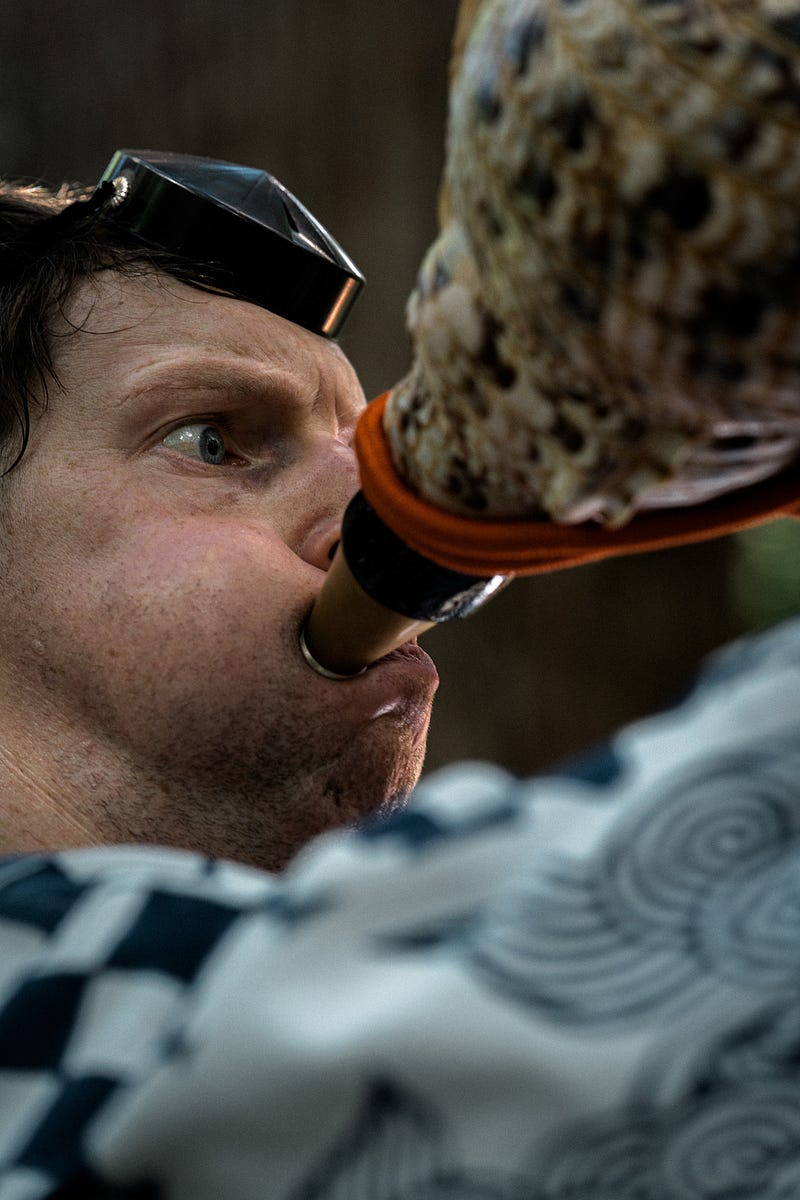
If we were to be a cult, it would definitely be of the third kind that Merriam kindly mentions:
“a cult of admirers”
“She has developed a cult following.”
I feel as if I owe everything to nature, but I would never have felt that way had I not become a yamabushi. I feel indebted to nature and the way of the Yamabushi, and I would love to see others join in the training as a way of productively dealing with life’s struggles. I am indeed doing yamabushi training of my own accord, but if I really wanted to, I could quit tomorrow. It’s just, then I would be out of a productive and harmless way of dealing with everything that life keeps throwing at me.
Shugendo and Yamabushi is an excellent and productive way to deal with everything life throws at you. Frankly speaking, calling it a cult puts off people who would otherwise be able to benefit from what has been such an amazing tool in the toolbox for me in making it through this thing we call life. I know the creator of the video means well, but calling yamabushi a cult is doing what is one of the most unique and potentially beneficial parts of Japanese culture a huge disservice, completely the opposite of what they intended to do, I’m sure.
-
Make yourself. Pick yourself. Unlock your potential.
Make yourself is the name of an album and song by Incubus, one of my all-time favourite bands. To be honest, I’m not entirely sure what the meaning of the song is, but if it’s something like pick yourself, a riff by one of my favourite authors Seth Godin, then I’m all for it.
All the gatekeepers are dead. It used to be that you needed a record contract to record music. Not true anymore. It used to be that you needed a license to publish a book. Not true anymore. It used to be that you needed financial backing to do a whole lot of things, and that just isn’t true anymore.
Think about cameras. In the past ten years, lenses that were exclusively the domain of SLR cameras are now available in your pocket. I think we just aren’t really thinking about how amazing this revolution has been in the past ten or so years. Not just in terms of technological advances, but in our ability to make and pick ourselves.
We no longer need someone above us to give us permission to record our thoughts and feelings in music, video, spoken word, or in book or blog. We have all that we need to be a media powerhouse right there in our pocket. And yet some of us for whatever reason just don’t understand, and are not unlocking their potential.
I don’t know about you, but I get a high when I write something good. I get a high when I press publish on a blog post, or better yet a YouTube video. Who knows where it will go, no-one does. But by turning up and shipping day after day, that’s how you give yourself a chance. That’s how you pick yourself. That’s how you make yourself. That’s how you unlock your potential.
-
Content with cleaning
My friend told me he once did a month at a Buddhist ‘retreat’ in Taiwan. He told me that he spent the whole time cleaning.
This morning I had the honour of helping to clean Daishobo pilgrim lodge’s Shinden, the sacred altar. Only select people are even allowed to do this, and it is a very important task, what with the huge number of artifacts and the history of the place. This cleaning is not part of training, although I guess you could consider it as such. This task is known as ご奉仕Gohoshi, donating your time and effort in dedication to a place.
This simple task has such a deep lesson. If you can be content with cleaning, honestly, you should be able to be content with anything.
-
Different country, different language, different definition of mountain: A year on the Mountains of Yamagata (round-up)
When I started the 100 Famous Mountains of Yamagata project, to be honest I thought I would be climbing taller mountains like Mt. Chokai and Mt. Gassan basically the whole way. I had it in my mind that that was what a mountain was; an alpine environment in another world completely separate from our everyday lives. However, different country, different language, different definition of mountain; and when you really get into it, the mountains of Yamagata here in the northern Tohoku region of Japan take on a completely different meaning.
For starters, I was shocked to find out that the lowest mountain on the 100 Famous Mountains of Yamagata list, Mt. Kashiwagi on Tobishima Island, was a mere 58m. Even my 3-year-old nephew could summit Mt. Kashiwagi in a manner of minutes, on a tricycle at that. What I failed to realise was that the 100 Famous Mountains of Yamagata weren’t chosen on the basis of stature, nor difficulty in climbing. Very wisely, in fact, these mountains were based on their cultural significance for locals. How else could you prioritise a tiny 57m peak?
A few weeks back I was part of a group checking out the condition of the cedar trees on Mt. Haguro, and one of the scientists there, a mountaineer who lives in the foothills of Mt. Chokai, told me exactly how the 100 Famous Mountains of Yamagata were chosen. From 2,774 peaks in the prefecture, this was no easy task, but it was made much easier by the way they went about it.
Yamagata Prefecture is separated into four main regions; The Shonai Region on The Sea of Japan coast where I live, and the three inland regions, The Mogami, Murayama, and Okitama Regions from north to south. Put simply, each region was tasked with choosing 25 peaks to place on the list. Of course there is some overlap as many of the peaks fall on the borders of the different regions, but a lot of the mountains all but choose themselves.
A round-up of the 100 Famous Mountains of Yamagata climbed in 2021
The Kinbo Shugen Line of Mountains
The first mountain I tackled for this project was Mt. Kinbo (1), a mountain I had climbed a few times before as part of yamabushi training, as it is a former Shugendo mountain, part of the Kinbo Shugen school. Mt. Kinbo is located to the south-west of central Tsuruoka City, and historically was the entrance to the Kinbo Shugen line of mountains, including the mountain of armour, Mt. Yorogamine, Mt. Hokari AKA Mother Hunter Mountain (16), Mt. Yunosawadake, and lastly one of the coolest peaks around, and one of my new favourites, Mt. Maya (13).
Mt. Kinbo and Mt. Maya especially have a long history and really interesting backstories. Mt. Kinbo alone is also a relatively easy hike, about one hour one way if you take the shortest route, but this can be extended to 90 minutes if you start from Shoryuji Temple at the base. The same mountaineer from earlier recommended climbing from Mt. Yunosawadake all the way down to Mt. Kinbo. I am yet to do Mt. Yunosawadake as I ran out of time this year, so am really looking forward to heading up there sometime next year if I can.
I have been to Mt. Yorogamine only once before during yamabushi training, on a day when the path to Mt. Gassan was blocked, and Master Hoshino chose Mt. Yorogamine specifically for its view of Mt. Gassan, which as expected is rather grand. Mt. Hokari and Mt. Maya also have grand views of Mt. Gassan if you can time it right.
Read the Mt. Kinbo article, the Mt. Hokari article, or the Mt. Maya article.
The Shonai Alps
Mt. Arakura
The second mountain I climbed was Mt. Arakura (2), which I named Sakura Mountain as the cherry blossoms were in full bloom as I was up there. At 307m, Mt. Arakura isn’t exactly tall, but the route I took from Yura was a long one, taking about 2 hours one way. For anyone who has done Mt. Haguro before, I would also recommend Mt. Arakura, especially if you can get there in spring.
Mt. Takadate
Mt. Arakura is part of what I believe locals call The Shonai Alps, a group of mountains along The Sea of Japan coast starting with Mt. Takadate (3) just to the north of Mt. Arakura. Mt. Takadate is very easy to recognise due to being covered in cell towers, and is a relatively easy climb compared to other peaks in the area, taking less than one hour one way. When we were there, some local high schoolers had even biked all the way up to the top.
Mt. Takadate is known for its RAMSAR-certified marshlands, the Shimo’ike and Kami’ike lakes, where all manner of birds, mainly swans in the cooler months, likes to congregate. The flowers in the lakes are also extremely pretty, especially the lotus in summer.
Mt. Fujikura
Just to the south of Mt. Arakura is the Sanze hamlet home to Mt. Fujikura (9). As you can tell from the video, I didn’t enjoy this mountain that much. I was there while the heat of summer was still lingering, and the path was very overgrown. I came across a pair of mamushi pit vipers, and got bitten by leaches right at the end. There also wasn’t much to see on Mt. Fujikura, but I think it would be a really good mountain to explore in spring and definitely during the autumn leaves.
Mt. Kumanonagamine
Another peak that counts as The Shonai Alps was Mt. Kumanonagamine (try saying that in one breath) (7). Mt. Kumanonagamine was the first time we (I) really screwed up climbing a mountain. We stupidly followed the route on Google Maps, which took as to an older decommissioned trail. We forged our way upwards, clambering through and at times on the bush, and managed to make it in the end.
That’s when we realised we had gone completely the wrong way, and I very stupidly stopped filming at this point. Turns out we required the services of some locals who were clearing the marshlands up there to take us back to our cars. They really saved our arses, and you can read all about it in the Mt. Kumanonagamine article. I have to get back up there again now, and get a proper video for you. It’s not high on my priority list though.
Mt. Atsumi
Mt. Atsumi (8) was another really good find. Located in the southern part of Tsuruoka City, Atsumi Onsen is a tiny hot spring village that I still visit frequently. Little did I know that in the hills behind lay one of the coolest peaks in the whole Shonai region. Mt. Atsumi is covered in waterfalls on one side, and has a whole trail on the other side that is covered in relics of its time as a Shugen peak. Mt. Atsumi even had an Shukubo pilgrim’s lodge to boot.
Mt. Nihonkoku
After Mt. Kinbo, Mt. Arakura, Mt. Takadate, and then climbing the Haguro Kodo, I went and checked out Mt. Nihonkoku (5), a tiny peak on the border of Niigata Prefecture that was marked the border between ancient Japan and the tribes of Emishi who lived to the north. Mt. Nihonkoku was a nice little hike, it was steep, but wasn’t very long at all and had some really good views from the summit. It also has a few interesting theories as to the origin of the name. Read the Mt. Nihonkoku article for more.
The Dewa Sanzan
As a Dewa Sanzan yamabushi, it’s a given that I climb these mountains at least once a year. This year I climbed Mt. Haguro (4) probably about 10 times, Mt. Gassan (10) twice, and went to Mt. Yudono (11) twice, once from the top of Mt. Gassan, and once for the Mt. Yudono Shrine opening in June.
Probably the highlight for me was climbing the Haguro Kodo, the old path of Mt. Haguro on the Shonai Town side, for the first time. I had been down that side of the mountain before, there is a small shrine with a waterfall called Otaki Shrine that we go to during the Akinomine Autumn’s Peak Ritual annually. However, I had never taken the Haguro Kodo, and it was a really eye-opening experience to see some statues and relics that were from a time before Mt. Haguro had its now epitomising stone stairway.
What surprised me the most about the Haguro Kodo, however, was that there is absolutely zero signage from Dewa Sanzan Shrine at the summit. For some reason, Dewa Sanzan Shrine doesn’t want people climbing up that way. Perhaps it’s the shops at the base near the Zuishinmon gates, or the Ninosaka Teahouse halfway up, but for whatever reason, they are completely ignoring what is actually a very nice trail.
Mt. Gassan
Mt. Gassan I climbed twice. The first time with a group of friends guided by a yamabushi friend of mine, and the second time with a group of friends guided by a different yamabushi friend of mine. The first time round I recorded the climb, but saved it in a corrupt hard drive, so lost all the data. Luckily in the following weeks I had the chance to go up again, this time actually staying at the summit, and going down to Mt. Yudono. It turned out to be a very epic two-day hike, one that I would definitely recommend to any fellow mountaineers out there.
Special mention: Mt. Ubagatake
Mt. Ubagatake (14) isn’t one of the Dewa Sanzan peaks, but it is located along the trail between Mt. Gassan and Mt. Yudono. We had intended on climbing Mt. Gassan from there, but ran out of time in the end. The day we went was amazing, the sheer variety in colours on the autumn coat of Mt. Gassan is just intense. Definitely worth seeing for yourself.
Read the Mt. Ubagatake Article.
Other peaks in Sakata
Mt. Kyogakura (12) and Mt. Taizo (15) to the south east of Sakata City both turned out to be really amazing peaks to hike. Mt. Kyogakura due to the history of the place, there was plenty to explore on this low-lying peak, that I would definitely recommend to people who have done Mt. Haguro and want a similar challenge. Mt. Taizo was basically a really long hike through a corridor of autumn leaves that comes out at the most amazing spot with 360 degree views of said autumn leaves. Well worth the hike up!
Read the Mt. Kyogakura and Mt. Taizo articles
Mt. Shogadake
As one of the peaks of Mt. Chokai, Mt. Shogadake is probably the mountain I see the most but never go to. We climbed Mt. Shogadake via the normal way up Mt. Chokai, but again my footage corrupted, and I lost essentially all the video I had. The mountain was really cool, it’s known for its alpine flowers, and the dawn lilies in particular were really quite amazing to see. I will have to go up there again on the way up Mt. Chokai, although I would like to try the climb from Ninotaki and Sannotaki in Yuza.
Read the Mt. Shogadake article
The first year in conclusion
So there you have it, 16 peaks in one year, not as much as I’d like, but still plenty to work from. This project has been very surprising, I have learnt so much about the surrounding peaks, I can now recognise more mountains than just the normal Mt. Gassan and Mt. Chokai, and I can also tell you a whole lot of stories from each of the peaks visited. Plus, I managed to develop a lot as a video creator, although I am still nowhere near where I’d like to be. Something to keep working on.
-
Different country, different language, different definition of mountain: A year on the Mountains of Yamagata (round-up)
When I started the 100 Famous Mountains of Yamagata project, to be honest I thought I would be climbing taller mountains like Mt. Chokai and Mt. Gassan basically the whole way. I had it in my mind that that was what a mountain was; an alpine environment in another world completely separate from our everyday lives. However, different country, different language, different definition of mountain; and when you really get into it, the mountains of Yamagata here in the northern Tohoku region of Japan take on a completely different meaning.
For starters, I was shocked to find out that the lowest mountain on the 100 Famous Mountains of Yamagata list, Mt. Kashiwagi on Tobishima Island, was a mere 58m. Even my 3-year-old nephew could summit Mt. Kashiwagi in a manner of minutes, on a tricycle at that. What I failed to realise was that the 100 Famous Mountains of Yamagata weren’t chosen on the basis of stature, nor difficulty in climbing. Very wisely, in fact, these mountains were based on their cultural significance for locals. How else could you prioritise a tiny 57m peak?
A few weeks back I was part of a group checking out the condition of the cedar trees on Mt. Haguro, and one of the scientists there, a mountaineer who lives in the foothills of Mt. Chokai, told me exactly how the 100 Famous Mountains of Yamagata were chosen. From 2,774 peaks in the prefecture, this was no easy task, but it was made much easier by the way they went about it.
Yamagata Prefecture is separated into four main regions; The Shonai Region on The Sea of Japan coast where I live, and the three inland regions, The Mogami, Murayama, and Okitama Regions from north to south. Put simply, each region was tasked with choosing 25 peaks to place on the list. Of course there is some overlap as many of the peaks fall on the borders of the different regions, but a lot of the mountains all but choose themselves.
A round-up of the 100 Famous Mountains of Yamagata climbed in 2021
The Kinbo Shugen Line of Mountains
The first mountain I tackled for this project was Mt. Kinbo (1), a mountain I had climbed a few times before as part of yamabushi training, as it is a former Shugendo mountain, part of the Kinbo Shugen school. Mt. Kinbo is located to the south-west of central Tsuruoka City, and historically was the entrance to the Kinbo Shugen line of mountains, including the mountain of armour, Mt. Yorogamine, Mt. Hokari AKA Mother Hunter Mountain (16), Mt. Yunosawadake, and lastly one of the coolest peaks around, and one of my new favourites, Mt. Maya (13).
Mt. Kinbo and Mt. Maya especially have a long history and really interesting backstories. Mt. Kinbo alone is also a relatively easy hike, about one hour one way if you take the shortest route, but this can be extended to 90 minutes if you start from Shoryuji Temple at the base. The same mountaineer from earlier recommended climbing from Mt. Yunosawadake all the way down to Mt. Kinbo. I am yet to do Mt. Yunosawadake as I ran out of time this year, so am really looking forward to heading up there sometime next year if I can.
I have been to Mt. Yorogamine only once before during yamabushi training, on a day when the path to Mt. Gassan was blocked, and Master Hoshino chose Mt. Yorogamine specifically for its view of Mt. Gassan, which as expected is rather grand. Mt. Hokari and Mt. Maya also have grand views of Mt. Gassan if you can time it right.
Read the Mt. Kinbo article, the Mt. Hokari article, or the Mt. Maya article.
The Shonai Alps
Mt. Arakura
The second mountain I climbed was Mt. Arakura (2), which I named Sakura Mountain as the cherry blossoms were in full bloom as I was up there. At 307m, Mt. Arakura isn’t exactly tall, but the route I took from Yura was a long one, taking about 2 hours one way. For anyone who has done Mt. Haguro before, I would also recommend Mt. Arakura, especially if you can get there in spring.
Mt. Takadate
Mt. Arakura is part of what I believe locals call The Shonai Alps, a group of mountains along The Sea of Japan coast starting with Mt. Takadate (3) just to the north of Mt. Arakura. Mt. Takadate is very easy to recognise due to being covered in cell towers, and is a relatively easy climb compared to other peaks in the area, taking less than one hour one way. When we were there, some local high schoolers had even biked all the way up to the top.
Mt. Takadate is known for its RAMSAR-certified marshlands, the Shimo’ike and Kami’ike lakes, where all manner of birds, mainly swans in the cooler months, likes to congregate. The flowers in the lakes are also extremely pretty, especially the lotus in summer.
Mt. Fujikura
Just to the south of Mt. Arakura is the Sanze hamlet home to Mt. Fujikura (9). As you can tell from the video, I didn’t enjoy this mountain that much. I was there while the heat of summer was still lingering, and the path was very overgrown. I came across a pair of mamushi pit vipers, and got bitten by leaches right at the end. There also wasn’t much to see on Mt. Fujikura, but I think it would be a really good mountain to explore in spring and definitely during the autumn leaves.
Mt. Kumanonagamine
Another peak that counts as The Shonai Alps was Mt. Kumanonagamine (try saying that in one breath) (7). Mt. Kumanonagamine was the first time we (I) really screwed up climbing a mountain. We stupidly followed the route on Google Maps, which took as to an older decommissioned trail. We forged our way upwards, clambering through and at times on the bush, and managed to make it in the end.
That’s when we realised we had gone completely the wrong way, and I very stupidly stopped filming at this point. Turns out we required the services of some locals who were clearing the marshlands up there to take us back to our cars. They really saved our arses, and you can read all about it in the Mt. Kumanonagamine article. I have to get back up there again now, and get a proper video for you. It’s not high on my priority list though.
Mt. Atsumi
Mt. Atsumi (8) was another really good find. Located in the southern part of Tsuruoka City, Atsumi Onsen is a tiny hot spring village that I still visit frequently. Little did I know that in the hills behind lay one of the coolest peaks in the whole Shonai region. Mt. Atsumi is covered in waterfalls on one side, and has a whole trail on the other side that is covered in relics of its time as a Shugen peak. Mt. Atsumi even had an Shukubo pilgrim’s lodge to boot.
Mt. Nihonkoku
After Mt. Kinbo, Mt. Arakura, Mt. Takadate, and then climbing the Haguro Kodo, I went and checked out Mt. Nihonkoku (5), a tiny peak on the border of Niigata Prefecture that was marked the border between ancient Japan and the tribes of Emishi who lived to the north. Mt. Nihonkoku was a nice little hike, it was steep, but wasn’t very long at all and had some really good views from the summit. It also has a few interesting theories as to the origin of the name. Read the Mt. Nihonkoku article for more.
The Dewa Sanzan
As a Dewa Sanzan yamabushi, it’s a given that I climb these mountains at least once a year. This year I climbed Mt. Haguro (4) probably about 10 times, Mt. Gassan (10) twice, and went to Mt. Yudono (11) twice, once from the top of Mt. Gassan, and once for the Mt. Yudono Shrine opening in June.
Probably the highlight for me was climbing the Haguro Kodo, the old path of Mt. Haguro on the Shonai Town side, for the first time. I had been down that side of the mountain before, there is a small shrine with a waterfall called Otaki Shrine that we go to during the Akinomine Autumn’s Peak Ritual annually. However, I had never taken the Haguro Kodo, and it was a really eye-opening experience to see some statues and relics that were from a time before Mt. Haguro had its now epitomising stone stairway.
What surprised me the most about the Haguro Kodo, however, was that there is absolutely zero signage from Dewa Sanzan Shrine at the summit. For some reason, Dewa Sanzan Shrine doesn’t want people climbing up that way. Perhaps it’s the shops at the base near the Zuishinmon gates, or the Ninosaka Teahouse halfway up, but for whatever reason, they are completely ignoring what is actually a very nice trail.
Mt. Gassan
Mt. Gassan I climbed twice. The first time with a group of friends guided by a yamabushi friend of mine, and the second time with a group of friends guided by a different yamabushi friend of mine. The first time round I recorded the climb, but saved it in a corrupt hard drive, so lost all the data. Luckily in the following weeks I had the chance to go up again, this time actually staying at the summit, and going down to Mt. Yudono. It turned out to be a very epic two-day hike, one that I would definitely recommend to any fellow mountaineers out there.
Special mention: Mt. Ubagatake
Mt. Ubagatake (14) isn’t one of the Dewa Sanzan peaks, but it is located along the trail between Mt. Gassan and Mt. Yudono. We had intended on climbing Mt. Gassan from there, but ran out of time in the end. The day we went was amazing, the sheer variety in colours on the autumn coat of Mt. Gassan is just intense. Definitely worth seeing for yourself.
Read the Mt. Ubagatake Article.
Other peaks in Sakata
Mt. Kyogakura (12) and Mt. Taizo (15) to the south east of Sakata City both turned out to be really amazing peaks to hike. Mt. Kyogakura due to the history of the place, there was plenty to explore on this low-lying peak, that I would definitely recommend to people who have done Mt. Haguro and want a similar challenge. Mt. Taizo was basically a really long hike through a corridor of autumn leaves that comes out at the most amazing spot with 360 degree views of said autumn leaves. Well worth the hike up!
Read the Mt. Kyogakura and Mt. Taizo articles
Mt. Shogadake
As one of the peaks of Mt. Chokai, Mt. Shogadake is probably the mountain I see the most but never go to. We climbed Mt. Shogadake via the normal way up Mt. Chokai, but again my footage corrupted, and I lost essentially all the video I had. The mountain was really cool, it’s known for its alpine flowers, and the dawn lilies in particular were really quite amazing to see. I will have to go up there again on the way up Mt. Chokai, although I would like to try the climb from Ninotaki and Sannotaki in Yuza.
Read the Mt. Shogadake article
The first year in conclusion
So there you have it, 16 peaks in one year, not as much as I’d like, but still plenty to work from. This project has been very surprising, I have learnt so much about the surrounding peaks, I can now recognise more mountains than just the normal Mt. Gassan and Mt. Chokai, and I can also tell you a whole lot of stories from each of the peaks visited. Plus, I managed to develop a lot as a video creator, although I am still nowhere near where I’d like to be. Something to keep working on.
-
Mountains of Wisdom Early Winter 2021 Update
I just sent out my most recent update for the Mountains of Wisdom project, so keep a look out for it in your inbox – or spam folder, which is where I found it 🙁 If you haven’t already, consider signing up, which you can do using the ‘subscribe’ function in the header of this page. If you sign up within the next 24 hours, I’ll personally email you the most recent version.
Unfortunately there was a large gap between newsletters this time around. That’s what happens when you don’t have a set plan for releasing things. I want to send this newsletter out much more regularly from now, seeing as this latest one had 10 new videos, which is a bit much. I tried to ease the burden of choosing something to watch by adding my recommendations, but next time I just need to make it easier by limiting the options as much as possible.
So, I hope you enjoy this quick update, and I hope you’ll consider visiting Yamagata once you can!
-
Mountains of change
One thing the mountains have taught me is to actively seek out change, and to not get so caught up when change happens, to embrace it.
Constantly seeking safety in the familiar I think this is a trap. It’s great to go back to what you know, but you also need to try different things. This is not just for the sake of it, but because unpredictable things do happen, and you need to be able to deal with them emotionally when they do.
If you have experience trying different things, this helps you more easily adapt and accept the new new.
Mountains by their nature are unpredictable locations. You always need to be prepared for the unpredictable, and even then the unpredictable can happen. So it helps to not only give you the chance to prepare for the unpredictable, but to also practice dealing with it when it inevitably does happen.
-
One Year Climbing the Mountains of Yamagata
Reflections on the first year of the 100 Famous Mountains of Yamagata Project
This year in January, I set out to summit and document all 100 Famous Mountains of Yamagata. This year alone I was able to summit 16 peaks, all but one in the Shonai area (well, technically at least), which in order were:
100 Famous Mountains of Yamagata Summited in 2021
- Exploring The Yamabushi Trails of Mt. Kinbo
- Sakura Mountain: Mt. Arakura
- Whetting your appetite for wetlands on Mt. Takadate
- The Hidden Side of Mt. Haguro (Haguro Kodo)
- The Shogun and the Falcon, How I “Conquered” Japan: Mt. Nihonkoku
- Dancing in the Dawn Lillies: Mt. Shogadake and The Fuji of The North
- Bananas and Cokes, Leaches and Pit Vipers: Mt. Kumanonagamine
- Reaching Peak Tranquility on Mt. Atsumi
- Sanze’s Little Helper: Mt. Fujikura
- The Dewa Sanzan’s “Mountain of Death”: Mt. Gassan
- The Dewa Sanzan’s “Mountain of Rebirth”: Mt. Yudono
- Womb Passes and Monkey Crossings: Mt. Kyogakura “The Shugendo Peak of Sutras”
- Mythical Beasts, Buddha’s Mother and Buried Yamabushi Treasure? Welcome to Mt. Maya
- The Widow’s Peak: Mt. Ubagatake
- The Epitome of Autumn Leaves in North Japan: Mt. Taizo
- Mother. Hunter. Mountain. Mt. Hokari
Documenting the climb
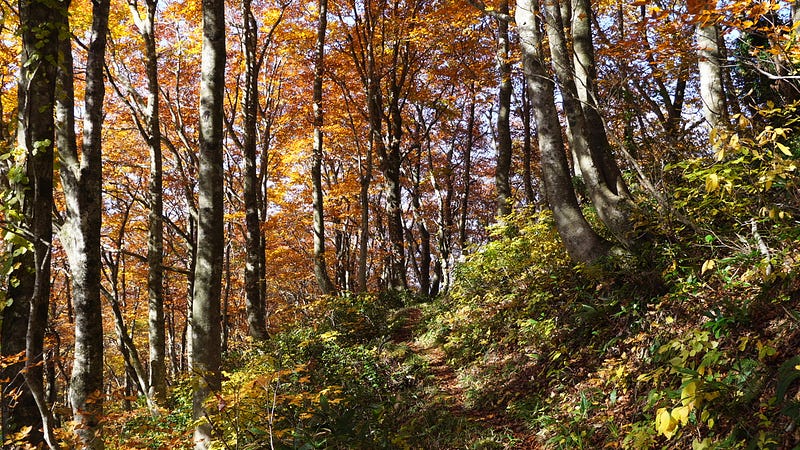
I started out wanting to make YouTube videos for each, and an accompanying page on my website that people could use for reference. The videos for 6. Mt. Shogadake, and 7. Mt. Kumanonagamine, were essentially ruined due to a faulty hard drive, and my lack of foresight in what turned out to be a very eventful hike on Mt. Kumanonagamine (read the story if you haven’t already). I will have to get back up there to get these two. Fortunately Mt. Shogadake is on the way up another 100 Famous Mountain of Yamagata, Mt. Chokai, and Mt. Kumanonagamine is not a particularly large mountain that is also relatively close.
Then in summer I started waking up really early and going for walks out to watch the sunrise over Mt. Chokai. This became somewhat of a habit, and I would come back home, pour myself a cold brew and milk, and sit in my backyard where I just started pumping out my thoughts of each mountain. The in-depth articles of each mountain were born.
Video Quality
Looking back, I feel there is a marked difference in the style and quality of the videos. I have a philosophy of always doing the best job you can in creative projects, no half-arsing, and you can probably tell I did grow a lot in terms of video production. I can certainly tell, as producing and editing the videos did become a hell of a lot easier, which is very noticeable if you look at the style I was experimenting with in the latter videos (Mt. Maya, Mt. Ubagatake, Mt. Gassan, but especially Mt. Taizo and Mt. Hokari) compared to any other video really.
Where do I stand in terms of the project?
In all honesty, I am well behind where I wanted to be. I wanted to finish the project within three years, and to do that, next year I’m going to have to climb 50 peaks. I’m quite happy in my efforts over October and November, I was able to summit, document, and make videos and articles for 4 of the peaks, and the only thing stopping me from doing more was the weather.
This year was the year of the Shonai peaks, besides Mt. Yunosawadake, Mt. Chokai, and Mt. Tsuchiyu and Mt. Yozo, the remaining peaks are quite the distance, and I’m going to have to travel further afield next year to even have a chance of climbing 50. Since some of the remaining peaks are very low and close to one another, I should be able to get a lot of them in with the right planning and execution.
What to do over winter
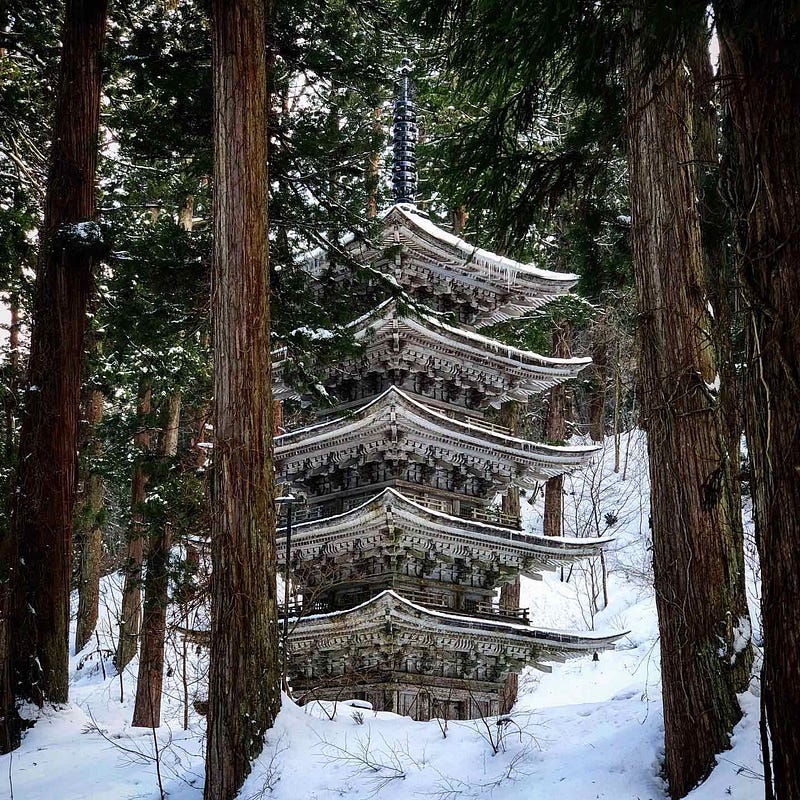
Now that it’s winter, only certain mountains are still open, and my camera batteries will run out fast, so I have to be very particular about climbing, and am not expecting much. This means I need to come up with other content over the next few months, which will be like a Shugyo in and of itself, or a Komorigyo specifically as training indoors is known (I have a few ideas in the works, but it is a lot of effort to get out into the world!).
Next Steps
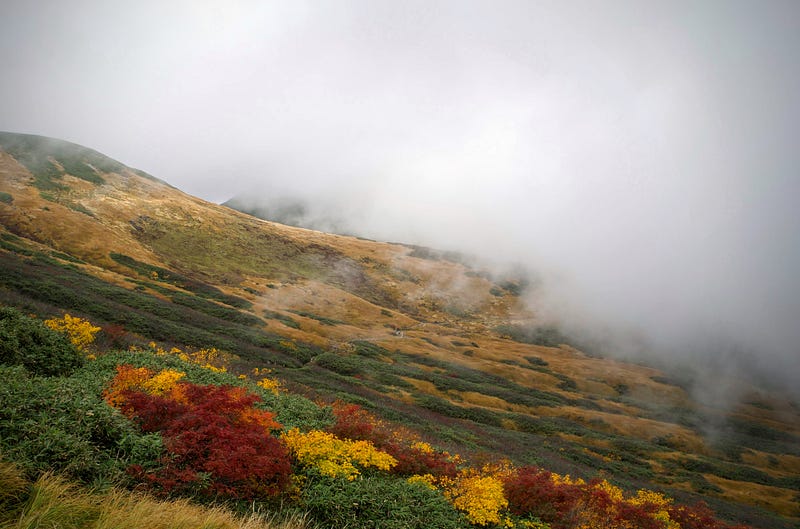
So, there you have it. At the current point in time, I have plenty to do, and plenty to think about. I also have plenty of room to experiment and grow. Wish me luck.
-
Nature is the medicine
Nature is the medicine. Besides my daily dose of caffeine, I don’t take any other substances, not even alcohol, which is essentially a criminal offense according to some people. I get all I need from nature.
Which isn’t to say you shouldn’t do what you enjoy, I’m not one to point fingers. What I want to say is that nature is how I like to rewind and refresh, and it certainly does a good job at that.
My wife says that often when I come off the mountains my demeanor changes and it’s like I am a different person. I also feel it myself. I don’t get as worked up as I can at times, and it helps to keep me calm.
The problem is when you can’t get out, and feelings and emotions bottle up and it gets overwhelming. At those times, you really need to make getting out into nature a real priority.
There is one important difference as well though. Since becoming a Yamabushi I have better understood the importance of showing appreciation to nature through prayer. That’s all. Just acknowledging nature’s existence and your existence, and how they intertwine, that in itself is enough.
If you ever feel worked up, feel unlike yourself, or feel that you need to unwind, a dose of nature might be just what the doctor ordered.
-
Writing up your intuition
If you have something to work with, it makes it 1,000x easier to edit, iterate, and improve on what you’ve got. That’s just another reason why I like to put my immediate thoughts together whenever I’m handed an assignment or something where I have to use my creative abilities. This for me means that I can still rely on instinct; jumping into things without giving too much analytical thought, then mulling it over before really getting into the nitty gritty of it and editing, iterating, and improving.
It’s true that everything starts with a simple idea, but a simple idea with a little bit of back work, or as I like to call it writing up your intuition, can go a long way.
-
Are you hiding?
When I trained to become an English teacher, one of the things that I was taught was that staying behind your desk all the time is a way of hiding, a way of giving into the fear as such. Obviously as a teacher, confidence is key, so it helps to be cognizant of whether you are hiding or not.
I’m just putting the finishing touches on the Mt. Hokari video, and tried it with and without music. The Mt. Taizo video has basically zero music in it, just the sounds of the forests, and I think it is much better for it. The same goes for the Mt. Hokari video. That was when I realised in my videos I had been using music to cover a number of things in the background, that I had been using music to hide some undesirable sounds (breathing being the biggest one).
And I don’t want to do that. I want to give a true representation of the mountain, not some lavish over-edited piece of garbage. I think that there is a lesson in here for all of us, that we may be doing some things that are essentially hiding, that if we only had a little bit more confidence, maybe we could present a truer version of ourselves.
So, are you hiding?
-
A sense of accomplishment: the only motivation needed
Today as we got up and headed to Sanjingosaiden, Dewa Sanzan Shrine, the outside was completely white. I love Mt. Haguro once all the trees have lost their leaves because it means we get to see quite far. We also took a path down the mountain which is a bit unconventional, I would say less than 1% of visitors to Mt. Haguro use this path.
This meant that we could get a really good view of some parts of the mountain that you can never get to see. For example, we could see the Buchudo, a special building used during Yamabushi training. I had never seen it from that angle before, it is always covered in trees.
We also got to see Minamidani, the southern valley of Mt. Haguro, covered in white. There were still yellow leaves on the trees, and it was quite something to witness. This place is mystical just by itself, but being able to see it at this time of year only amplified the mysticism.
Today we experienced climbing down a mountain covered in snow, in the middle of a thunderstorm. There were times when the snow actually stung as it hit us it was that heavy. I have to say I did not expect that, although with Mt. Haguro at this time of year, truly anything is to be expected.
You have to be a little crazy, and you have to be willing to try new things to be able to do what we did today. Before you begin, you think it’s going to be tough, but then you remember that there is a real sense of accomplishment once you finish. Sometimes that’s all the motivation you need to do something crazy like this.
-
Don’t skip the steps
Don’t skip the steps. To make sure you make it up the steps, take then one by one. Getting over confident and skipping steps only leads to disaster before long. One step at a time is how to guarantee you get to the top.
-
Sunken costs and Stoic Philosophy
I despise WordPress. I just spent the best of two or so hours trying to fix a problem where pictures won’t load properly, it was the main picture for the Mt. Hokari article, and thankfully I got it to work. This means I won’t have enough time to make my Mt. Hokari video for tomorrow, and will have to wait until I’m able to upload it, most likely Sunday at this stage.
In the big scheme of things, this is a tiny setback. I was aiming to have the video up by tomorrow, but I guess these things can’t be helped.
I guess I should have thought ahead and predicted that something like this would happen, then taken action to strengthen my blog (which I had been doing), or I could think of it as a chance to try something new, like a different blog service.
The problem is I’ve given so much to making the website how I want it to be, not to mention the money paid to be able to do so, that it would be really hard to leave, and I’d also have to learn a new system, which I am not at all afraid of and actually somewhat looking forward to.
But if you think long term enough, these sunken costs have almost zero relevance, and are more of a stepping stone on the way to your future. The stoics encourage not worrying about things you cannot change, and sunken costs is one of them! Worry about what you can change, such as giving people good service and information! As Seth Godin says, make things better by making better things.
(This blog was partially inspired by Seth’s recent Akimbo Podcast White Elephants and gifts)
-
Don’t dawdle
Don’t dawdle. Of all the things to remember from inside a friend’s house as I grew up, for some reason this cross-stitched sign in my friend’s toilet sticks out. There was something else to the sign, but the key message was to get on with it.
And that’s the sort of push that we need a lot of the time. If you’re going to do something, once you’ve decided to do it, do it. You could even do it before you decide to do it. Whatever you do, don’t dawdle.
-
Constraint Setting
Just like goal setting, setting yourself realistic constraints can help you make sure you get the work done. I set myself the target of one video per week, and I have been able to keep that up over the past two or so months. I wrote about it the other day, but if you have a set constraint where it’s already decided that you’re going to be doing something, a daily blog post, a weekly video, then the decision changes to ‘what should I blog about?’ or ‘what should I make a video about?’ That is how constraints can help in you all but guaranteeing the work gets done.
We all know of the benefits of setting goals, but equally as viable, or I guess the two really should go hand in hand, is setting some sort of constraints that guarantee you put something out in the world, which is the true struggle, now made easier.
-
Sustainability is a ‘do’ a path or way
There are so many areas in which we can be more sustainable but are choosing not to. One thing is obviously choice of car, but I was very happy to see that the top 10 cars in NZ were electric (I think it’s a list curated by some sort of judges or something, so not sales).
I can’t believe how long it took me to realise this, but like Kendo, Judo, and Aikido, Sustainability is a ‘do’, a path or way. Do, 道, is an ongoing thing. There is no end, and it’s about turning up day after day and doing your best to try and master it.
Sustainability fits that bill. No one is expecting people to stop unsustainable practices overnight, but they are expecting you to stop sometime, they are expecting you to at least make an effort. No one is expecting you to be perfect, but when it comes to something like sustainability, it’s worth trying, no?
-
Comfort in the mundane
You could spend a month in a zen monastery cleaning all day every day. And you know what, it might just make you content. There’s something to be said for the comfort that mundane things give you.
For me, every day begins with about a 20 minute ritual preparing coffee. I realised that of course the coffee is a big part of it, but also all the steps that go into producing the cup of coffee are somewhat relaxing. I love the feel of the grinder as it grinds the beans, and the feel of the kettle in my hand as it slowly pours over the beans that bubble up as carbon dioxide is released.
And that’s about it. In essence that is all you need to do to prepare coffee, and that’s about all you need to enjoy the mundane.
-
‘Should I practice today?’ Versus ‘What should I practice today?’
When you practice something daily, the question changes from ‘should I practice today’ to ‘what should I practice today?’ By having a default that means you practice no matter what, you increase your chances of getting in some worthwhile practice for that day. Should I exercise today? becomes What should I exercise today? Should I blog today? becomes What should I blog today? Which one do you think is more motivational?
-
Thoughts on climbing the first 15 100 Famous Mountains of Yamagata
So far this year I’ve done 15 mountains. I’m still working on the video for 14) Mt. Taizo, and then I have the article and video for 15) Mt. Hokari, but I’m going to have to bump up the pace if I’m to finish within three years. It means next year I will need to do at least 48 mountains to get to 66%, and with the seasons and everything, that’s going to be more than one a week for a lot of the year. I guess I’m going to have to do multiple mountains in one trip, especially for those further away.
Also over the winter, when there is not much point in trying to summit the majority of the mountains here (Mt. Haguro and Mt. Kinbo are still doable, but that’s about as high as you can go), so I’m going to have to make videos here at home I guess. I have a few ideas, but am definitely going to miss checking out these new mountains! I’ve had so much fun over the past year.
The biggest problem was that there was a huge gap between many of the mountains. The first half of the year I think I did 4, and that’s not really good enough. The past few months I’ve been able to bump up my numbers, sometimes going weeks in a row, and there were also a few over summer I got to summit.
They were a good lesson in that summer isn’t really the time to climb lower mountains. So, next year I’ll aim to hit up the taller ones during the summer, which I can now more easily find with this list (although it is in a bit of a desperate need of an update). Either way, I have to plot my next mountains of attack. Mt. Yozo might just still be doable this month if the stars align.
-
Slow cars in front
Slow cars in front of you are doing you a favour. Sure they can be a bit annoying when you’re trying to get somewhere, but they’ll only be in front of you for so long, and they help keep you in check.
This is easier to say in Japan where the speed limits are ridiculously slow, so if a car in front of you is going really slowly that might be a legitimate cause for concern, but I often think this when cars are going the actual limit. They aren’t doing anything wrong, it’s the speed limit that needs changing.
Either way, the metaphor sticks. These things can be seen as a way to pace yourself, to not get too far ahead of yourself, to stay grounded, and the stay steadily on course.
-
Are you doing what you love? For your sanity
Are you doing what you love? Not for your job, although that would be nice, but for your sanity. When it all gets a bit too much, this is one thing I always like to check up on. Often the reason for feeling down is a lack of doing what you love to be doing, which means you need to get out there and do it! Doing what you love is something that is worth making up an excuse for, it’s for your sanity after all!
What is DAILY YAMABUSHI?
Daily insights from my time on and around the mountains of Japan. Get them sent to your inbox daily by signing up below.
Sign up for the weekly Kiwi Yamabushi Newsletter here.
Read all Daily Yamabushi posts here.